
If you’re a nature enthusiast or enjoy taking a stroll in the woods, you may have come across the Sitka Spruce. This large coniferous tree is native to the Pacific Northwest and Alaska and is known for its impressive size and longevity.
But how can you identify a Sitka Spruce? In this article, we’ll provide some key characteristics to look for when identifying this magnificent tree.
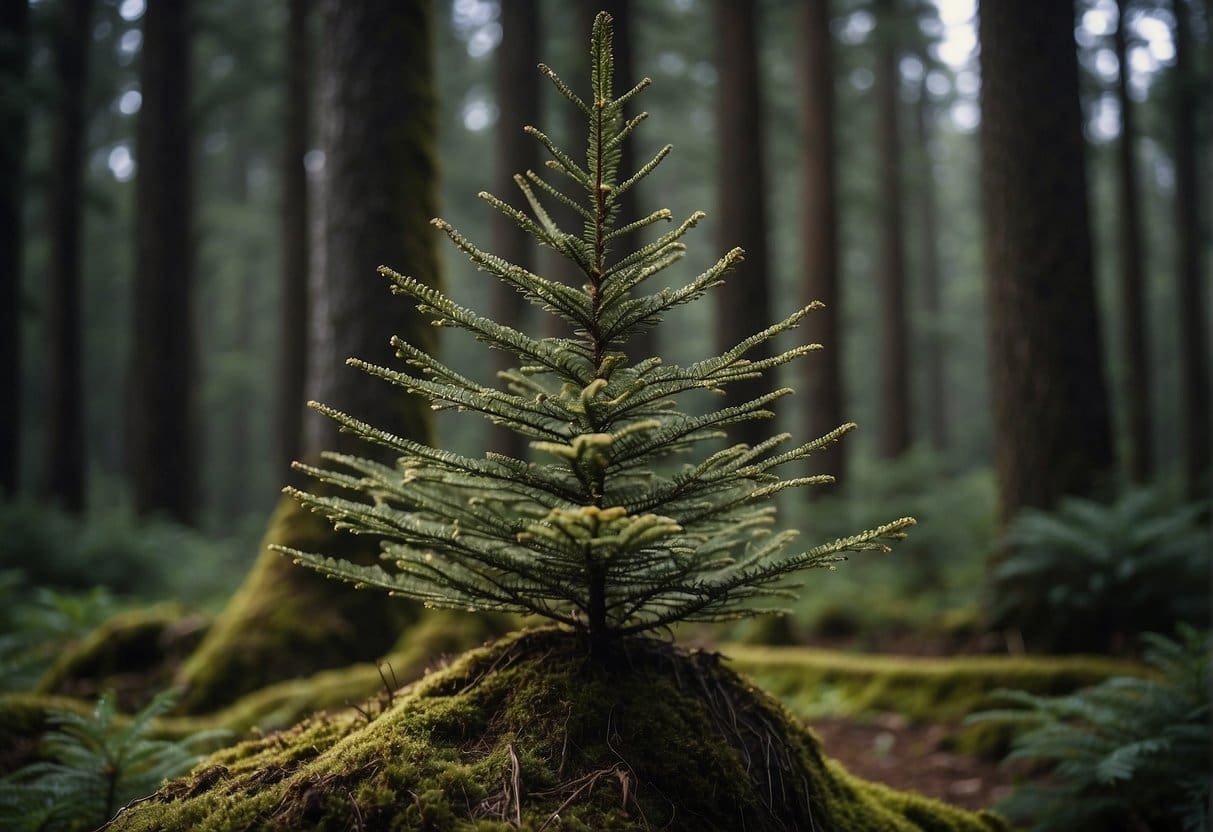
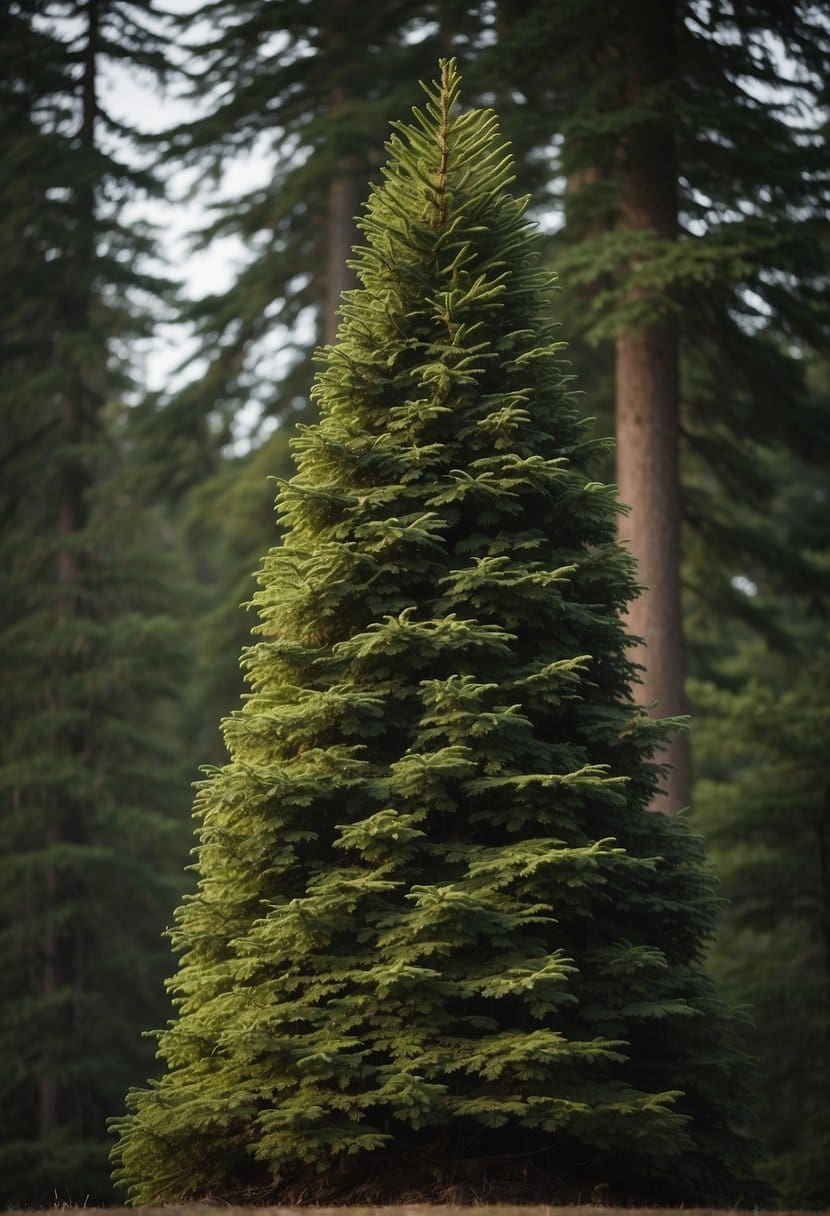
One of the most distinctive features of the Sitka Spruce is its conical shape. The tree has a straight trunk that tapers towards the top, where the branches curve upwards at the tips.
The Sitka Spruce’s dark green needles are arranged in a spiral pattern around the branches. The tree’s cones, which are brown and can grow up to four inches long, are also worth noting.
Table of Contents
Sitka Spruce Identification Made Simple
If you’re looking for a tall, conical-shaped evergreen tree with needle-like leaves and cones, then a Sitka spruce might be just what you’re looking for. Here are some characteristics to help you identify this coniferous tree:
By Needle Characteristics
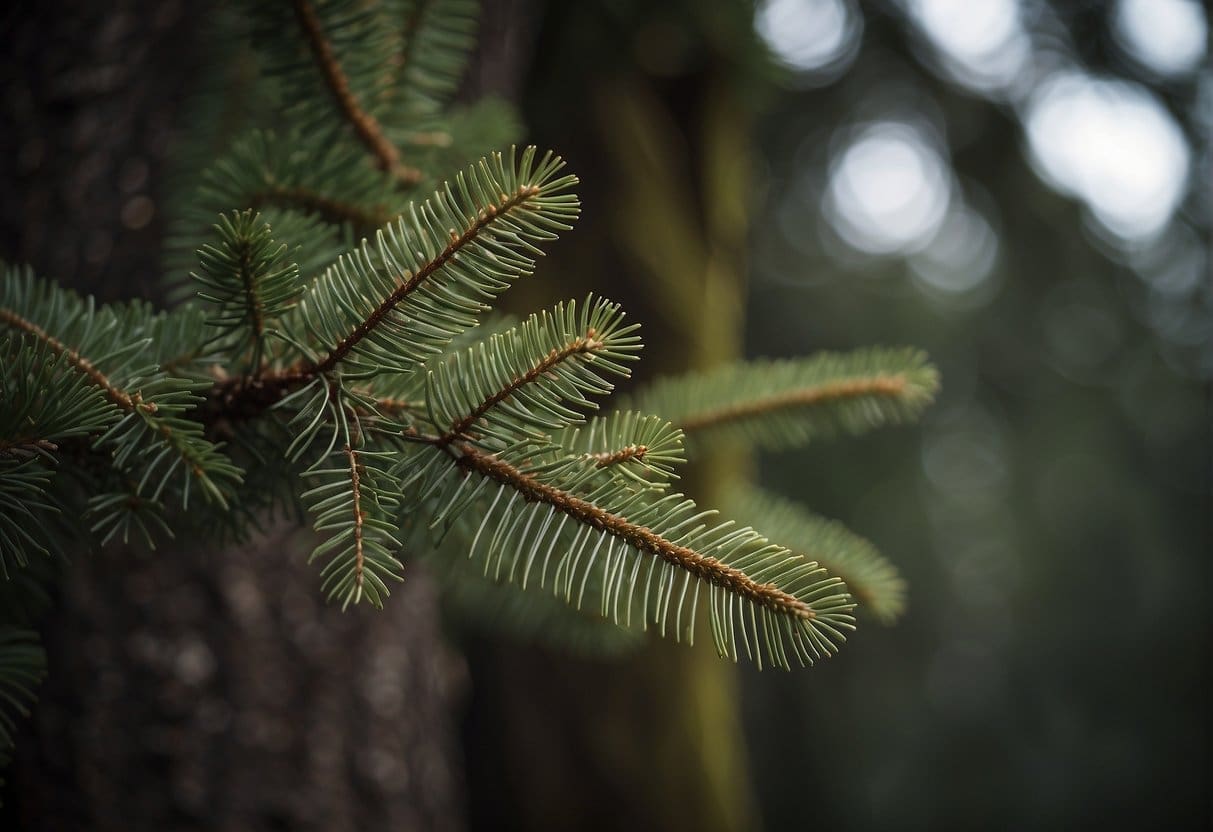
The Sitka spruce has needle-like leaves that are about 1 inch (2.5 cm) long and are blue-green in color. These needles are arranged on the branches in a spiral pattern and are attached to small, woody pegs.
The needles are also very sharp and can easily prick your skin.
By Cone Features
The cones of the Sitka spruce are about 4 inches (10 cm) long and are brown in color. They are slender and hang from the branches of the tree.
The scales of the cones are thin and flexible, attached to a central stalk. The cones also contain seeds that are released when they open.
When identifying a Sitka spruce, look for these key features: The tree has a straight trunk with branches that curve upwards at the tips.
The bark is thin, brown, or purplish-grey and breaks up into small scales.
The best time to identify a Sitka spruce is in the spring or summer when the tree is in full foliage.
If you’re still not sure whether you’re looking at a Sitka spruce, you can try rubbing a needle between your fingers. The needles of a Sitka spruce are very flexible and will bend easily, whereas the needles of other conifers, such as pine trees, will break or snap.
Understanding the Habitat of Sitka Spruce
If you’re looking to identify a Sitka Spruce, it’s important to understand where they grow and what type of environment they thrive in. In this section, we’ll explore the native regions of the Sitka Spruce, as well as its soil and climate preferences.
Native Regions
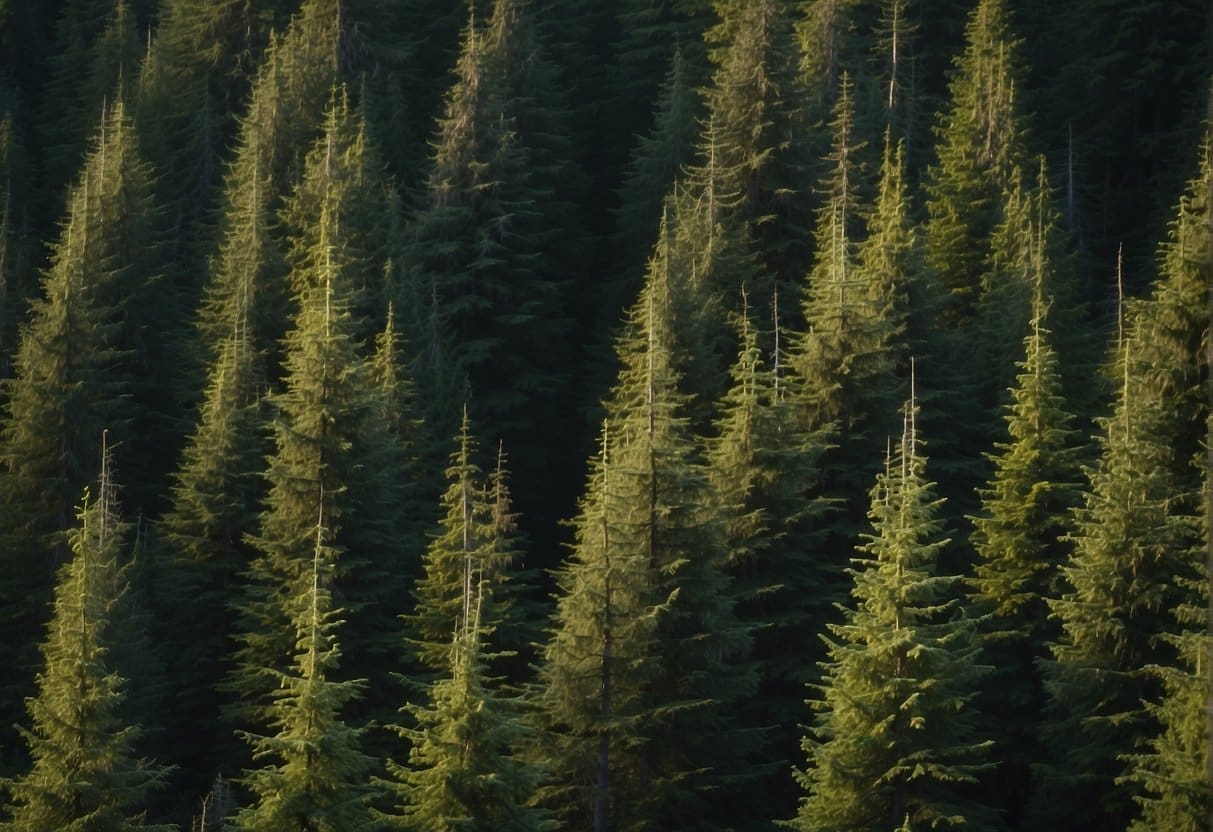
The Sitka Spruce is native to the west coast of North America, stretching from Cook Inlet in southcentral Alaska to northern California. The most extensive portion of its range is in southeast Alaska and northern British Columbia, where the east-west range extends for about 210 km (130 miles). The tree can also be found on Vancouver Island and in Olympic National Park.
Soil and Climate Preferences
The Sitka Spruce prefers cool, moist, well-drained soils in full sun.
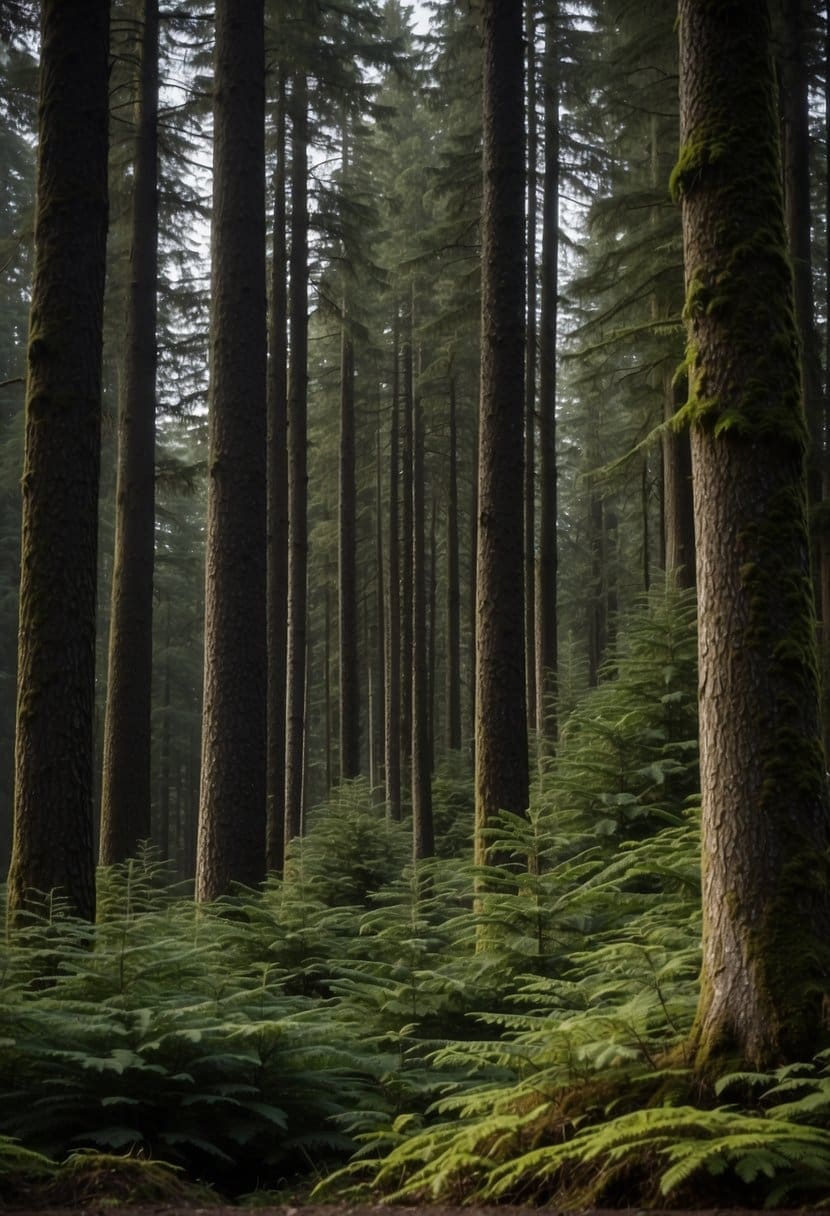
It thrives in the wet, coastal forests of the Pacific Northwest, where the climate is mild and humid.
The tree is adapted to withstand heavy rainfall and strong winds, which are common in this region.
In terms of precipitation, the Sitka Spruce prefers areas with high rainfall. It can tolerate up to 2,500 mm (98 inches) of annual precipitation, making it well-suited to the wet climate of the Pacific Northwest.
Physical Characteristics
Are you trying to identify a Sitka spruce? The physical characteristics of this forest tree can help. This section will discuss the tree’s size, form, bark, and trunk.
Tree Size and Form
One of the most distinguishing characteristics of the Sitka spruce is its size. When mature, it is a large tree that can grow up to 70 meters tall and 2 meters in diameter.
The tree has a conical shape, with a straight trunk and branches that curve upwards at the tips.
Bark and Trunk
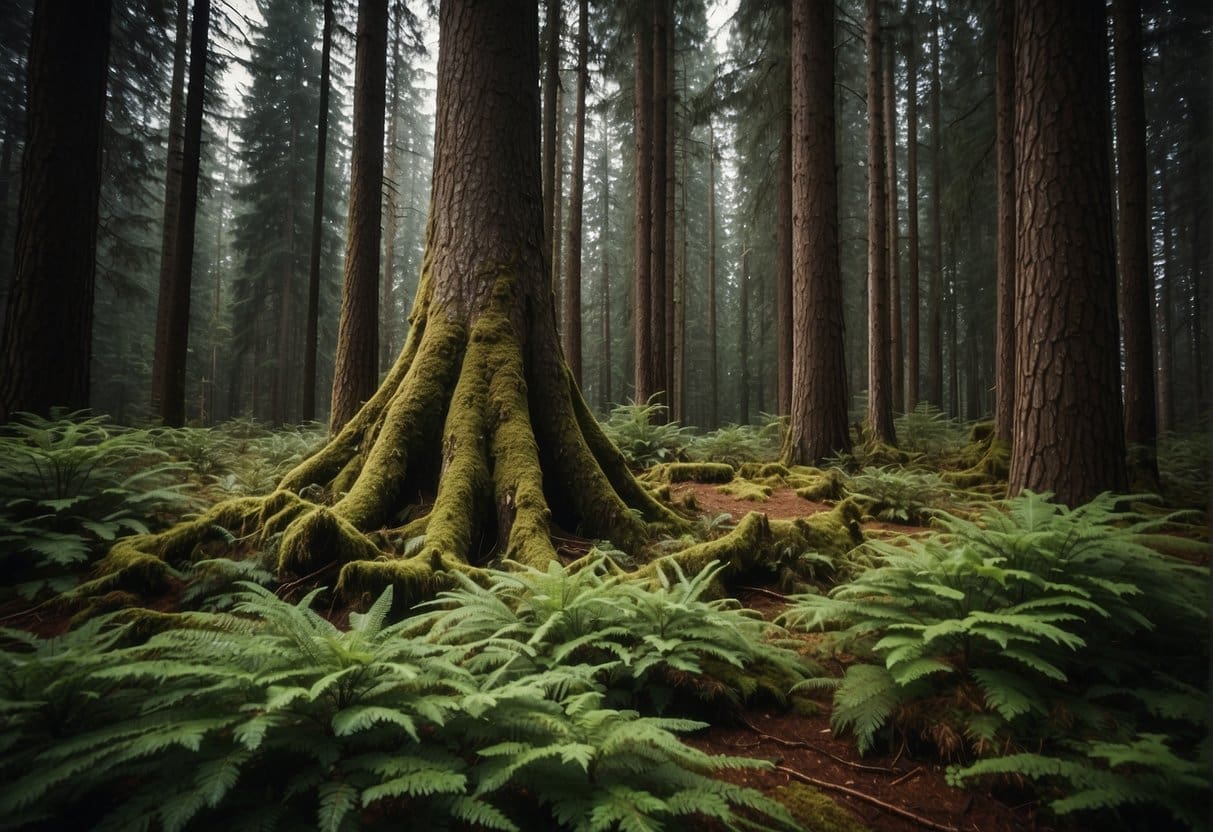
The bark of a Sitka spruce is thin, brown, or purplish-grey and breaks up into small scales.
The trunk diameter can also be helpful in identifying the tree. BC’s largest known Sitka spruce is 95 meters tall and 5 meters across.
Uses and Applications
In Industry
Sitka spruce is a valuable timber tree used in the construction of various products. Its high strength-to-weight ratio makes it an ideal choice for use in the construction of airplanes, boats, and musical instruments such as guitars and pianos.
The tree is also used to produce pulp and paper, and its timber is used to construct buildings and furniture.
The lumber produced from Sitka spruce is known for its durability and resistance to decay.
Cultural and Recreational
Sitka spruce is useful in industry and has cultural and recreational uses.
The tree is used as an ornamental tree in parks and gardens, and its beauty and size make it a popular choice for landscaping.
It is also a favorite nesting spot for birds and provides cover and food for deer and other wildlife.
The indigenous people of North America used the tree for medicinal purposes and in ceremonial rituals.
The Role of Sitka Spruce in Local Ecosystems
If you’re interested in learning about Sitka spruce, it’s important to understand its ecological importance. These trees are an important part of the ecosystem in the Pacific Northwest, providing habitat for a variety of wildlife. In this section, we’ll explore the wildlife habitat and environmental benefits of Sitka spruce.
Wildlife Habitat
Sitka spruce is an evergreen tree that provides important habitat for a variety of wildlife, including birds, deer, and squirrels.
These animals rely on the tree for nesting, food, and shelter.
The dense foliage of the Sitka spruce provides excellent cover for birds and other small animals, and the large branches provide an ideal nesting site for birds.
Environmental Benefits
In addition to providing habitat for wildlife, Sitka spruce also has important environmental benefits.
These trees are an important part of the coniferous forest ecosystem, helping to regulate the climate and maintain soil health.
The trees help prevent erosion and runoff, leading to soil degradation and water pollution.
Sitka spruce is also a valuable source of timber for the lumber industry. However, it’s important to manage these forests sustainably to ensure that they continue to provide habitat for wildlife and environmental benefits for future generations.
Propagation and Growth
If you’re interested in growing your own Sitka spruce, there are two methods of propagation: reproduction by seeds and asexual propagation.
Reproduction by Seeds
Sitka spruce produces cones that contain seeds. The cones are usually found on the tree’s upper branches and can be harvested when they turn brown.
The seeds should be extracted from the cones and cleaned before planting.
To increase the chances of germination, the seeds should be stratified before planting.
This involves placing the seeds in a moist soil or sand container and storing them in a cool place for several weeks.
This process simulates the natural conditions that the seeds would experience in the wild.
Asexual Propagation
Asexual propagation involves taking cuttings or layering branches from an existing Sitka spruce to create a new tree.
Cuttings should be taken from the current year’s growth and should be about 6-8 inches long.
The cuttings should be planted in a rooting hormone and placed in a container with moist soil.
Then, cover the container with a plastic bag to maintain humidity.
Layering involves bending a branch to the ground and covering it with soil. The branch will eventually produce roots and can be cut from the main tree to create a new tree.
Sitka spruce is a fast-growing tree that can reach heights of up to 225 feet.
The tree prefers moist, well-drained soil and can tolerate acidic and alkaline soils.
Additionally, Sitka spruce is native to the west coast of North America and is commonly found in coastal forests.
Threats and Conservation
Pests and Diseases
Like all forest trees, Sitka spruce is vulnerable to pests and diseases that can cause significant damage.
Some of the most common pests affecting Sitka spruce include the white pine weevil and the spruce beetle.
The white pine weevil often causes damage to the tree’s terminal shoot, which can lead to deformity and stunted growth. Meanwhile, the spruce beetle attacks the tree’s bark, which can lead to extensive damage and even death.
In addition to pests, Sitka spruce is also susceptible to a number of diseases, including root rot and needle cast.
Root rot is caused by a fungus that attacks the tree’s root system, leading to decay and reduced nutrient uptake. Meanwhile, needle cast causes the tree’s needles to turn brown and fall off prematurely, leading to reduced photosynthesis and growth.
Conservation Efforts
Given the importance of Sitka spruce as a commercial timber species, there has been a significant effort to conserve the species and protect it from pests and diseases.
One of the most important conservation efforts is the development of disease-resistant strains of Sitka spruce, which are less vulnerable to pests and diseases.
Another important conservation strategy is the use of sustainable forestry practices. These practices ensure that Sitka spruce forests are managed in a way that is both economically and environmentally sustainable.
This includes the use of selective harvesting techniques and the protection of old-growth forests.

Growing up in the Pacific Northwest, we’ve always felt at home in the outdoors. We created Evergreen Adventures PNW to share our love of hiking, camping, and exploring, and to help others discover the best adventures this region has to offer. Along with trip guides and tips, we also enjoy diving into the science behind the landscapes—thanks to a background in Environmental Science—because understanding nature makes every adventure even more meaningful.