
If you’re interested in learning about the diverse range of deciduous trees in the Pacific Northwest, you’ve come to the right place.
Deciduous trees lose their leaves in the fall and grow new ones in the spring. Unlike evergreen trees, which retain their needles year-round, deciduous trees go through a seasonal cycle of growth and dormancy.
The Pacific Northwest is home to a wide variety of deciduous trees, ranging from towering giants to smaller understory species.
These trees play an essential ecological role in the region’s forests and provide habitat for diverse wildlife.
Understanding the different species of deciduous trees in the Pacific Northwest can help you better appreciate the region’s natural beauty and its essential role in its ecosystems.
Key Takeaways
- The Pacific Northwest is home to diverse deciduous trees that play an essential ecological role in the region’s forests.
- Understanding the different species of deciduous trees in the Pacific Northwest can help you better appreciate the region’s natural beauty and its important role in its ecosystems.
- Educational resources and identification tools are available to help you learn more about Pacific Northwest deciduous trees and identify different species in the wild.
Understanding Deciduous Trees
Defining Deciduous Trees
Deciduous trees lose their leaves in the fall. Unlike evergreen trees, which keep their leaves year-round, deciduous trees’ leaves change color and fall off during the autumn months.
This cycle of leaf growth, color change, and leaf loss is an important part of deciduous trees’ natural rhythm.
Deciduous trees are found in many parts of the world, including the Pacific Northwest. These trees are an important part of the region’s ecosystems, providing habitat and food for a variety of animals.
Some common deciduous trees in the Pacific Northwest include the bigleaf maple, the red alder, and the Pacific dogwood.
Deciduous vs. Evergreen
One of the main differences between deciduous and evergreen trees is their leaves.
Deciduous trees have leaves that change color and fall off in the fall, while evergreen trees keep their leaves year-round.
Evergreen trees are often associated with the Pacific Northwest, which is known for its dense forests of coniferous trees like the Douglas fir and the Western red cedar.
Another difference between deciduous and evergreen trees is their twigs.
Deciduous trees have smooth twigs, while evergreen trees have rough, scaly twigs.
This is because evergreen trees need to protect their leaves from damage caused by the weight of snow and ice, so their twigs are covered in protective scales.
Species Identification
Are you trying to identify deciduous trees in the Pacific Northwest? Here are some key features to look for:
Leaf Characteristics
The leaves of deciduous trees in the Pacific Northwest can vary widely in shape and size.
Some common leaf shapes include lobed, toothed, oval, and heart-shaped. Look for leaves that are arranged alternately along the stem rather than in pairs or clusters.
Twig and Bud Features
The twigs and buds of deciduous trees can also provide important clues for identification.
Pay attention to the twig’s color, texture, and arrangement of the buds. Are they opposite or alternate? Are they clustered at the tip of the twig or spaced out along its length?
Bark and Trunk Patterns
The bark and trunk of a tree can also be helpful for identification.
Look for patterns in the bark, such as furrows, ridges, or scales. Note the bark’s color and texture as well.
Some common deciduous trees in the Pacific Northwest include:
| Scientific Name | Common Name |
|---|---|
| Acer macrophyllum | Bigleaf maple |
| Alnus rubra | Red alder |
| Populus tremuloides | Quaking aspen |
| Quercus garryana | Garry oak |
| Salix spp. | Willow |
By paying attention to leaf characteristics, twig and bud features, and bark and trunk patterns, you can identify many of the deciduous trees that grow in the Pacific Northwest.
Ecological Importance

Deciduous trees play a crucial role in the Pacific Northwest forest ecosystem. These trees provide shade, nutrients, and habitat for a variety of wildlife species.
This section will explore the ecological importance of deciduous trees in the Pacific Northwest.
Role in Forest Ecosystems
Deciduous trees are an essential part of the Pacific Northwest forest ecosystem. They provide a variety of benefits, including:
- Providing habitat for wildlife: Deciduous trees provide habitat for a variety of wildlife species, including birds, mammals, and insects. These trees offer shelter, food, and nesting sites for many animals.
- Regulating temperature: Deciduous trees provide shade, which helps regulate the temperature in the forest. This shade also helps prevent soil erosion and keeps the forest floor moist.
- Filtering air and water: Deciduous trees help filter the air by absorbing carbon dioxide and other pollutants. They also help filter water by absorbing excess nutrients and pollutants from the soil.
Decomposition and Nutrient Cycling
When deciduous trees die, they begin to decompose.
This decomposition process is critical for nutrient cycling in the forest ecosystem.
As the tree decomposes, it releases nutrients back into the soil, which other plants can use. The decomposition process also helps break down organic matter, which helps improve soil structure and fertility.
Decomposition is a natural process that occurs in the forest ecosystem.
As deciduous trees decompose, they provide a source of food and habitat for a variety of decomposer organisms, including fungi, bacteria, and insects. These decomposers play a critical role in breaking down organic matter and releasing nutrients back into the soil.
Notable Species of the Pacific Northwest

You’re in luck if you’re looking for deciduous trees in the Pacific Northwest. This region is home to a variety of species that provide beauty, shade, and food for wildlife. Here are some notable species that you might encounter:
Red Alder (Alnus Rubra)
Red Alder is a common deciduous tree native to the Pacific Northwest. It’s a fast-growing tree that can reach up to 100 feet tall. The bark of the tree is smooth and gray, and the leaves are dark green and oval-shaped. Red Alder is an important species for wildlife, providing food and habitat for a variety of animals.
Vine Maple (Acer Circinatum)
Vine Maple is a small deciduous tree or large shrub native to the Pacific Northwest. It’s known for its beautiful fall foliage ranging from yellow to red. The leaves are circular and lobed, and the bark is thin and smooth. Vine Maple is a great choice for small gardens or as an understory tree in larger landscapes.
Black Cottonwood (Populus Balsamifera)
Black Cottonwood is a large deciduous tree native to the Pacific Northwest. It’s known for its fast growth and large size, often reaching up to 200 feet tall. The bark is dark gray and deeply furrowed, and the leaves are triangular and toothed. Black Cottonwood is an important species for wildlife, providing food and habitat for a variety of animals.
Western Hemlock (Tsuga Heterophylla)
Western Hemlock is a coniferous tree native to the Pacific Northwest. It’s known for its graceful, drooping branches and soft, feathery foliage. The bark is reddish-brown and deeply furrowed, and the needles are dark green and about an inch long.
Human Uses and Cultural Significance
Pacific Northwest deciduous trees have a rich history of human uses and cultural significance.
People have used these trees for various purposes, including timber and lumber production, medicinal uses, and recreational and aesthetic value.
Timber and Lumber Production
For centuries, the Pacific Northwest deciduous trees have been a vital timber and lumber production source.
These trees are known for their strong and durable wood, making them ideal for construction and furniture-making.
The lumber industry in the Pacific Northwest has played a significant role in the region’s economy, providing jobs and income for many people.
Medicinal Uses and Traditional Practices
The indigenous people of the Pacific Northwest have long used deciduous trees for their medicinal properties.
For example, the bark of the Pacific yew tree contains taxol, a compound used in cancer treatment.
Additionally, the bark of the red alder tree has been used to treat various ailments, including fever, coughs, and colds.
Traditional practices such as mask-making and basket-weaving also rely on the bark of these trees.
Recreational and Aesthetic Value
The deciduous trees of the Pacific Northwest also provide recreational and aesthetic value.
Many of these trees can be found in parks and natural areas, providing shade and beauty for visitors.
The red alder tree, in particular, is known for its attractive appearance and is often used in landscaping.
Conservation and Challenges
Threats to Pacific Northwest Deciduous Trees Populations
Pacific Northwest deciduous trees are facing a number of threats that are putting their populations at risk.
One of the biggest threats is the tension between human development and trees’ natural habitats. As cities and towns continue to expand, more land is being cleared for development, which can lead to the loss of important tree habitats.
Another major threat to deciduous trees in the Pacific Northwest is drought.
As the climate continues to change, the region is experiencing longer and more severe droughts, which can make it difficult for trees to get the water they need to survive. This can weaken the trees and make them more susceptible to disease and other environmental stressors.
Conservation Efforts and Reforestation
Despite the challenges facing Pacific Northwest deciduous trees, several conservation efforts are underway to help protect and restore their populations.
One of the most important of these efforts is reforestation. By planting new trees and restoring damaged habitats, conservationists are working to rebuild the region’s deciduous tree populations and ensure their survival for generations to come.
In addition to reforestation, several other conservation efforts are underway, such as disease prevention and management, water conservation, and habitat preservation.
These efforts aim to protect the region’s native tree species and ensure their continued health and vitality.
Educational Resources and Identification Tools
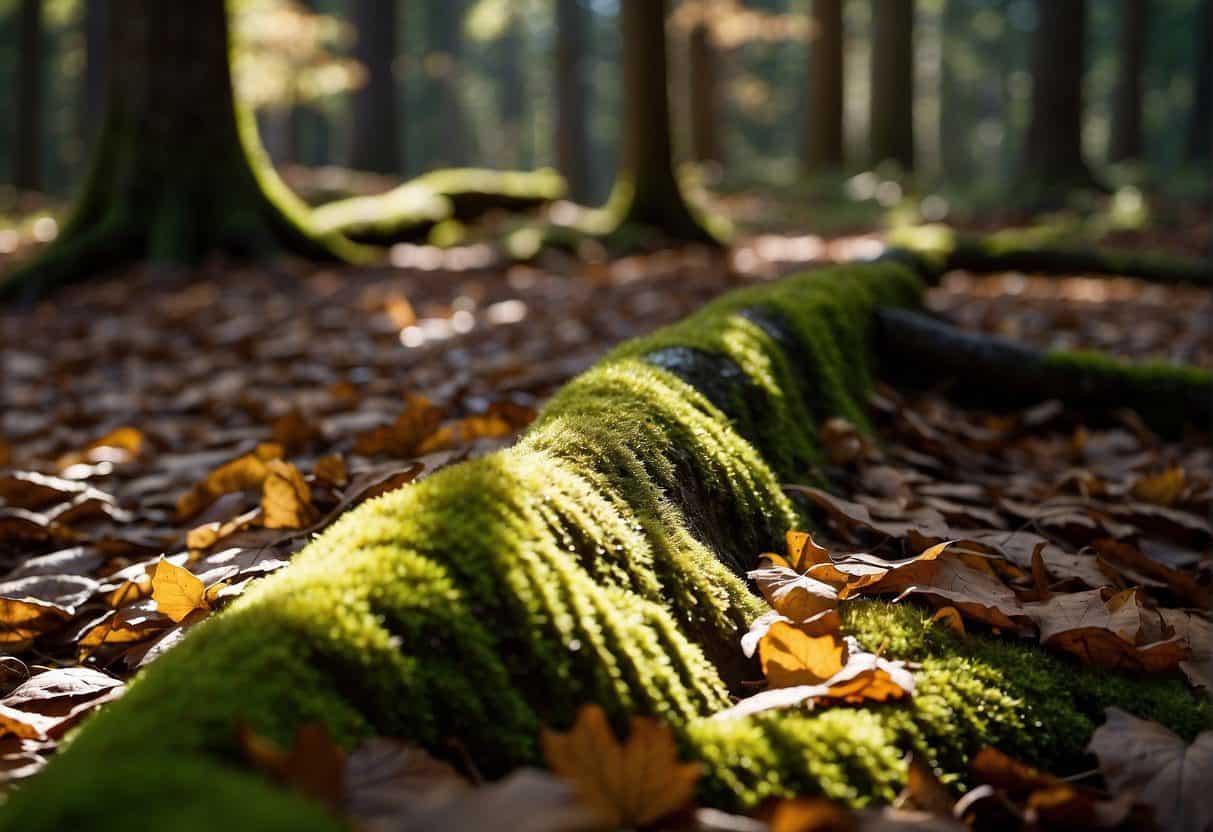
If you’re interested in learning more about Pacific Northwest deciduous trees, several educational resources and identification tools are available. Here are a few options to consider:
Apps and Online Guides
Several apps and online guides can help you identify different species of deciduous trees in the Pacific Northwest.
One popular option is the “PictureThis” app, which is available for both iOS and Android devices. This app allows you to identify trees based on their leaves, bark, and other characteristics. It allows is great at helping to identify many other types of plants.
Another great online resource is the tree identification home page at Oregon State University.
This site provides a user-friendly dichotomous key that can help you identify common deciduous trees in the Pacific Northwest. It also includes descriptions of specific genera and species native to the region.
Educational Programs in Oregon and Washington
If you’re looking for a more hands-on approach to learning about Pacific Northwest deciduous trees, there are several educational programs available in Oregon and Washington.
For example, the Oregon State University Extension Service offers various workshops and classes on tree identification and forest ecology.
Whether you prefer to learn online or in person, there are plenty of resources to help you identify and learn about Pacific Northwest deciduous trees. By taking advantage of these resources, you can deepen your understanding of the region’s unique ecology and gain a greater appreciation for the natural world around you.
Growing up in the Pacific Northwest, we’ve always felt at home in the outdoors. We created Evergreen Adventures PNW to share our love of hiking, camping, and exploring, and to help others discover the best adventures this region has to offer. Along with trip guides and tips, we also enjoy diving into the science behind the landscapes—thanks to a background in Environmental Science—because understanding nature makes every adventure even more meaningful.