
Are you planning a camping trip to Washington State and wondering if you can camp for free? The good news is that there are many free camping options available.
From national forests to state parks, there are plenty of places where you can pitch your tent or park your RV for free.
Washington is known for its natural beauty, and what better way to experience it than by camping?
Whether you’re looking for a secluded spot in the woods or a scenic spot near the water, there are plenty of areas available for free camping in Washington.
In this article, we will provide an overview of free camping in Washington, including the types of campsites available, essential rules and regulations, and tips for finding the best free campsites.
Key Takeaways
- Washington state offers many free camping options, including national forests and state parks.
- There are different types of free campsites available, including dispersed camping and designated campsites.
- It’s important to follow essential rules and regulations when camping for free, such as packing out your trash and respecting wildlife.
Table of Contents
Exploring Free Camping in Washington State: A Complete Overview
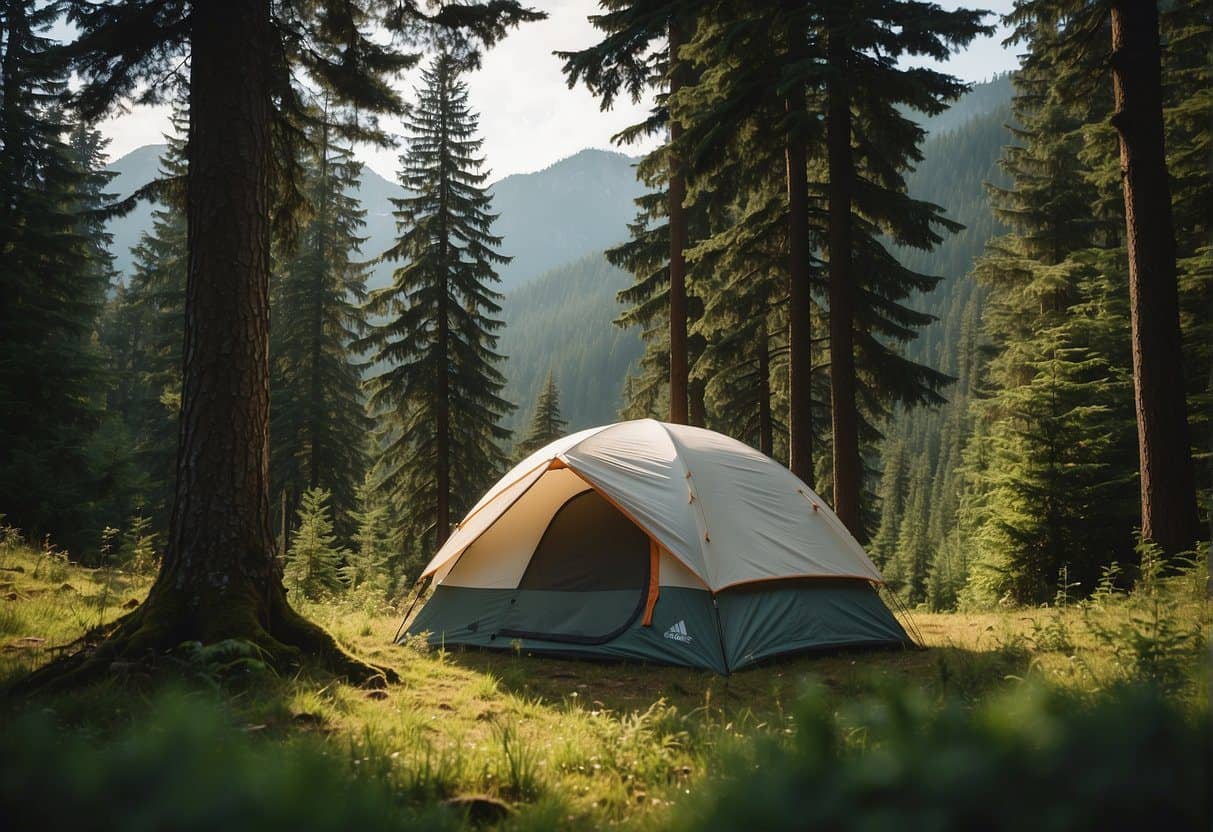
If you’re an avid camper or just looking for a fun weekend getaway, you might be wondering if you can camp for free in Washington State. The answer is yes, you can!
In this section, we’ll provide an overview of free camping in Washington State, including what it is and where you can find it.
What is Free Camping?
Free camping, also known as dispersed camping, is when you camp on public land without paying a fee. This can include camping in national forests, BLM land, and other public lands.
Free camping is a great way to enjoy the outdoors without breaking the bank, and it’s a popular option for many campers in Washington State.
General Availability of Free Campsites
Washington State offers a wide variety of free camping options, including dispersed camping on public land and free campgrounds in national forests.
Some of the best places to find free camping in Washington State include:
- Olympic National Forest
- Colville National Forest
- Wenatchee National Forest
- Gifford Pinchot National Forest
- Mount Baker-Snoqualmie National Forest
In addition to these national forests, there are also many BLM land areas in Washington State that offer free camping.
Some of the best places to find free camping on BLM land include Twin Lakes Recreation Area, Douglas Creek, and Saddle Mountains.
Types of Free Campsites
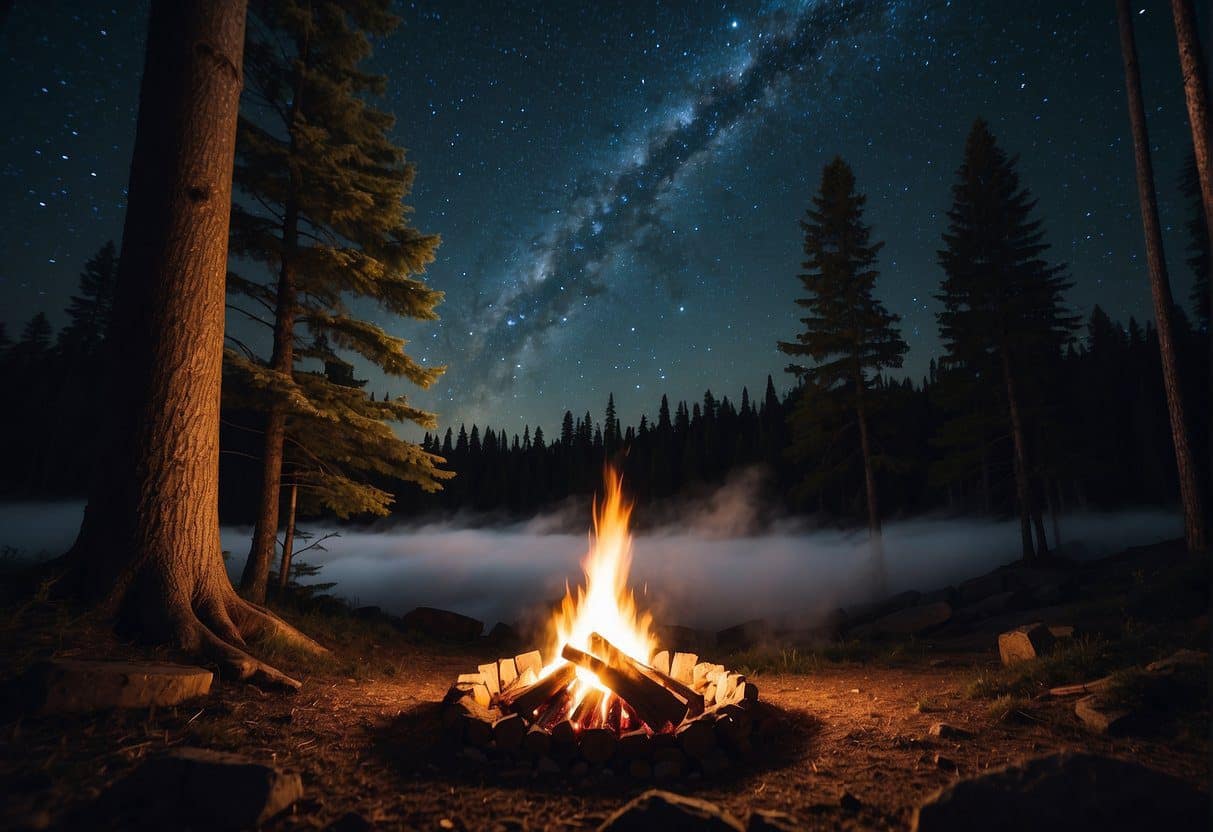
When it comes to camping for free in Washington state, there are a few different types of campsites to consider. In this section, we’ll take a look at the most common types of free campsites available in Washington and what you can expect from each.
Dispersed Camping Areas
Dispersed camping areas are one of the most popular types of free campsites in Washington state.
These are areas where you can set up camp anywhere that is not specifically prohibited, usually in a national forest or on BLM land. Dispersed camping areas are typically primitive, with no facilities or amenities, so you’ll need to come prepared with everything you need to camp.
BLM Lands
Another option for free camping in Washington state is to camp on BLM lands.
The Bureau of Land Management (BLM) manages millions of acres of public land in Washington state, much of which is available for camping. Like dispersed camping areas, camping on BLM lands is typically primitive, with no facilities or amenities, so you’ll need to come prepared.
National Forests
Washington state is home to several national forests, including the Olympic National Forest, the Gifford Pinchot National Forest, and the Mount Baker-Snoqualmie National Forest.
Many of these national forests offer free camping opportunities, typically in dispersed camping areas. As with other types of free campsites, you’ll need to come prepared with everything you need to camp, as there are no facilities or amenities.
Essential Rules and Regulations
When camping for free in Washington State, it is important to follow certain rules and regulations to ensure that you have a safe and enjoyable experience.
In this section, we will cover the essential rules and regulations that you need to know before you set out on your camping adventure.
Leave No Trace Principles
One of the most important things to remember when camping in Washington is to practice the Leave No Trace principle.
This means that you should leave your campsite as you found it and take all of your trash with you when you leave.
It is also important to avoid damaging the natural environment by staying on designated trails and using established campsites.
Stay Limits and Permits
While there are many free dispersed camping sites in Washington State, it is important to note that there are often stay limits and permit requirements.
For example, some sites may have a maximum stay limit of 14 days, while others may require a permit or reservation in advance.
Always check the rules and regulations for each site before you plan your trip.
Campfire and Fishing Regulations
When camping in Washington State, following campfire and fishing regulations is important.
For example, campfires are not allowed in some areas during certain times of the year due to fire danger.
It is also important to follow fishing regulations in order to protect the fish populations and ensure that they remain healthy for future generations.
How to Find the Best Free Campsites in Washington State
When it comes to finding free campsites in Washington state, there are a few things to keep in mind. Here are some tips to help you find the perfect spot for your next camping trip.
Using Maps and Apps
One of the easiest ways to find free campsites in Washington state is to use maps and apps.
Google Maps, for example, can be a great tool for identifying public lands and national forest boundaries.
There are also camping apps like The Dyrt and Campendium that can help you find free camping areas in the state.
Identifying Public Lands
Another way to find free campsites in Washington state is to identify public lands.
The Bureau of Land Management (BLM) manages several areas in the state that allow free camping.
You can also check with the Department of Natural Resources (DNR) to see if there are any free camping areas on their properties.
Popular Free Camping Areas
There are several popular free camping areas in Washington state. Some of the most popular include:
- Colville National Forest
- Gifford Pinchot National Forest
- Mt. Baker-Snoqualmie National Forest
- Okanogan & Wenatchee National Forests
- Olympic National Forest
Keep in mind that while these areas may allow free camping, there may be restrictions on where you can camp and how long you can stay. Be sure to check with the local ranger station or land management agency before setting up camp.
Amenities and Accessibility
What to Expect at Free Campsites
When camping for free in Washington state, it’s important to know what amenities to expect.
While some campsites may have basic facilities such as toilets and fire pits, others may not have any facilities at all.
It’s important to plan accordingly and bring all necessary equipment and supplies, including food, water, and a camping stove.
RV and Trailer Considerations
If you’re planning to camp in an RV or trailer, it’s important to consider the maximum length allowed at each campsite.
Some campsites may have restrictions on RV or trailer length, so it’s important to check ahead of time.
Additionally, not all campsites have RV hookups, so you may need to plan accordingly and bring a generator or other equipment.
Accessibility of Campsites
When camping for free in Washington state, it’s important to consider the accessibility of each campsite. Some campsites may require a high-clearance vehicle or 4-wheel drive to access, while others may be more easily accessible.
It’s important to research each campsite ahead of time to ensure that it is accessible for your vehicle and camping equipment.
It’s also important to consider the availability of cell service at each campsite. While some campsites may have cell service, others may not have any signal at all.
It’s important to plan accordingly and bring a satellite phone or other communication equipment if necessary.
Finally, if you plan to camp near a lake or river, it’s important to check for the availability of a boat ramp. Not all campsites have boat ramps, so it’s important to research each campsite ahead of time to ensure that you can easily launch and retrieve your boat.
Safety and Preparedness
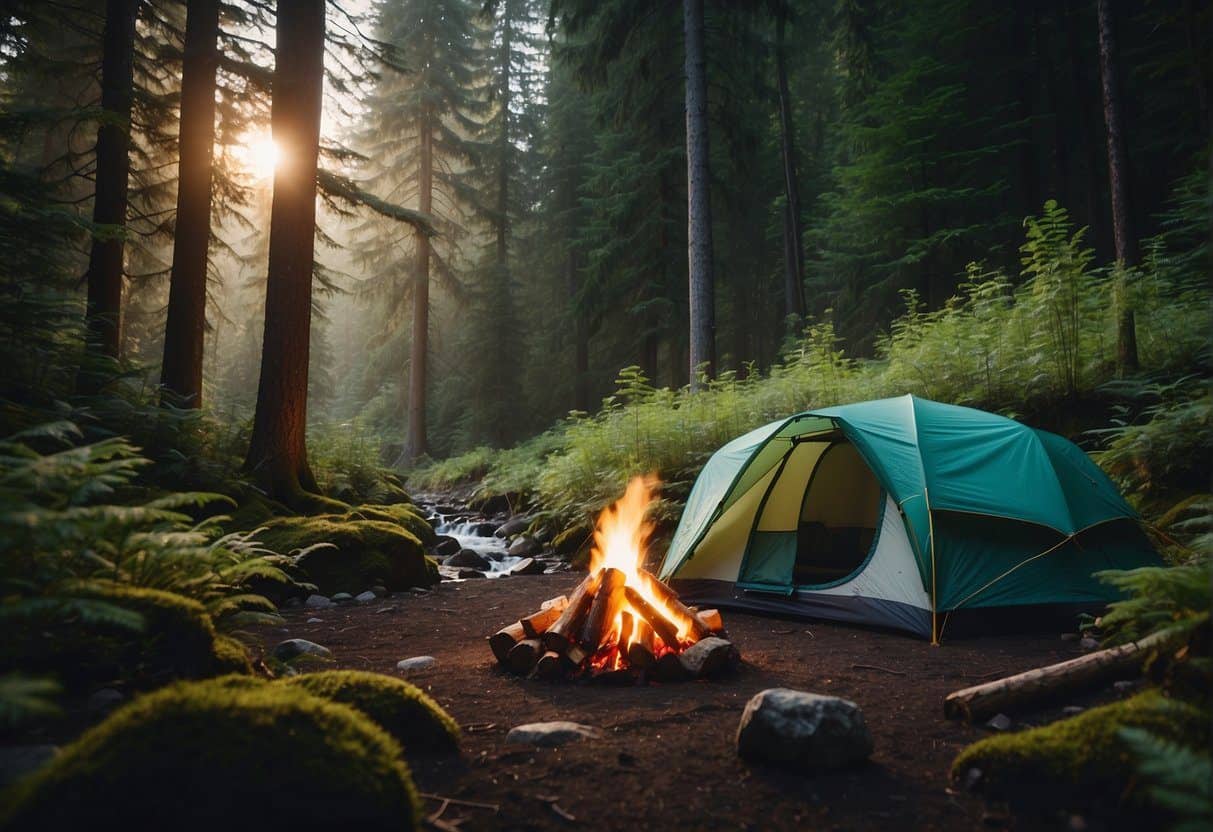
When camping in Washington state, safety and preparedness should be top priorities. Here are some important factors to consider:
Wildlife and Wilderness Safety
Washington state is home to a variety of wildlife, including bears, cougars, and wolves.
To stay safe while camping, make sure to store food properly and keep a clean campsite.
Make sure to bring bear-resistant containers or hang food from a tree at least 10 feet off the ground and 4 feet away from the trunk.
When hiking, make noise to alert wildlife of your presence and carry bear spray just in case.
Additionally, be aware of the potential for wildfires and follow all fire restrictions and guidelines.
Weather and Elevation Factors
Washington state’s climate can be unpredictable. It’s important to check the weather forecast before heading out and pack accordingly.
Even during the summer months, temperatures can drop significantly at night, so make sure to bring warm layers.
When camping at higher elevations, be aware of the potential for altitude sickness and take appropriate precautions, such as staying hydrated and taking it slow when hiking.
Emergency Planning
No matter how well-prepared you are, emergencies can happen.
Make sure to bring a first aid kit and know how to use it.
It’s also a good idea to have a map and compass and know how to use them in case of getting lost.
Make sure to let someone know your itinerary and expected return time before heading out, and consider bringing a personal locator beacon for added safety.
Responsible Camping and Stewardship
When camping in Washington state, it is important to be a responsible camper and practice good stewardship of the environment. Here are some tips to help us minimize our environmental impact and show respect for the local community and culture.
Environmental Impact
One of the most important things we can do to minimize our impact on the environment is to follow the Leave No Trace principles.
These principles include packing out all trash, minimizing campfire impact, respecting wildlife, and staying on designated trails.
By following these principles, we can help preserve the natural beauty of the area for future generations to enjoy.
Another way to minimize our environmental impact is to camp in designated areas.
There are many free camping options in Washington state, but it is important to choose a site designated for camping to minimize our environmental impact.
The Washington State Parks website has a list of campgrounds and rules to follow while camping.
Community and Cultural Respect
When camping in Washington State, it is important to show respect for the local community and culture.
This includes respecting private property and staying on designated trails.
It is also important to be aware of any cultural or historical sites in the area and to treat them with respect.
Another way to show respect for the local community is to follow campground rules and regulations.
This includes following quiet hours, not leaving trash in the campsite, and not holding a campsite for someone who may arrive later.
Additional Resources
If you’re looking for more information on camping in Washington state, there are several resources available to you. Here are a few that we recommend:
Department of Natural Resources
The Department of Natural Resources (DNR) manages over 5 million acres of state-owned land in Washington, including forests, mountains, and shorelines.
They offer a variety of camping options, including primitive campsites, developed campsites, and group campsites.
You can make reservations online or by phone; many sites are available on a first-come, first-served basis.
Washington Department of Fish and Wildlife
The Washington Department of Fish and Wildlife (WDFW) manages over 1 million acres of public land in Washington, including wildlife areas, fish hatcheries, and natural areas.
They offer a variety of camping options, including primitive campsites, developed campsites, and group campsites.
You can make reservations online or by phone; many sites are available on a first-come, first-served basis.
Army Corps of Engineers
The Army Corps of Engineers manages several campgrounds in Washington, including some on the Columbia River and Lake Roosevelt.
They offer a variety of camping options, including primitive campsites, developed campsites, and group campsites.
You can make reservations online or by phone; many sites are available on a first-come, first-served basis.
In addition to these resources, there are also several websites and apps that can help you find free camping in Washington state. Some popular options include Campendium, Recreation.gov, and Hipcamp. Whatever your camping style, there’s sure to be a resource out there that can help you plan your next adventure in Washington State.
Free Camping in Washington State: Your Questions Answered
What are the top free boondocking locations in Washington state?
Washington State has many free boondocking locations, but some of the top spots include Forest Road 29 on the Olympic Peninsula, Big Meadow Lake in the Colville National Forest, and several campgrounds in the Okanogan-Wenatchee National Forest.
These sites offer beautiful scenery and a chance to experience the great outdoors without breaking the bank.
Can I find free camping spots in Eastern Washington that are RV-friendly?
Yes, there are several free camping spots in Eastern Washington that are RV-friendly.
For example, the Colville National Forest offers several campgrounds with free RV camping sites, including Big Meadow Lake and Sullivan Lake.
The Okanogan-Wenatchee National Forest also has several free RV camping spots, including the Entiat River Road and the Tumwater Campground.
How can I use the Discover Pass for free camping in Washington?
The Discover Pass is required for camping on state lands in Washington, but it is possible to use the pass for free camping.
The pass can be used for free camping at state parks and state recreation areas, as well as on lands managed by the Washington Department of Natural Resources and the Washington Department of Fish and Wildlife.
However, some campgrounds may still charge fees for amenities such as water and electricity.
Are there any free beach camping areas in Washington state?
Yes, there are several free beach camping areas in Washington state.
Some of the top spots include the Olympic National Forest, which offers several free beach camping sites, and the Long Beach Peninsula, which has several free camping sites on the beach.
However, some of these sites may have limited amenities and may require a permit or reservation.
What is dispersed camping, and where can I do it legally in Washington?
Dispersed camping is a form of camping that involves camping outside of designated campgrounds.
In Washington state, dispersed camping is legal on lands managed by the Bureau of Land Management, the U.S. Forest Service, and the Washington Department of Natural Resources.
However, make sure to follow the rules and regulations for dispersed camping, such as staying a certain distance from water sources and packing out all trash.
What are the costs associated with camping at Washington state parks?
Camping fees at Washington state parks vary depending on the season and the amenities offered.
Basic campsites without electricity or water typically cost around $12-$30 per night. Meanwhile, campsites with full hookups and other amenities can cost up to $50 per night.
It is important to note that additional fees may apply for reservations and other services.
Growing up in the Pacific Northwest, we’ve always felt at home in the outdoors. We created Evergreen Adventures PNW to share our love of hiking, camping, and exploring, and to help others discover the best adventures this region has to offer. Along with trip guides and tips, we also enjoy diving into the science behind the landscapes—thanks to a background in Environmental Science—because understanding nature makes every adventure even more meaningful.