
Seeking a winter activity that blends fun with challenge? Snowshoeing could be your perfect match. Snowshoeing is a great way to explore the great outdoors and get some exercise, even in the middle of winter. Our beginners guide to snowshoeing will help you get started on the right foot, whether you’re new to the sport or just looking to brush up on your skills.
Choosing the right snowshoes is the first step to a successful winter adventure. There are several different types available, each designed for a specific type of terrain and activity.
Our guide assists in selecting snowshoes that fit your needs and offers tips for proper fitting. We’ll also cover essential gear and clothing, basic techniques, planning for your adventure, and practical tips to help you stay safe and comfortable on the trails.
Key Takeaways
- Choose the right snowshoes and gear for your needs.
- Learn basic snowshoeing techniques and plan your adventure.
- Stay safe and comfortable on the trails with practical tips and accessories.
Table of Contents
Choosing the Right Snowshoes for Beginners
When it comes to snowshoeing, selecting the right equipment is essential to maximize your experience. There are several factors to consider when choosing the right snowshoes for your needs. Here are some key things to keep in mind:
Types of Snowshoes
There are several different types available, and each one is designed for a specific type of terrain. Flat terrain snowshoes are ideal for beginners and entry-level models. Rolling terrain snowshoes are best for intermediate users, and mountain terrain snowshoes are designed for advanced users. Choose the type of snowshoe that best suits your skill level and the terrain you plan to explore.
Sizing and Weight Considerations
Sizing is important for proper performance. You need to consider both the maximum load on your snowshoes (your body weight plus the gear you are carrying) and the type of terrain you will be navigating. Snowshoe specs should list the overall weight capacity and recommended length. Choose a length that best matches your weight, though some models allow you to add an additional tail for extra flotation as needed.
Materials and Traction Features
Snowshoes are made with different materials, and each material has its own benefits. Aluminum frames are lightweight and durable, while composite frames are lightweight and flexible. Traction features are also important to consider when choosing snowshoes. Look for models with aggressive crampons and heel lifts for better grip and stability on steep terrain.
Essential Gear and Clothing for Beginner Snowshoers
When it comes to snowshoeing, having the right gear and clothing is essential. Here are some tips to help you stay warm, dry, and comfortable during your adventure.
Layering for Warmth
Layer your clothing strategically to maintain optimal body temperature. Start with a moisture-wicking base layer, then add insulating layers like fleece or wool. Finish with a waterproof and windproof outer layer to protect against the elements.
Protective Accessories
Remember to pack a hat and gloves or mittens for essential warmth in your head and hands. Sunglasses and sunscreen are also important to protect against the sun’s glare and harmful UV rays. Gaiters can help keep snow out of your boots, while poles can provide added stability on uneven terrain.
Footwear and Socks
Invest in a good pair of winter boots that are waterproof, insulated, and offer good traction. Wool socks are a great choice to keep your feet warm and dry. Make sure your boots are compatible with your snowshoes, and use straps to secure them in place.
Basic Snowshoeing Techniques for Beginners
Snowshoeing is an easy and fun adventure in the backcountry. Here are some basic techniques to help you get started.
Basic Movements
Walking in snowshoes requires lifting your feet higher than in typical hiking. Keep your knees slightly bent and take smaller steps to maintain balance. Use your arms for balance and to help propel yourself forward.
Ascending and Descending
As you climb a hill, employ the kick-step technique for easier ascent. Kick the toe of your snowshoe into the snow to create a step. Push down with your foot to secure the snowshoe. When descending, use the heel-lift feature to ease the strain on your calf muscles.
Traversing Slopes
When traversing a slope, keep your weight on your uphill foot and use your downhill foot to kick a step into the snow. Maintain a comfortable stance with your feet shoulder-width apart. Use your poles for added stability and traction.
Planning Your First Snowshoeing Adventure
Before hitting the snowy trails, planning is essential. Here are some tips to help you prepare for your snowshoeing adventure.
Selecting a Trail
Select a trail that aligns with your skills and interests for the best experience. Flat trails are ideal for beginners, while forested areas and mountain trails offer more challenging terrain. Use trail markers or a navigation app to stay on course. Check out AllTrails for trail reviews and ratings.
Understanding Snow Conditions
Check the snow conditions before heading out. Freshly fallen snow requires more effort and energy to navigate than packed snow. Surface area, temperature, and humidity affect snow quality. Be aware of avalanche risk and consider taking an avalanche safety course.
Weather and Safety Precautions
Dress appropriately for the cold weather and bring extra layers. Wear waterproof boots and consider using trekking poles for stability. Check the weather forecast before heading out and avoid going out in extreme weather conditions. State parks often have safety guidelines posted on their websites.
Remember to bring plenty of water and snacks to keep you fueled during your workout. With these tips, you’ll be prepared to enjoy the great outdoors on your snowshoeing adventure.
Essential Snowshoeing Tips for Starters
Maintaining Balance and Posture
Maintaining good posture is essential to avoid injuries and enjoy snowshoeing. Keep your feet hip-width apart and your knees slightly bent. Lean forward slightly from your ankles, not your waist. Keep your core engaged and your back straight. Avoid looking down; instead, keep your gaze forward to maintain balance.
Using Poles Effectively
Poles play a vital role in maintaining balance and ensuring stability in deep snow. Adjust your poles to the appropriate length, with your elbows at a 90-degree angle. Use snow baskets to prevent the poles from sinking in deep snow. Plant the poles firmly in the snow with each step, alternating between the left and right poles.
Trail Etiquette and Conservation
Remain considerate of fellow snowshoers and hikers sharing the trail. Yield to those going uphill, and keep to the right side of the trail. Avoid trampling on vegetation and stay on designated trails to minimize environmental impact. Pack out all trash and leave no trace.
Remember to dress in layers and bring plenty of water and snacks. Snowshoeing is a fun and rewarding activity that can be enjoyed by anyone with the right equipment and knowledge. With these practical tips, you’ll be well on your way to enjoying the beauty of winter landscapes.
Accessorizing for Comfort and Safety
Equipping yourself with the right accessories is as important as the gear for comfort and safety. Here are some essential items to consider bringing with you on your next adventure.
Hydration and Nutrition
Hydration and nutrition are key to the success of your snowshoeing adventure. Bring a water bottle or hydration pack, and pack snacks that are easy to eat on the go, like trail mix or energy bars. Don’t forget to pack extra snacks in case you get delayed or lost.
Emergency and First Aid
Always be prepared for emergencies by bringing a first aid kit. Your kit should include essentials like bandages, antiseptic wipes, and pain relievers. In addition, it’s a good idea to bring a whistle and a compass in case you get lost or separated from your group.
Daylight and Visibility
If you plan on snowshoeing during low light conditions, bring a headlamp or flashlight with extra batteries. It’s also important to wear bright or reflective clothing to increase visibility. In case of an emergency, a signal mirror can also be helpful for attracting attention.
Getting Started with Snowshoeing
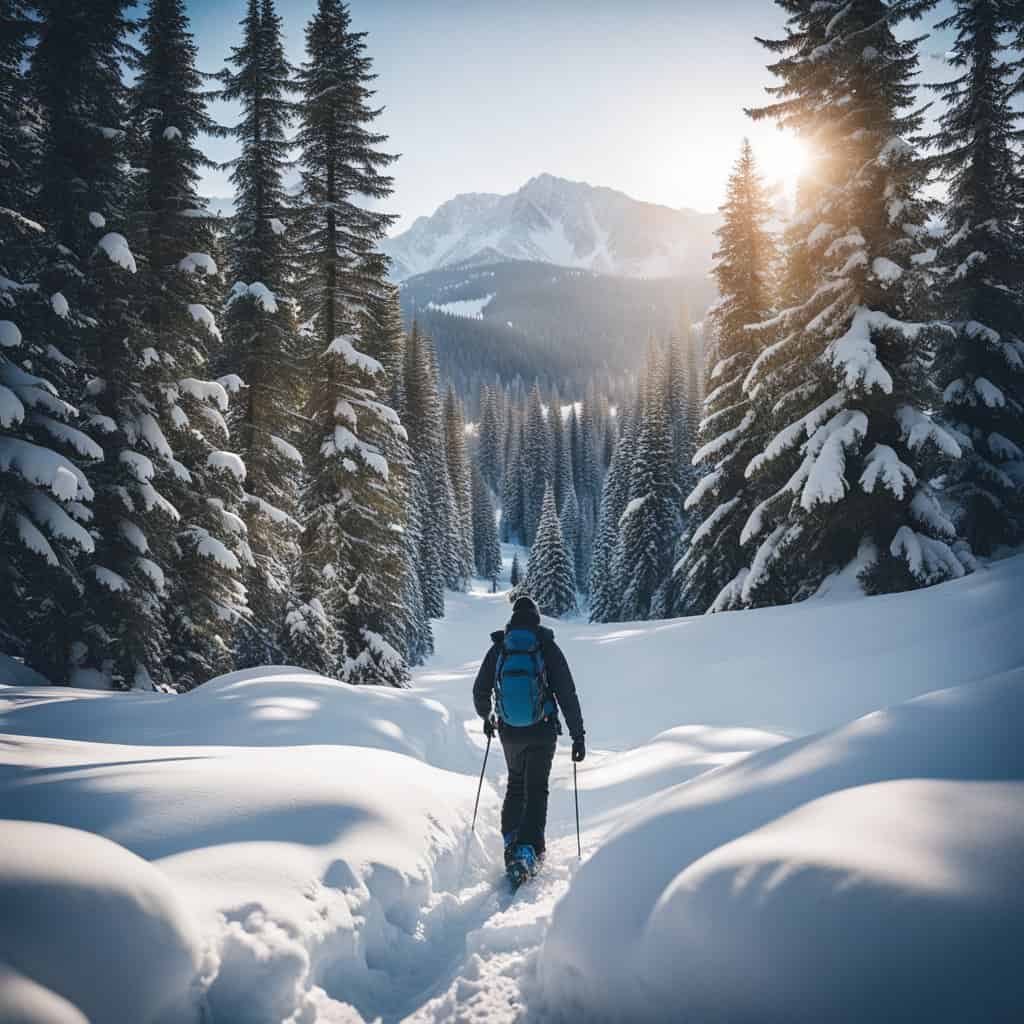
Starting out in this winter activity can be daunting, but knowing where to begin makes it easier. Here are some tips to help you get started.
Finding Local Snowshoeing Groups
Connecting with a local group offers valuable insights from seasoned enthusiasts and the chance to meet fellow beginners. Check out REI’s website or search for local snowshoeing groups on Facebook.
Renting vs. Buying Equipment
Unsure about snowshoeing? Renting equipment is a practical starting point. REI and other outdoor retailers offer snowshoe rentals. If you plan on going frequently, purchasing your own snowshoes is a more cost-effective option. MSR offers a variety of snowshoes for beginners.
Transportation and Access
When planning a trip, consider transportation and access. Some trails may require a permit or have limited parking. Check trail conditions and weather forecasts before heading out.
Remember to always dress appropriately for the weather and bring plenty of water and snacks. With these tips, you’re ready to hit the trails and enjoy the winter wonderland!
Understanding Risks and Prevention
Snowshoeing can be a fun and rewarding experience, but it’s essential to be aware of potential risks and take measures to prevent accidents. Here are some hazards you should know about and how to avoid them.
Avalanche Awareness
Before you head out on your, check the avalanche risk level in your area. Avoid areas with high avalanche danger, and always carry essential avalanche safety equipment, such as an avalanche beacon, probe, and shovel. Learn how to use this equipment and practice with it before you go.
Hypothermia and Frostbite
Cold weather and wind chill pose risks of hypothermia and frostbite, demanding caution. Wear warm, waterproof clothing, and dress in layers to regulate your body temperature. Keep your hands, feet, and head covered, and carry extra clothes in case you get wet. Watch for signs of hypothermia and frostbite, such as shivering, numbness, and discoloration of the skin. Seek shelter and warmth immediately if you experience any of these symptoms.
Wildlife and Environmental Hazards
Be aware of the wildlife and environmental hazards that can be present in the areas where you snowshoe. Stay on marked trails and avoid disturbing wildlife. Carry bear spray and know how to use it if you’re in bear country. Be aware of the potential for falling trees or branches due to heavy snow loads or high winds. If you’re near water, be aware of thin ice and stay away from the edges.
By being aware of these risks and taking preventive measures, you can ensure a safe and enjoyable snowshoeing experience. Remember, safety should always be your top priority.
Advancing Your Snowshoeing Skills
Now that you have the basics down, it’s time to take your skills to the next level. Here are some tips to help you advance your abilities.
Taking on More Challenging Terrain
Eager to conquer steeper hills and deeper snow? Make sure you have the right equipment, including snowshoes with aggressive traction and poles for added stability. Keep your weight forward and your knees bent to maintain balance and control. Remember to take it slow and steady, and don’t be afraid to turn back if conditions become too challenging.
Improving Endurance and Strength
Looking for a winter workout? Snowshoeing effectively builds endurance, strengthening your legs, core, and upper body. To maximize your workout, try to maintain a brisk pace and incorporate hills and varied terrain. You can also add weight to your pack for an extra challenge.
Snowshoeing for Fitness
Snowshoeing offers an exciting and enjoyable way to remain active in winter. Whether you prefer to stick to groomed trails or venture into the backcountry, snowshoeing offers a unique and rewarding workout. To get the most out of your snowshoeing experience, try to vary your routes and explore new areas. Don’t forget to stay hydrated and fuel up with snacks to keep your energy levels up.
Remember to always be prepared for your adventure by checking weather conditions, bringing appropriate gear, and letting someone know where you’re going. With these tips, you’ll be well on your way to becoming a pro.
We’d love to hear about your snowshoeing adventures. Whether it’s your first step into the snow or a memorable journey on the trails, your experiences can inspire and guide fellow enthusiasts. Drop a comment below, and share your tips, favorite trails, and moments. Let’s build a community of passionate snowshoers, learning and exploring together. Join the conversation and become a part of our winter wonderland storytelling!
Growing up in the Pacific Northwest, we’ve always felt at home in the outdoors. We created Evergreen Adventures PNW to share our love of hiking, camping, and exploring, and to help others discover the best adventures this region has to offer. Along with trip guides and tips, we also enjoy diving into the science behind the landscapes—thanks to a background in Environmental Science—because understanding nature makes every adventure even more meaningful.