
If you’re looking for a stunning display of wildflowers, look no further than Mount Rainier National Park. Known for its diverse flora and fauna, Mount Rainier is a breathtaking destination for nature enthusiasts and photographers alike. With over 100 species of wildflowers, the park bursts into color during the summer months, making it a must-visit destination for those seeking natural beauty.
If you’re picking dates for Rainier’s subalpine wildflowers, start with late July or early August and check the NPS wildflower status before you drive. Snow melts at different times on different slopes. A good bloom at Paradise tells you little about whether the road to Sunrise is open.
Key Takeaways
- Mount Rainier National Park is home to over 100 species of wildflowers, making it a must-visit destination for nature enthusiasts and photographers.
- The park offers a variety of viewing locations and trails for both experienced hikers and casual strollers.
- It’s important to plan your visit during the blooming season to ensure you catch the peak of the wildflower season.
Table of Contents
Wildflower Varieties
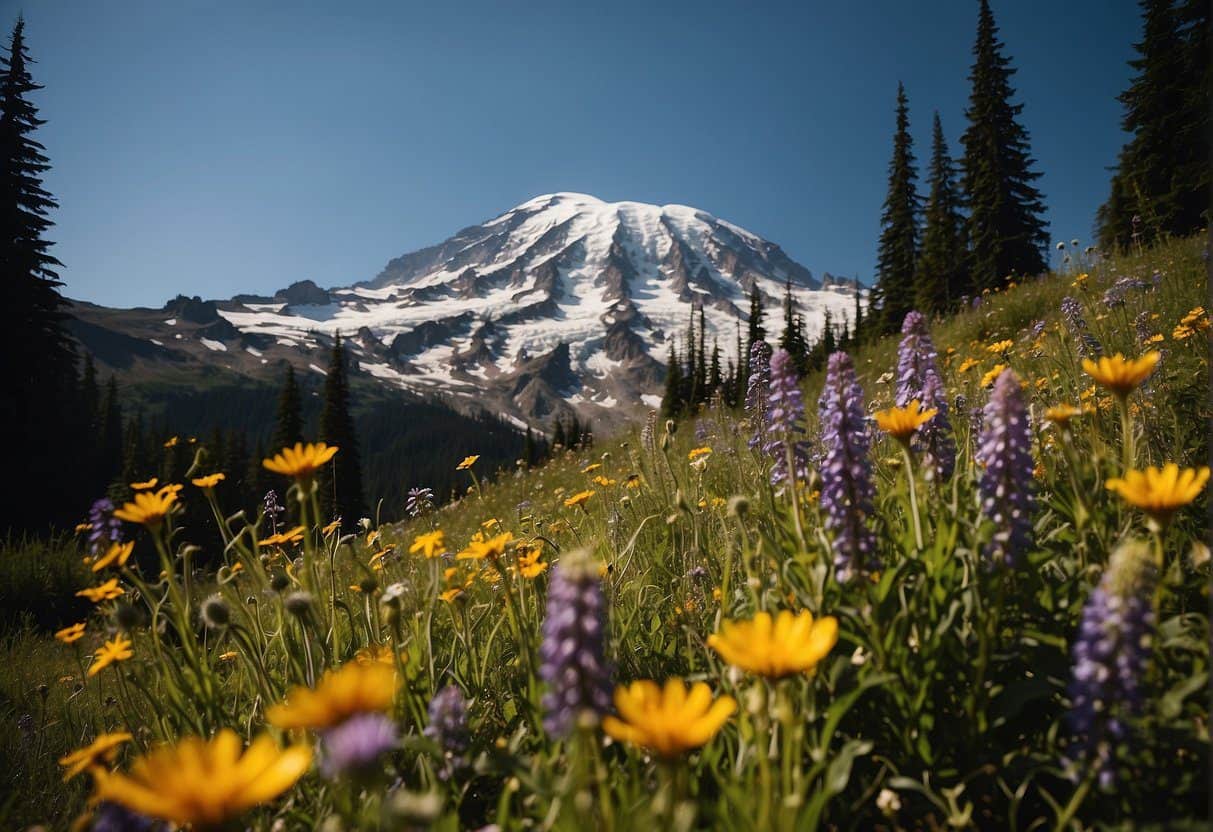
Mount Rainier National Park is home to a diverse array of wildflowers, with hundreds of species found within the park. These wildflowers bloom for a limited amount of time each year, making their appearance a special treat for visitors. Here are some of the wildflower varieties you can expect to see during your visit to Mount Rainier.
Alpine Meadows
At higher elevations, you’ll find alpine meadows that burst with color during the summer months. Look out for species like lupine, avalanche lilies, and paintbrush. These wildflowers come in a variety of colors, including purple, red, yellow, and blue. The scarlet paintbrush, with its bright red blooms, is a standout in these meadows.
Subalpine Meadows
Subalpine meadows are also home to a variety of wildflowers, many of which can be found alongside patches of snow. Look out for species like pasqueflower, rosy spirea, and broadleaf arnica. The magenta paintbrush is another standout species, with its vibrant pink blooms.
Forest Wildflowers
In the forested areas of Mount Rainier National Park, you’ll find a different variety of wildflowers. Look out for species like Sitka valerian, elephant’s head, and fan-leaf cinquefoil. The cascade aster is a standout species, with its delicate purple blooms. Other forest wildflowers include vanilla leaf, foam flower, and bunchberry.
Overall, Mount Rainier National Park is a paradise for wildflower enthusiasts. With so many species to discover, there’s always something new to see during your visit. Be sure to bring your camera and take plenty of photos to remember your trip.
Top Spots to View Mount Rainier’s Wildflowers
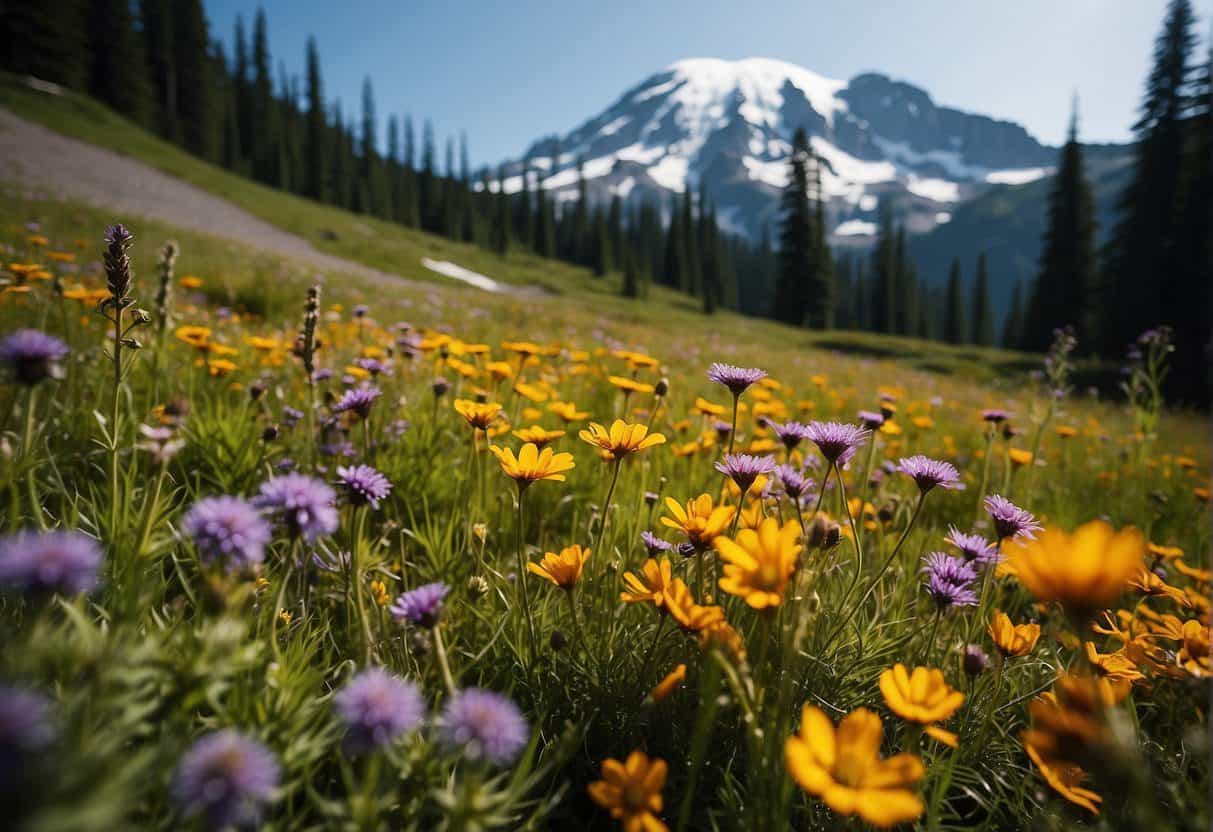
If you’re planning a trip to Mount Rainier National Park during wildflower season, you’re in for a treat. The park boasts some of the most spectacular wildflower displays in the country. Here are the best viewing locations to experience the beauty of the wildflowers up close:
Paradise
Start with the Nisqually Vista Trail, a 1.2-mile paved loop in the Paradise area. It’s a short way to see the meadows without committing to the full Skyline loop. Check the NPS trail conditions; snow can linger on paved paths, too.
Sunrise
At 6,400 feet, Sunrise is the highest point in the park you can reach by vehicle when the road is open. From there, the Emmons Vista and Sourdough Ridge trails are options. Check NPS road status and NPS trail conditions before choosing the route.
Reflection Lakes
Reflection Lakes is a picturesque spot that offers some of the best views of Mount Rainier. The lakes are surrounded by meadows that are covered in wildflowers during the summer months. This is a great spot for photography enthusiasts or anyone who wants to relax and enjoy the beauty of the park.
Berkeley Park
The NPS route to Berkeley Park is about 7 miles round trip with 1,200 feet of gain. From Sunrise, take Sourdough Ridge to Frozen Lake, then follow the Northern Loop Trail into the meadows. Check NPS trail conditions first: the November 2026 park update lists Northern Loop fire closures, including Berkeley Park toward Windy Gap. Don’t plan a through-hike based on an old map.
Tipsoo and Eunice Lakes
Tipsoo Lake is near Chinook Pass and is a much shorter stop than the 3.4-mile Naches Peak Loop. Eunice Lake is on the separate Tolmie Peak route from Mowich Lake. Do not use Tipsoo directions for Eunice; current NPS road status lists no public access to Mowich Lake via SR 165.
Overall, Mount Rainier National Park offers some of the most spectacular wildflower displays in the country. Whether you’re an avid hiker or just looking for a leisurely stroll, there’s a trail in the park that will take you through meadows filled with colorful blooms.
Mount Rainier National Park Wildflowers Blooming Season
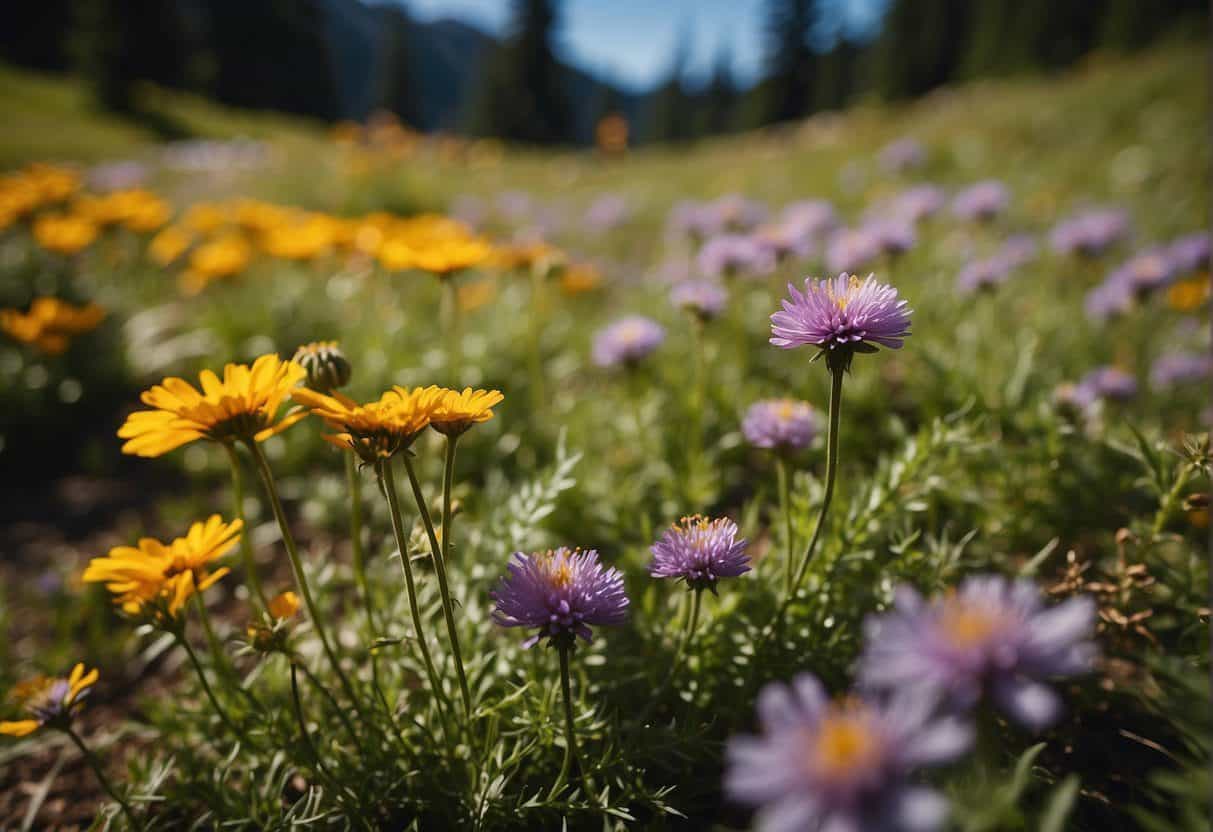
If you’re planning a trip to Mount Rainier National Park, you might be wondering when is the best time to see the wildflowers in bloom. The wildflower season at Mount Rainier is a limited time, so it’s important to plan your visit accordingly.
Early Season
As snow recedes, look for early flowers such as avalanche lilies at the edge of melting patches. Snowmelt and elevation matter more than a date on the calendar. NPS says many subalpine flowers are blooming by mid-July in a typical year.
Peak Bloom
Late July or early August is the usual planning window for the biggest subalpine displays, but peak timing changes with snowpack and weather. Use the NPS wildflower status to pick an area, then check NPS road status before you go.
Late Season
By late summer, some meadows will already have gone to seed while other patches still have flowers. Look for pasqueflower seedheads and note what is blooming on the park’s latest report rather than counting on a particular species.
Overall, the wildflower season at Mount Rainier National Park is a spectacular sight to behold. Whether you visit early in the season or during the peak bloom, you’re sure to be amazed by the beauty of these delicate flowers. So, plan your trip accordingly and make sure to bring your camera to capture the memories!
Wildflower Viewing Trails
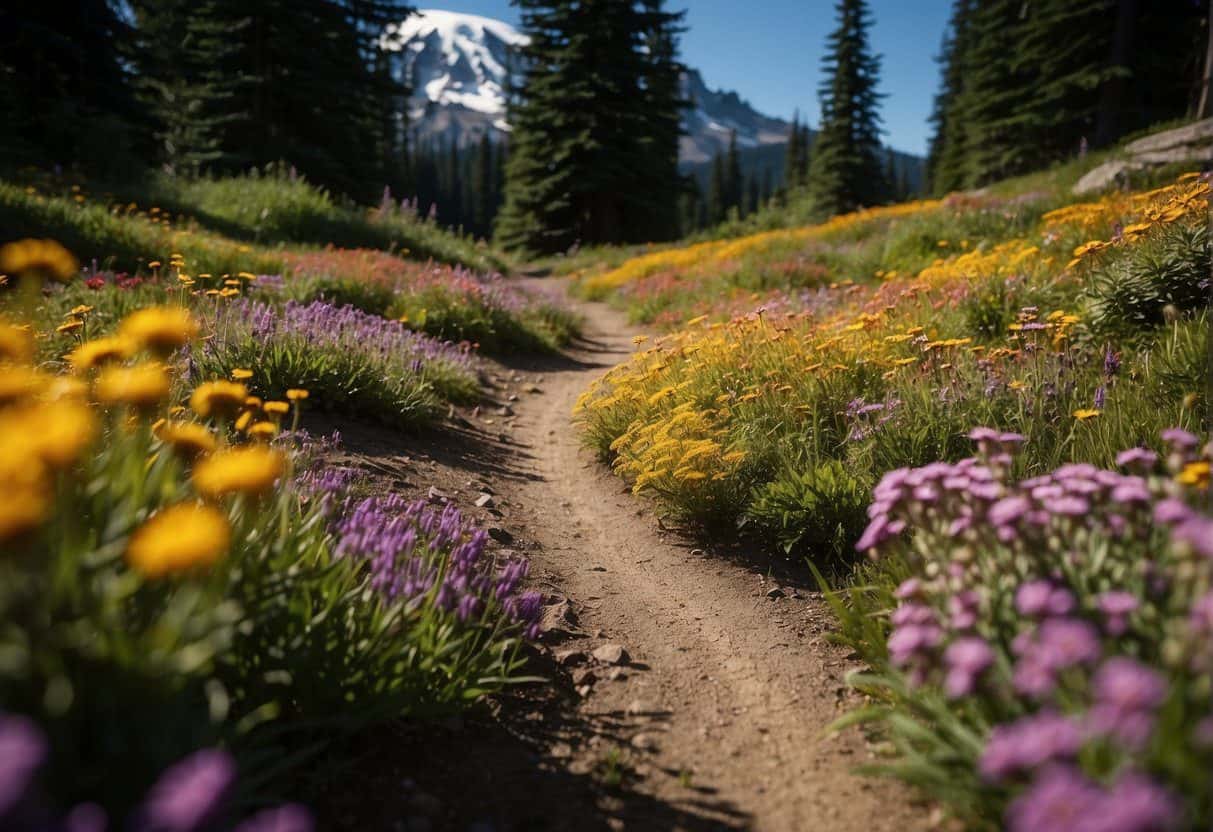
If you’re planning a trip to Mount Rainier National Park, one of the most popular activities is hiking the wildflower trails. There are several trails to choose from, ranging from easy to challenging, each offering unique views of the park’s stunning wildflowers.
Easy Trails
Nisqually Vista is a 1.2-mile paved loop. The NPS day-hike list has mileage and gain for longer routes. Check conditions before assuming a paved trail will be snow-free.
Moderate Trails
The Skyline loop is about 5.5 miles and climbs substantially above Paradise. For a shorter outing, pick one of the lower meadow paths from the NPS map instead of treating Skyline as a casual walk.
Challenging Trails
Spray Park starts at Mowich Lake, where NPS currently reports no public access via SR 165. The Wonderland Trail is a multi-day trip, with separate wilderness permits for overnight stays and fire-related closures; check NPS trail conditions before building either into your plans.
For other options, check the park’s day-hike list and verify access before settling on anything in the Sunrise, White River, or Mowich areas.
No matter which trail you choose, be sure to bring plenty of water, sunscreen, and insect repellent. And don’t forget your camera – you’ll want to capture the stunning views of the park’s wildflowers!
Wildflower Conservation
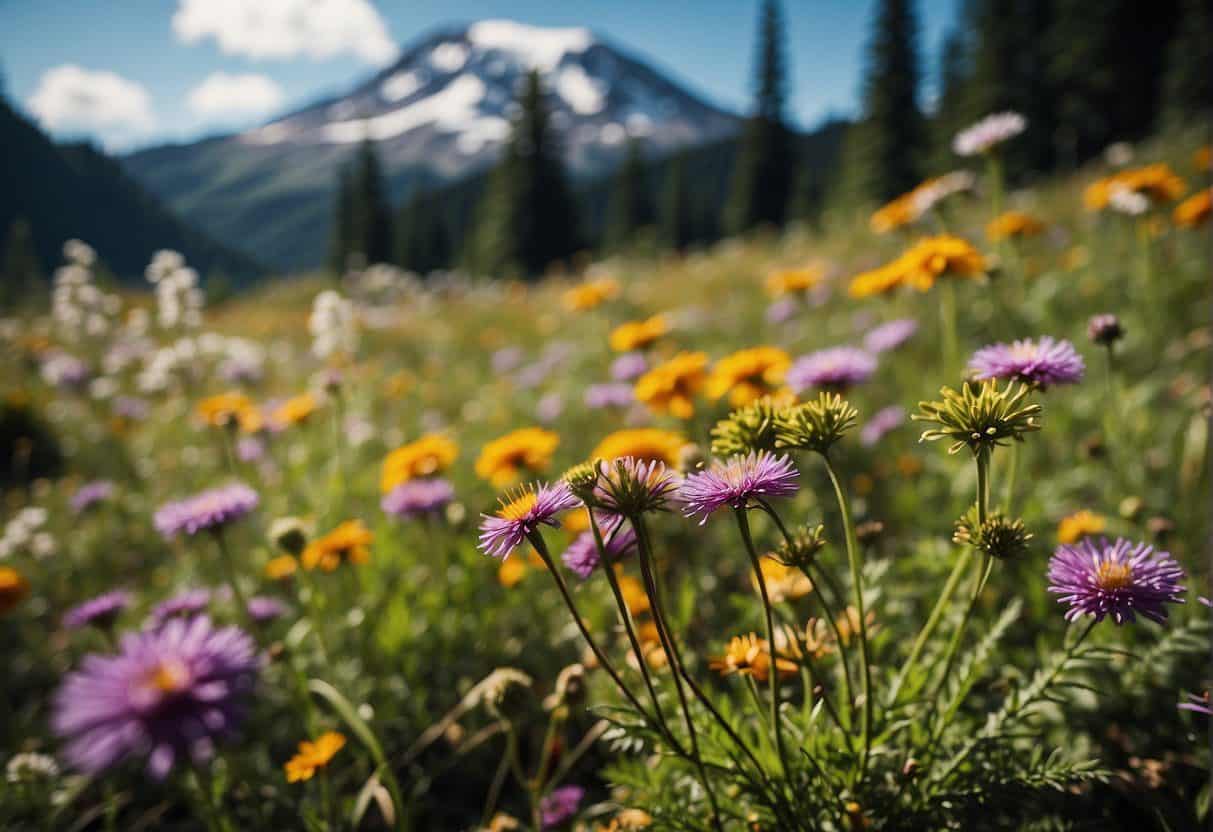
Wildflowers are a vital part of the ecosystem in Mount Rainier National Park. Here are some ways you can help conserve them.
Impact of Climate
Snowpack and weather affect when each meadow flowers. Keep your feet and tripod on the marked trail, even if a better angle is a step into the flowers. Follow posted closures and never cut across meadow vegetation to get around snow or mud.
Visitor Guidelines
When visiting the park, it is important to follow guidelines to help conserve wildflowers. Here are some tips to keep in mind:
- Stay on designated trails to avoid trampling on wildflowers.
- Do not pick or disturb wildflowers.
- Do not use insect repellent on or near wildflowers.
- Avoid visiting during peak season to reduce crowds and impact on the environment.
- Keep dogs on a leash to avoid disturbing wildlife and trampling on wildflowers.
- Be aware of black bears and other wildlife and give them plenty of space.
By following these guidelines, you can help conserve the beautiful wildflowers in Mount Rainier National Park for generations to come.
Visitor Information
If you’re planning a trip to Mount Rainier National Park to see the wildflowers, here’s what you need to know about park access, ranger-led programs, and visitor centers.
Park Access
Plan around the entrance and road for the trail you’re actually hiking. Nisqually is the usual south-side approach to Paradise, but the road above Longmire can close. Check NPS road status and the park’s current entry information.
Ranger-Led Programs
The park offers a variety of ranger-led programs that can help you discover wildflowers in the park. These programs include guided hikes, talks, and workshops. The park also has a Junior Ranger program for kids. Check the park’s website for a schedule of ranger-led programs.
Visitor Centers
The Henry M. Jackson Memorial Visitor Center is at Paradise. The NPS hours page lists seasonal hours for it and other park facilities, including Sunrise.
Overall, Mount Rainier National Park is a great destination for wildflower enthusiasts. With its diverse elevations and ranger-led programs, you can discover a variety of wildflowers in the park. Be sure to visit one of the park’s visitor centers for more information and to plan your trip accordingly.
Photography Tips
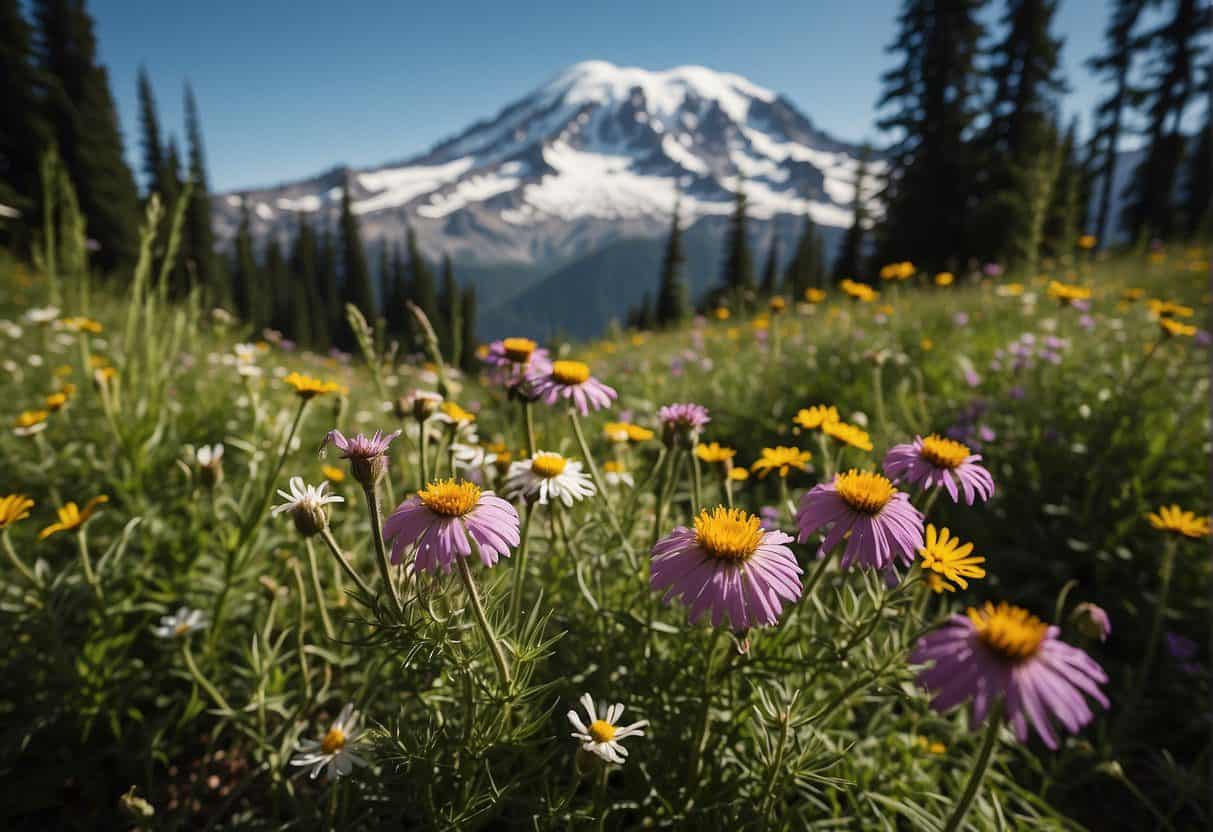
If you’re planning to visit Mount Rainier National Park to capture the beauty of wildflowers, you’ll want to make sure you’re prepared with the right photography techniques. Here are some tips to help you capture stunning photos:
Best Times for Photos
When the flowers are open, use cloud cover as a softbox or go when the light is low. Bring a longer lens if you want closeups without stepping off the trail. Check the NPS wildflower status before choosing a date.
Composition Techniques
When photographing wildflowers, it’s important to use the right composition techniques to create an eye-catching image. Here are some tips to help you compose your shots:
- Use a tripod to keep your camera steady and minimize movement.
- Get down low to capture the flowers from a unique perspective.
- Look for leading lines or patterns in the flowers to create a sense of depth and dimension in your photos.
- Use the rule of thirds to create a balanced composition.
- Incorporate the mountain goat or reflection lakes in the background to add interest and context to your shots.
By following these tips, you’ll be able to capture stunning photos of the wildflowers in Mount Rainier National Park. Remember to always respect the park’s rules and regulations, and leave no trace behind.
Flora and Fauna
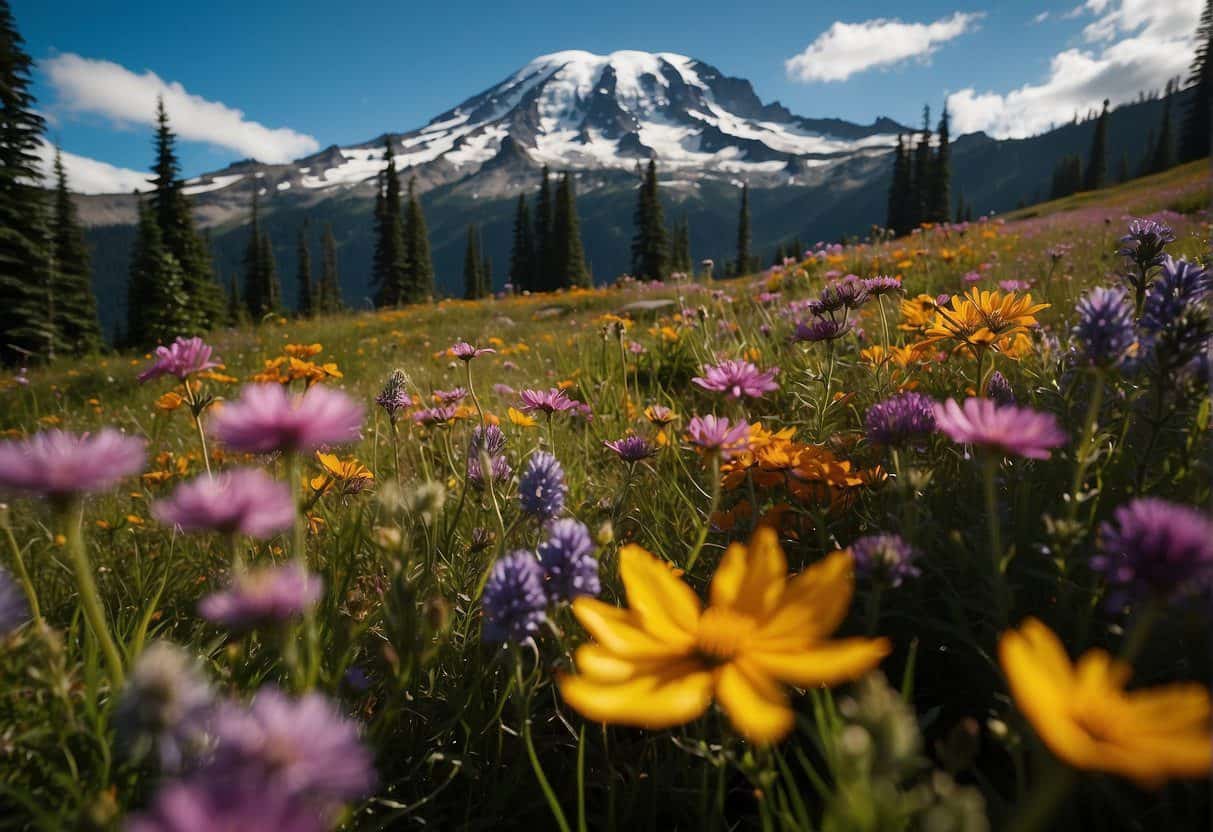
Mount Rainier National Park boasts a diverse range of flora and fauna. From the delicate pink mountain heather to the towering bear grass, the park is home to a variety of plant species that have adapted to the harsh mountain environment.
Wildlife Interactions
The park is also home to a variety of wildlife, including the majestic mountain goat. These animals can often be seen grazing on the lush meadows that surround the mountain. However, it is important to remember that these animals are wild and should not be approached. Always maintain a safe distance and respect their space.
Plant Adaptations
Plants in the park have adapted to the harsh mountain environment in a variety of ways. For example, the mountain heather has developed a deep root system to help it survive in the rocky soil. The pink mountain heather, on the other hand, has adapted to the cold temperatures by growing close to the ground and developing a thick mat of leaves.
The huckleberry is another plant that has adapted to the mountain environment. This plant grows in the understory of the forest and produces delicious berries that are a favorite of both humans and wildlife.
Streams in the park are home to a variety of aquatic plants, such as the foam flower and Cascade Oregon grape. These plants have adapted to the fast-moving water by developing strong roots that can anchor them in place.
Overall, the flora and fauna of Mount Rainier National Park are a testament to the resilience of life in the face of adversity. Whether you are a hiker, a photographer, or simply a nature lover, the park has something to offer everyone. So come and explore the beauty of this unique mountain environment for yourself.
Frequently Asked Questions
When is the peak season to experience the wildflower blooms in Mount Rainier National Park?
Late July or early August is a good starting window. Snowmelt and weather can move the peak, and two parts of the park can look quite different in the same week. Check the NPS wildflower status.
Can you provide a map or guide for the best wildflower hikes in Mount Rainier?
Yes! The park offers a variety of resources to help visitors plan their wildflower hikes. The park’s website has a page dedicated to wildflowers, which includes information on the best trails for viewing blooms. Additionally, the park’s visitor centers offer trail maps and guidebooks that provide detailed information on specific hikes.
How do I identify the different wildflowers I’ll see in the park?
If you’re interested in learning more about the different wildflowers you’ll see in the park, consider bringing a field guide with you on your hike. The park’s visitor centers also offer resources to help visitors identify different plant and flower species.
Which specific wildflowers are commonly found in the Paradise area of Mount Rainier?
The Paradise area of Mount Rainier is known for its stunning displays of wildflowers. Some of the most common species you’ll see in this area include lupine, paintbrush, Indian paintbrush, and avalanche lilies.
What types of plants and flowers are unique to Mount Rainier National Park?
Mount Rainier National Park is home to a wide variety of plant and flower species, many of which are unique to the area. Some of the most notable species include the pink mountain heather, the subalpine buttercup, and the western pasqueflower.
How does the wildflower season at Mount Rainier compare to other national parks?
Rainier’s high meadows tend to flower well after many low-elevation Washington sites. Compare dates by habitat and snowmelt, rather than applying the same calendar across parks.
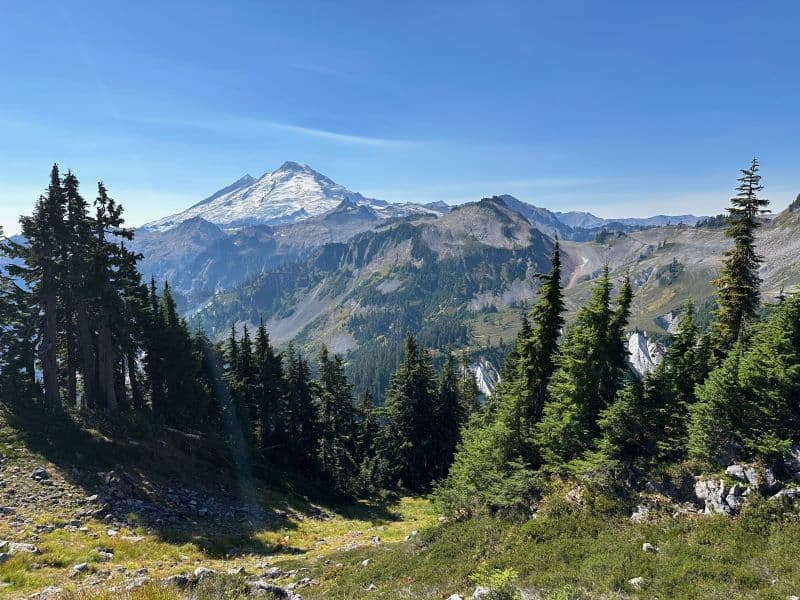
Growing up in the Pacific Northwest, we’ve always felt at home in the outdoors. We created Evergreen Adventures PNW to share our love of hiking, camping, and exploring, and to help others discover the best adventures this region has to offer. Along with trip guides and tips, we also enjoy diving into the science behind the landscapes—thanks to a background in Environmental Science—because understanding nature makes every adventure even more meaningful.