
Identifying a Douglas Fir can be a challenge, especially for those who are not familiar with the tree’s characteristics. Douglas Fir is a common coniferous tree found in North America, and it is known for its tall stature, pyramidal shape, and distinctive cones. If you are wondering how to identify a Douglas Fir, there are several key features to look out for.
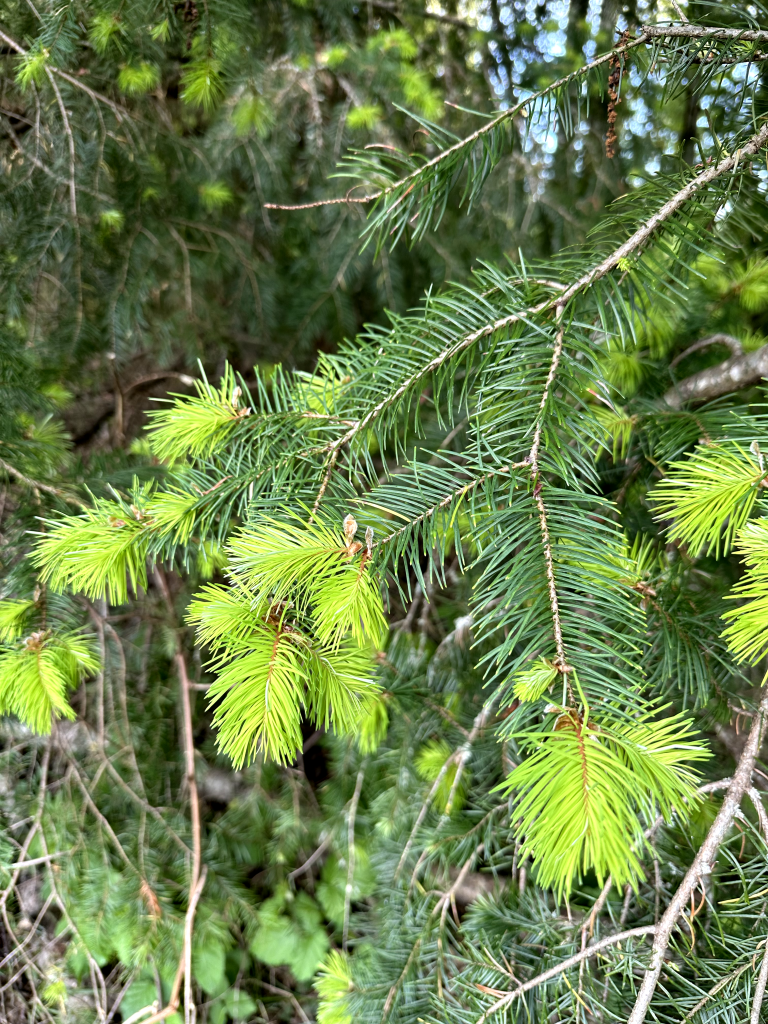
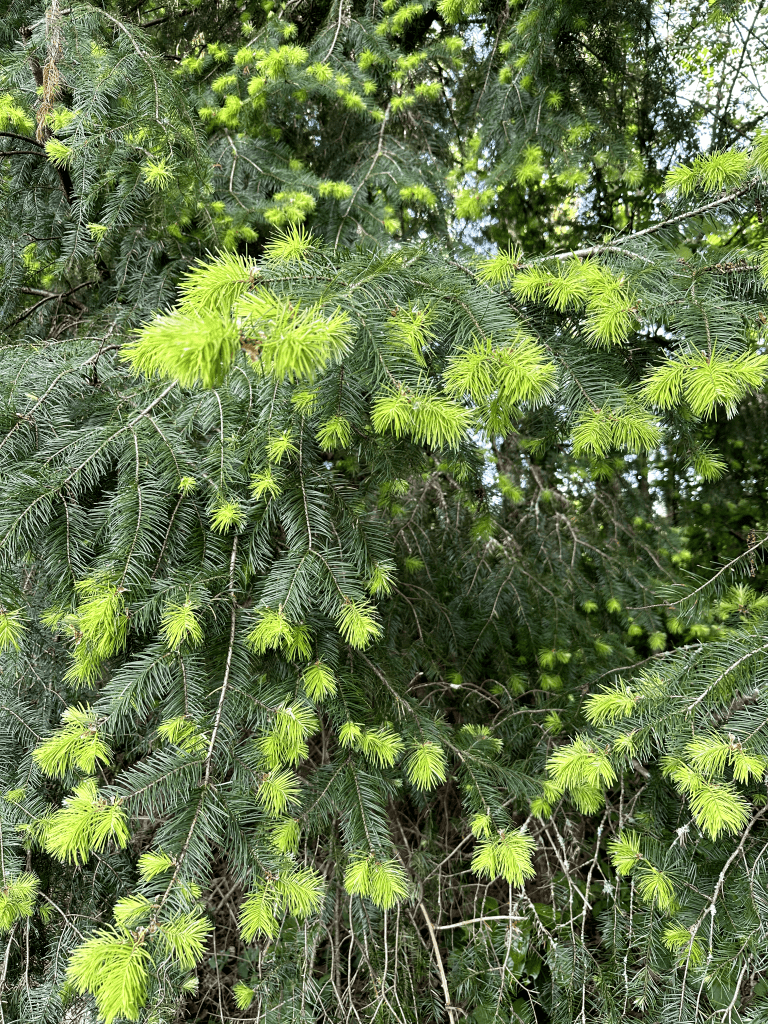
One of the most distinguishing features of a Douglas Fir is its needles. The needles are arranged in a spiral pattern around the branch and are usually about 1 inch long. They are also relatively soft to the touch and have a blue-green color. Another key identifying feature is the tree’s cones, which are large and egg-shaped, with a distinctive three-pointed bract that protrudes from the scales. The cones can be up to 4 inches long and are usually found hanging from the upper branches of the tree.
Identifying a Douglas Fir requires a keen eye for detail and a basic understanding of the tree’s characteristics. By looking for key features such as the needles and cones, you can easily distinguish a Douglas Fir from other coniferous trees. Keep reading for more tips and tricks on how to identify this iconic North American tree.
Key Takeaways
- Douglas Fir needles are soft and blue-green in color, arranged in a spiral pattern around the branch.
- Douglas Fir cones are large and egg-shaped, with a distinctive three-pointed bract that protrudes from the scales.
- To identify a Douglas Fir, look for these key features and compare them to other coniferous trees in the area.
Table of Contents
Douglas Fir Identification: Botanical Insights
Scientific Classification
The Douglas fir (Pseudotsuga menziesii) belongs to the Pinaceae family, a group of conifers that includes pines, spruces, and firs. The genus Pseudotsuga is derived from the Greek words for “false hemlock” and “Douglas fir” is named after botanists Archibald Menzies and David Douglas.
Physical Characteristics
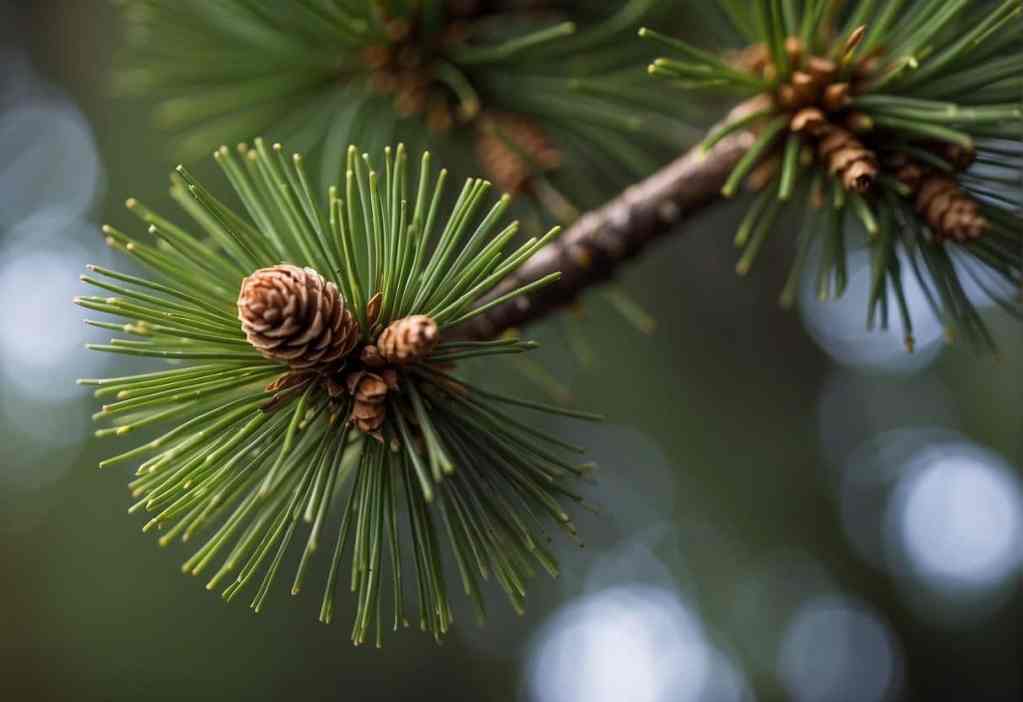
The Douglas fir is an evergreen tree that can grow up to 330 feet tall and 13 feet in diameter. The needles are flat and soft to the touch, measuring between 0.75 to 1.25 inches long with a white line underneath. Unlike true firs, the needles are singly wrapped around the twig and not whorled. The cones are pendulous, measuring between 3 to 4 inches long, and have a unique “mouse tail” protruding from the end.
The Douglas fir is often confused with other firs, such as the grand fir, Pacific silver fir, California red fir, noble fir, and Fraser fir, which belong to the genus Abies. However, the Douglas fir is not a true fir and has distinct differences in its physical characteristics.
The Douglas fir is a unique and majestic tree that stands out among other conifers. By understanding its scientific classification and physical characteristics, you can easily identify this beautiful tree in the wild.
Identifying Douglas Fir: Key Features
If you’re looking to identify a Douglas fir tree, there are several key features to look for. These include its needles, cones, bark, and buds.
Needles
Douglas fir needles are typically blue-green and grow in rows along the branches. They are about 1 inch long and have a blunt tip. Unlike other fir trees, Douglas fir needles are not attached to the branches by suction cups, but rather by a small stem.
Cones
The cones of a Douglas fir tree are also a distinctive feature. They are about 3-4 inches long and have a unique “mouse tail” protruding from the tip. The cones are light brown and have a papery texture. Douglas fir trees produce both male and female cones, with the female cones being larger and more visible.
Bark
The bark of a Douglas fir tree is another helpful identifying feature. It is thick, ridged, and has a reddish-brown color. As the tree ages, the bark becomes darker and more deeply furrowed.
Buds
When identifying a Douglas fir tree, it’s also important to look at the buds. The buds of a Douglas fir tree are round and have a light brown color. They are covered in a resinous material that helps protect them from the cold.
Overall, identifying a Douglas fir tree can be done by looking for these key features. By examining the needles, cones, bark, and buds, you can confidently identify a Douglas fir tree in your area.
Douglas Fir Habitats: Key to Identification
Native Regions
The Douglas fir tree is native to western North America, including coastal regions from California to British Columbia, inland to the Rocky Mountains, and even into Mexico. The tree is commonly found in the Sierra Nevada, Vancouver Island, and drier sites in the Rocky Mountains. It has also been introduced to Europe.
Climatic Zones
The Douglas fir tree thrives in climatic zones 4-6. The tree grows best on well-aerated, deep soils with a pH range from 5 to 6. It will not thrive on poorly drained or compacted soils. The Coast Douglas fir is found in wet, coastal and inland areas, while the Rocky Mountain Douglas fir is found in the Rocky Mountains.
When identifying a Douglas fir, it is important to consider its habitat and range. This tree is a hardy species that can grow in a variety of conditions, but it prefers well-drained soil and a moderate climate. By knowing where the tree is native and what conditions it thrives in, you can better identify it in the wild.
Remember, the Douglas fir is not a true fir, but a member of the genus Pseudotsuga. Its unique characteristics make it a valuable and iconic tree in North America.
Ecology and Identification of Douglas Fir
Wildlife
Douglas fir trees are a crucial component of forest ecosystems, providing habitat and food for a variety of wildlife species. The most notable of these is the red tree vole, which is dependent on the Douglas fir for its survival. The tree vole feeds on the tree’s needles and bark and creates its nests in the branches. Other species that rely on the Douglas fir include elk, deer, and black bears, which feed on the tree’s needles and buds.
Forest Dynamics
The Douglas fir plays a vital role in forest dynamics, especially in old-growth forests. These trees provide shade and shelter for smaller trees and plants, helping to create a diverse and healthy forest ecosystem. Additionally, Douglas fir forests are home to a variety of plant species that are adapted to the unique conditions found in these forests. These plants include lupines, trilliums, and ferns.
The National Wildlife Federation recognizes the important role that Douglas fir forests play in maintaining healthy ecosystems. They work to protect these forests and the wildlife that depend on them. The federation advocates for sustainable forest management practices that balance the needs of wildlife and the forest industry.
Douglas fir is an essential component of forest ecosystems, providing habitat and food for a variety of wildlife species. These trees play a vital role in forest dynamics, creating diverse and healthy ecosystems. By protecting these forests, we can ensure that future generations can enjoy their ecological benefits.
Douglas Fir Identification in Human Uses
Timber and Construction
Douglas fir is a highly sought-after timber species due to its strength and durability. It is commonly used in construction, particularly for framing, beams, and posts. The wood is also used in the production of plywood, which is commonly used for sheathing, flooring, and roofing.
The lumber produced from Douglas fir is known for its excellent strength-to-weight ratio, making it ideal for use in heavy construction. Its natural resistance to decay and insects makes it a popular choice for outdoor applications such as decks, fences, and retaining walls.
Ornamental Purposes
Douglas fir is also used for ornamental purposes, particularly during the holiday season when it is used as a Christmas tree. The tree’s symmetrical shape and blue-green needles make it a popular choice for this purpose.
In addition to Christmas trees, Douglas fir is also used in the production of wreaths and garlands. Its branches are also used in floral arrangements and as greenery in landscaping.
Overall, Douglas fir is a versatile and highly valued tree species due to its many uses. Its strength, durability, and natural beauty make it a popular choice for a wide range of applications, from construction to holiday decorations.
Douglas Fir Conservation and Management
Threats and Diseases
Douglas fir trees are susceptible to various diseases, including Swiss needle cast and laminated root rot. These diseases can weaken the tree and make it more vulnerable to other stressors. Insects such as bark beetles can also cause damage to Douglas firs, leading to tree mortality.
To mitigate the impact of these threats, it’s important to identify and manage diseased trees promptly. Regular monitoring and treatment can help prevent further spread and protect healthy trees.
Conservation Efforts
Douglas firs are an important timber resource, and their conservation is critical for the sustainability of the industry. The population of these trees is generally stable, but conservation efforts are still necessary to ensure their long-term survival.
Conservation efforts for Douglas firs include reforestation and habitat restoration projects. These initiatives aim to increase the number of Douglas firs and improve the quality of their habitat. Additionally, sustainable forestry practices can help maintain healthy populations of Douglas firs while minimizing the impact on the environment.
Overall, effective conservation and management strategies are necessary to protect Douglas firs from threats and ensure their continued survival. By identifying and addressing issues promptly, we can help maintain healthy populations of these valuable trees for future generations.
Cultural and Historical Aspects
The Douglas fir is named after Scottish botanist David Douglas, who first documented the tree in the late 18th century. The tree was later named in honor of David Douglas by the British botanist Archibald Menzies. The tree is native to western North America and is also found in Europe.
The Douglas fir has a long history of being used as a Christmas tree. The tree’s dense foliage and symmetrical shape make it the perfect choice for holiday decorations. In fact, the Douglas fir is one of the most popular Christmas tree species in the United States.
Aside from its use as a Christmas tree, the Douglas fir has been an important timber tree for centuries. Its strong wood has been used in boats, aircraft, and construction. The tree has also been used for medicinal purposes by indigenous peoples in North America.
Overall, the Douglas fir is an important tree with a rich cultural and historical significance. Its versatility and beauty make it a valued species for both practical and decorative purposes.
Douglas Fir vs. Others: ID Comparisons
Douglas Fir vs. Other Firs
To distinguish Douglas Fir from other firs, look for the needles. Douglas Fir needles are singly wrapped around the twig and are between .75 to 1.25 inches long. They have a white line underneath. True firs have upturned needles that are not whorled.
The Rocky Mountain Douglas Fir has needles that are .5 to 1.5 inches long, and are bluish-green in color. The Grand Fir’s needles are between 1 to 1.5 inches long, and are shiny green on top with two white stripes underneath. The White Fir’s needles are between 1 to 1.5 inches long and are bluish-green in color.
Douglas Fir vs. Pines and Spruces
To differentiate Douglas Fir from pine and spruce trees, look for the needles. Pine needles grow in clusters of 2-5, while spruce needles grow individually. Douglas Fir needles are singly wrapped around the twig and are between .75 to 1.25 inches long.
The Pacific Silver Fir has needles that are between .5 to 1.5 inches long, and are blue-green in color. The California Red Fir has needles that are between 1 to 1.5 inches long, and are green on top with two white stripes underneath. The Noble Fir’s needles are between .75 to 1.5 inches long, and are blue-green in color.
To identify a Douglas Fir, look for singly wrapped needles that are between .75 to 1.25 inches long with a white line underneath. Differentiate from other firs by noting the needle direction and whorling. Differentiate from pines and spruces by noting the needle clusters.
Douglas Fir: Advanced Identification Tips
Identifying a Douglas Fir is easy if you know what to look for. Here are some tips and tricks to help you identify this evergreen tree:
Needles: Douglas Fir needles are soft to the touch and are typically between 0.75 to 1.25 inches long. They are blue-green in color and have a white line underneath. Unlike true firs, the needles are singly wrapped around the twig and not whorled.
Cones: Douglas Fir cones are unique in shape, with a distinctive “mouse tail” protruding from the end. They are typically between 3 to 4 inches long and have a reddish-brown color.
Bark: Douglas Fir bark is thick, corky, and has a grayish-brown color. It has deep grooves that run vertically up and down the trunk, and the bark is often covered in resin blisters.
When identifying a Douglas Fir, it is important to note that it is not a true fir and belongs to a separate genus.
Propagation and Growth
Seed Germination
To propagate Douglas Fir, collect cones in late summer or early fall. Extract seeds from cones and stratify them for 30-60 days. Sow seeds in spring in well-draining soil. Keep the soil moist and provide partial shade until seedlings are established.
Growth Patterns
Douglas Fir is an evergreen conifer with an upright, narrow crown that becomes cylindrical with age. It grows up to 70-240 feet tall and has rigid, erect branches with upturned tips. Needles are whorled and linear-shaped, with entire margins (smooth).
Douglas Fir prefers well-drained soils and full sun. It is a fast-growing tree, adding 1-2 feet of height per year. It is also long-lived, with some trees living up to 1,000 years.
To ensure proper growth, provide adequate space for the tree to grow and avoid planting it near structures or power lines. Prune the tree to remove dead or damaged branches and promote healthy growth.
Propagating Douglas Fir involves collecting cones, stratifying seeds, and sowing them in well-draining soil. Douglas Fir is an evergreen conifer with an upright, narrow crown and whorled, linear-shaped needles. It prefers well-drained soils and full sun and can grow up to 70-240 feet tall. To ensure proper growth, provide adequate space and prune as needed.
Frequently Asked Questions
What are the distinguishing characteristics of Douglas fir bark?
Douglas fir bark is thick, scaly, and dark brown with deep furrows. Young trees have smooth, gray bark that turns brownish-red as they mature.
How can one differentiate between Douglas fir and hemlock trees?
The easiest way to differentiate between Douglas fir and hemlock trees is to look at the needles. Douglas fir needles are stiff and pointy, while hemlock needles are soft and feathery.
What does a typical Douglas fir cone look like?
A typical Douglas fir cone is about 3-4 inches long and has a distinctive “mouse tail” protruding from the end of each scale.
Can you describe the appearance of Douglas fir needles for identification?
Douglas fir needles are about 1 inch long, bluish-green, and grow in two rows on opposite sides of the twig. They are stiff and pointy with a sharp tip.
What features should I look for to identify a Douglas fir in California?
In California, Douglas fir trees are typically found in the Sierra Nevada and coastal ranges. Look for a tree with a conical shape, thick scaly bark, and needles that are bluish-green and pointy.
What are the visual markers of a mature Douglas fir tree?
A mature Douglas fir tree can grow up to 330 feet tall and have a trunk diameter of up to 6 feet. The crown is conical, and the branches are spreading and slightly drooping. The bark is thick, scaly, and dark brown with deep furrows.

Growing up in the Pacific Northwest, we’ve always felt at home in the outdoors. We created Evergreen Adventures PNW to share our love of hiking, camping, and exploring, and to help others discover the best adventures this region has to offer. Along with trip guides and tips, we also enjoy diving into the science behind the landscapes—thanks to a background in Environmental Science—because understanding nature makes every adventure even more meaningful.