
If you’re looking to identify a big-leaf maple tree (Acer macrophyllum), there are a few key features to look for. Bigleaf maples are the largest of all maple species and can grow up to 100 feet tall with a trunk diameter of up to 4 feet. The bigleaf maple leaves are the largest of any maple in Canada, measuring 15 to 30 centimeters across.
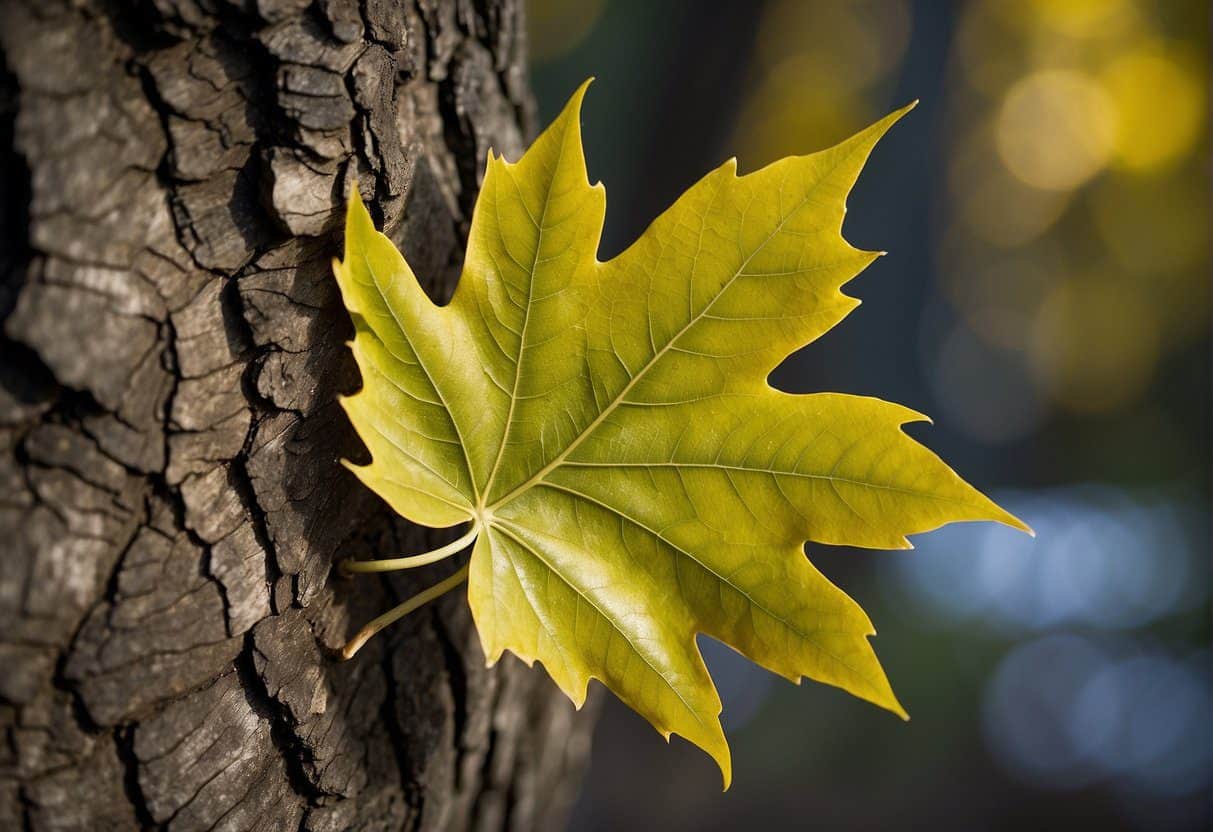
One of the most identifiable features of a bigleaf maple tree is its leaves. The leaves are large, lobed, and palm-shaped, with five primary lobes. They are bright green in color and slightly rough in texture. The bark of the tree is grayish-brown and shallowly grooved when the tree is older.
If you’re still unsure whether you’ve correctly identified a bigleaf maple, there are a few additional features to look for. Bigleaf maples grow best in USDA zones 5-9 and are commonly found in moist, low-elevation forests. They are also monoecious in nature, meaning they grow male and female flowers on the same tree. By keeping these features in mind, you should be able to confidently identify a bigleaf maple tree.
Key Takeaways
- Bigleaf maples are the largest of all maple species and can grow up to 100 feet tall.
- The bigleaf maple leaves are the largest of any maple in Canada, measuring 15 to 30 centimeters across.
- Bigleaf maples grow best in USDA zones 5-9 and are commonly found in moist, low-elevation forests.
Table of Contents
Big Leaf Maple Identification
Bigleaf maple (Acer macrophyllum) is a deciduous tree native to the Pacific Northwest. It is known for its large, lobed leaves and distinctive bark. Here are some characteristics to help you identify this species.
Leaf Characteristics
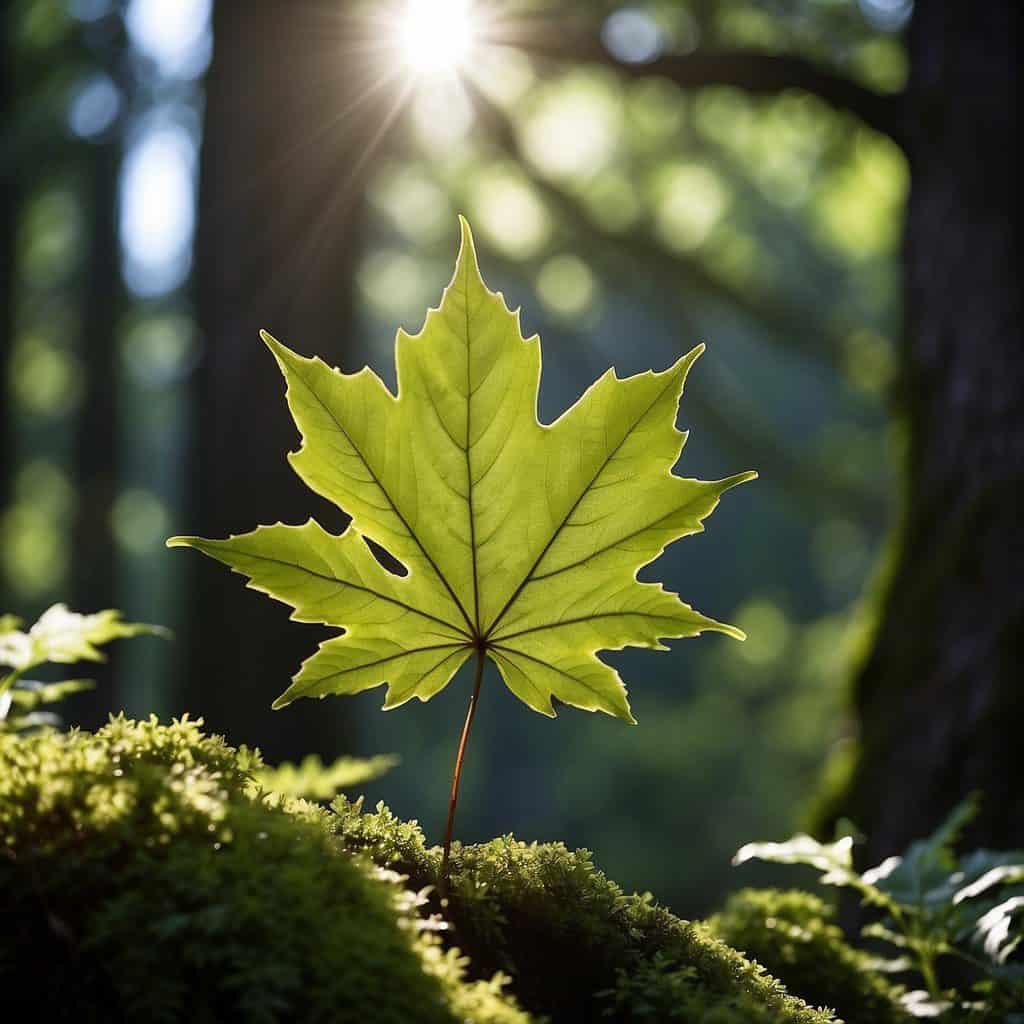
Bigleaf maple leaves are large, measuring up to 12 inches in diameter. They have five lobes and a palmate shape, meaning they resemble a hand with fingers spread apart. The leaves are dark green in color and have prominent veins. They grow in an opposite leaf arrangement and have toothed margins.
Tree Form and Size
Bigleaf maple is a deciduous tree that can grow up to 100 feet tall. It has a broad, spreading canopy and a straight trunk. Mature trees have rounded shapes and can be wider than tall. Bigleaf maple is one of the largest maple species and is known for having the largest leaves.
Bark Texture
The bark of bigleaf maple is light gray and has a smooth texture when young. As the tree ages, the bark becomes rough and develops deep furrows. The bark often has patches of mosses and epiphytes growing on it, giving it a distinctive appearance.
Using these characteristics, you can easily identify bigleaf maple. Its large, lobed leaves, broad, spreading canopy, and distinctive bark make it a standout species among maple trees.
Habitat and Distribution
Bigleaf maple (Acer macrophyllum) is a deciduous tree native to the Pacific Northwest region of western North America. It can be found from southern California to Vancouver Island, British Columbia. The tree prefers a temperate climate and can grow up to 100 feet tall with a trunk diameter of up to 4 feet.
Geographic Range
Bigleaf maple grows in the low to middle elevations from San Diego to Vancouver Island. It usually grows from near the Pacific Ocean to a maximum of 186 miles inland. The tree is commonly found in the Pacific Coast region, Sierra Nevada, and western North America.
Climate and Soil
Bigleaf maple prefers a mild, moist climate with temperatures ranging from 50 to 70 degrees Fahrenheit. The tree grows best in well-drained soils rich in organic matter and can tolerate a wide range of soil types, including clay, loam, and sand.
Associated Flora and Fauna
Bigleaf maple is an important habitat for many birds, deer, elk, and small mammals. The tree provides nesting sites and food for many bird species, including woodpeckers, nuthatches, and chickadees. The leaves, seeds, and bark of the tree are consumed by deer, elk, and other herbivores.
Bigleaf maple is a majestic tree that can be identified by its large leaves, distinctive bark, and unique habitat. If you are in the Pacific Northwest region of western North America, keep an eye out for this beautiful tree.
Reproductive Features
Bigleaf maples begin reproducing at approximately 10 years of age. These trees are monoecious, meaning they contain both male and female flowers on the same tree. The flowering season of Bigleaf maples is from April to May, coinciding with the emergence of new leaves.
Flower Description
Bigleaf maple flowers are pendent, yellowish-green clusters known as racemes. These flowers are produced in significant quantities in the spring. The flowers are unique in that they are both male and female, meaning that they can self-pollinate.
Fruit and Seed
After pollination, the Bigleaf maple’s flowers produce a samara fruit. These fruits are double samaras, which means that they have two wings. The wings are broad and flat, 1-2 inches long. The samaras mature in the fall, and the wings help the seed disperse by wind.
The reproductive features of Bigleaf maples are unique. The tree’s monoecious nature and self-pollinating flowers make it an interesting species to study. The samaras produced by the tree are also unique, with their broad and flat wings helping the seed disperse effectively.
Cultural and Economic Importance
Bigleaf maple (Acer macrophyllum) has significant cultural and economic importance in the Pacific Northwest region of North America. The tree is a source of maple syrup, wood for furniture and musical instruments, veneers, interior paneling, and burls. It is also a popular ornamental and landscaping tree, particularly in urban areas, where it is valued for its large size and attractive foliage.
Maple Syrup Production
While sugar maple trees are the primary source of maple syrup, bigleaf maple can also be tapped for sap. However, the sap of bigleaf maple has a lower sugar content than that of sugar maple, which means that it takes more sap to produce the same amount of syrup. As a result, bigleaf maple syrup is less common and more expensive than sugar maple syrup.
Wood Uses
Bigleaf maple wood is prized for its beauty and durability. It is commonly used for furniture, musical instruments, veneers, and interior paneling. The wood is light in color and has a fine, even grain, which makes it ideal for carving and turning. Its strength and stability also make it suitable for structural applications.
Ornamental and Landscaping
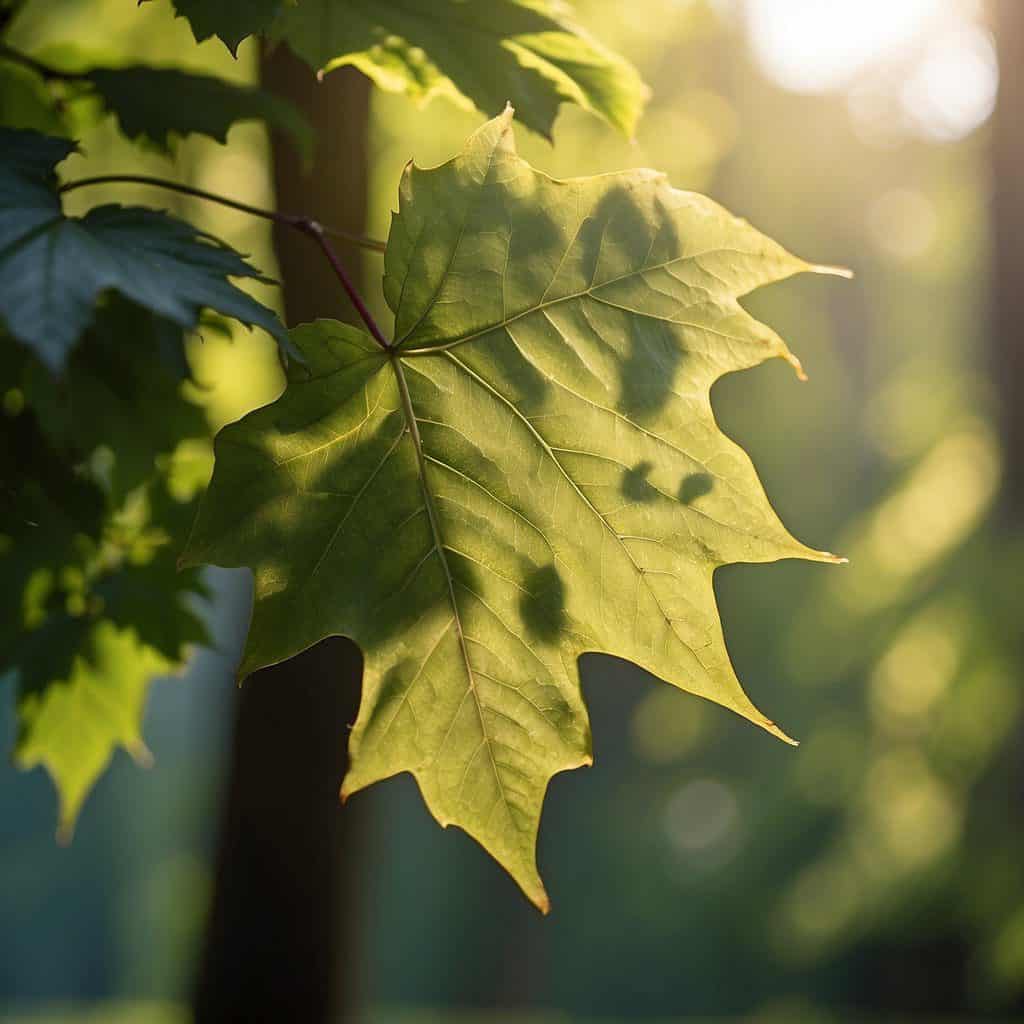
Bigleaf maple is a popular ornamental and landscaping tree, particularly in urban areas. Its large size and attractive foliage make it a desirable shade tree, while its bright yellow fall color adds visual interest to the landscape. It is also a good choice for parks and other public spaces, where its size and beauty can be appreciated by many.
In conclusion, the bigleaf maple is a culturally and economically important tree in the Pacific Northwest region of North America. Its sap can be used to produce maple syrup, while its wood is prized for furniture, musical instruments, and other applications. Additionally, it is a popular ornamental and landscaping tree, valued for its large size and attractive foliage.
Conservation and Management

Threats and Preservation
Bigleaf maple (Acer macrophyllum) is threatened by habitat loss, climate change, and invasive species. Streams and riparian zones are particularly vulnerable to development, logging, and agriculture. Conservation efforts aim to protect these areas from degradation and fragmentation.
Preservation of bigleaf maple is crucial for maintaining biodiversity and ecosystem function. The tree provides habitat for a variety of wildlife, including birds, mammals, and insects. It also stabilizes soil and regulates water flow.
Sustainable Practices
Sustainable management practices can help preserve bigleaf maple populations. Selective logging and restoration of degraded areas can promote healthy growth and maintain genetic diversity. Preservation of large, old-growth trees is especially important, as they provide unique habitat and are less susceptible to disease and climate stress.
Conservation efforts should consider the tree’s root system and elevation preferences. Bigleaf maple has a shallow, spreading root system vulnerable to construction and soil compaction damage. The tree also prefers lower elevations and moist soils, making it sensitive to drought and temperature changes.
In summary, bigleaf maple conservation and management require protecting riparian zones, preserving old-growth trees, and using sustainable logging practices. Consideration of the tree’s root system and elevation preferences is also crucial.
Comparison with Other Maples
Similar Species
When identifying a Big Leaf Maple, it’s important to consider similar species such as the Vine Maple, Japanese Maple, Sycamore, and Douglas Maple. While these species share some similarities with the Big Leaf Maple, there are key differences to look out for.
The Vine Maple, for example, has smaller leaves and a more delicate appearance, while the Japanese Maple has a distinct leaf shape and is often used in ornamental gardens. The Sycamore, found in Asia, has leaves similar in shape to the Big Leaf Maple but much larger. The Douglas Maple, also known as Acer glabrum, has leaves similar in shape to the Big Leaf Maple but much smaller.
Maple Species Variations
There are many species of Maple, each with unique characteristics. Some of the most well-known Maple species include the Sugar Maple, Red Maple, Black Maple, Norway Maple, and Silver Maple.
The Sugar Maple is known for its distinctive leaf shape and is often used as a symbol on the Canadian flag. The Red Maple has a reddish tint to its leaves and is commonly found in the eastern United States. The Black Maple is similar in appearance to the Sugar Maple but has a darker bark. The Norway Maple, originally from Europe, has a distinctive leaf shape and is often used in urban landscaping. The Silver Maple has a distinctively silver underside to its leaves.
When identifying a Big Leaf Maple, it’s important to compare its leaves and bark to those of other Maple species to ensure accurate identification. By paying close attention to each species’ unique characteristics, you can easily identify and distinguish the Big Leaf Maple from other Maple species.
Frequently Asked Questions
What are the distinguishing characteristics of Big Leaf Maple leaves?
Big Leaf Maple leaves are large, reaching up to 12 inches in width and length. They are palm-shaped, with five lobes and deep notches between them. The leaves have a bright green color and a smooth texture, with veins that are prominent on the underside.
In which regions can Big Leaf Maple trees typically be found?
Big Leaf Maple trees are native to the Pacific Northwest region of North America, including British Columbia, Washington, Oregon, and California. They can also be found in other parts of the world, including Europe and Asia.
What is the scientific name of the Big Leaf Maple?
The scientific name for Big Leaf Maple is Acer macrophyllum. It belongs to the family Sapindaceae.
What are some common uses for Big Leaf Maple?
Big Leaf Maple wood is commonly used for furniture, flooring, and musical instruments. The sap can also be used to make syrup, and the leaves are used for decoration.
How can I differentiate Big Leaf Maple bark from other maples?
The bark of the Big Leaf Maple is grayish-brown and smooth when young, becoming furrowed and ridged with age. It is distinct from other maples in that it has a more pronounced texture and a flaky appearance.
How does the Big Leaf Maple compare to hard maple in terms of wood properties?
Big Leaf Maple is softer and less dense than hard maple, making it easier to work with. It has a warm, reddish-brown color and a distinctive grain pattern that gives it a unique appearance. Hard maple, on the other hand, is harder and denser, making it more durable and better suited for heavy use.

Growing up in the Pacific Northwest, we’ve always felt at home in the outdoors. We created Evergreen Adventures PNW to share our love of hiking, camping, and exploring, and to help others discover the best adventures this region has to offer. Along with trip guides and tips, we also enjoy diving into the science behind the landscapes—thanks to a background in Environmental Science—because understanding nature makes every adventure even more meaningful.