
Identifying a paper birch tree can be a fun and rewarding experience for nature enthusiasts. Paper birch, also known as Betula papyrifera, is a popular deciduous tree that is native to northern North America. Its striking white bark and delicate leaves make it a beautiful addition to any landscape. Here are some tips to help you identify a paper birch tree.
Identifying Characteristics of Paper Birch
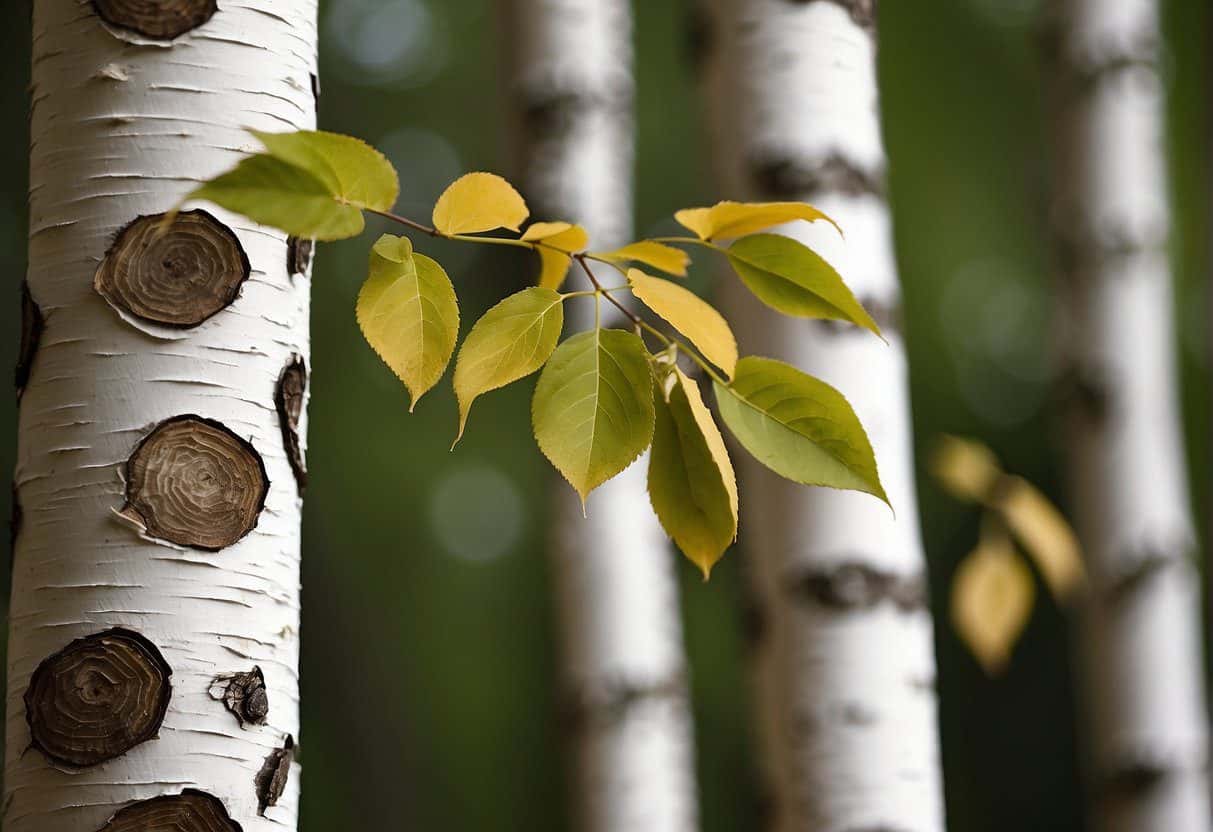
The paper birch tree has a distinctive white bark that peels off in thin layers, resembling paper. Its leaves are simple, alternate, and oval-shaped with serrated edges. The tree can grow up to 70 feet tall and has a narrow, conical crown. The bark of a young paper birch is reddish-brown, but it gradually turns white as the tree ages.
Habitat and Natural Range
Paper birch trees are commonly found in northern North America, including Canada and Alaska. They prefer moist, well-drained soils and can grow in a wide range of habitats, from swamps and bogs to upland forests. Paper birch trees are often one of the first species to colonize a burned area, making them important for moose browsing.
Key Takeaways
- Paper birch trees have a distinctive white bark that peels off in thin layers.
- They are commonly found in northern North America and prefer moist, well-drained soils.
- Paper birch trees are often one of the first species to colonize a burned area.
Table of Contents
Paper Birch Identification and Characteristics
If you’re looking to identify a paper birch tree, there are a few key characteristics to keep in mind. These include the bark features, leaf description, and distinctive catkins.
Bark Features
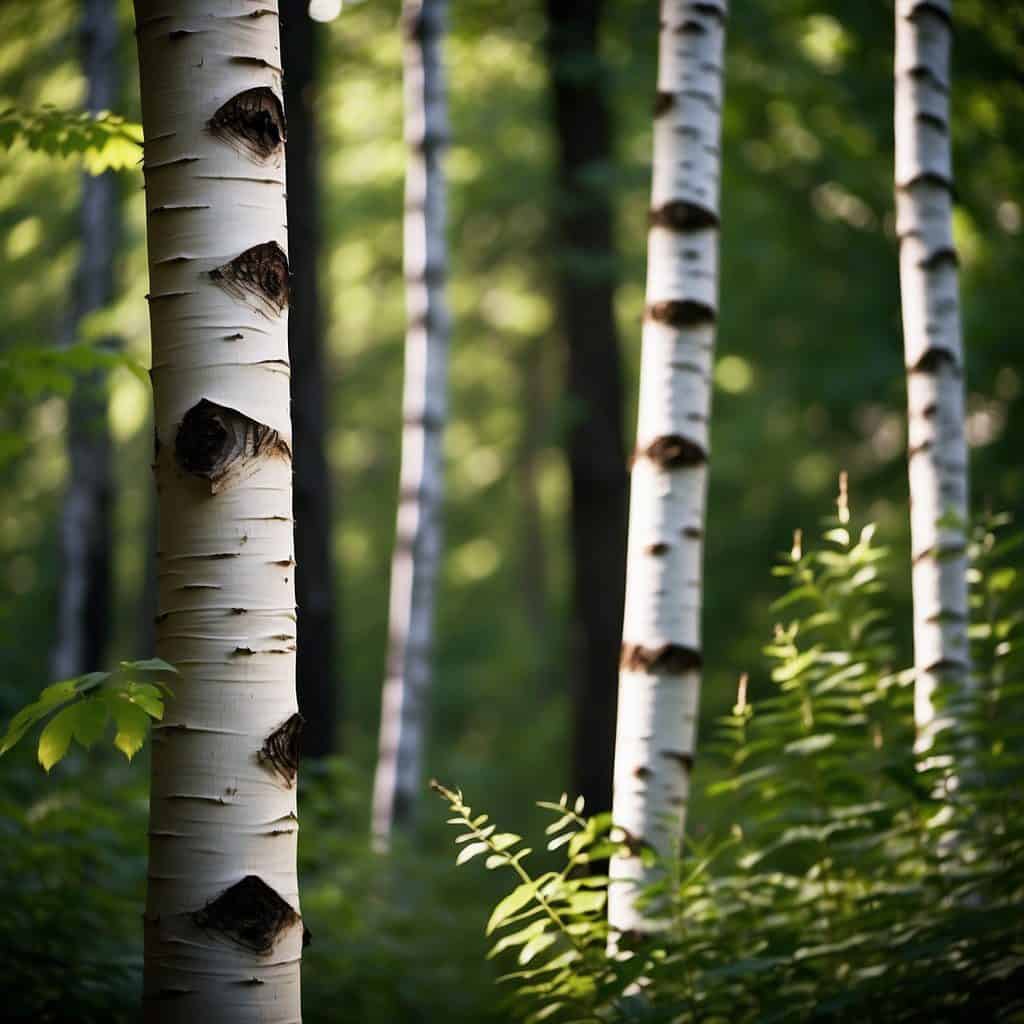
One of the most distinctive features of paper birch trees is their white bark. This bark is thin and papery, often peeling off in layers. The bark may also have black lenticels, which are small, raised pores that allow the tree to breathe.
Leaf Description
Paper birch leaves are dark green and have serrated edges. They are ovate in shape, meaning they are wider at the base and taper to a point at the top. The leaves are typically 2-4 inches long and 1-3 inches wide.
Distinctive Catkins
Paper birch trees produce cylindrical catkins, which are clusters of male and female flowers. The male catkins are longer and more slender than the female flowers. The female flowers are located at the base of the male catkins and are often hidden by the male flowers.
When identifying a paper birch tree, it’s important to note that it may be confused with other birch species, such as the white birch, canoe birch, silver birch, river birch, and yellow birch. However, by paying attention to the bark, leaves, and catkins, you can accurately identify a paper birch tree.
Habitat and Natural Range
If you’re looking to identify a paper birch, it’s important to understand its habitat and natural range. Paper birch is native to the more northern areas of the United States and Canada and can be found in forests and other natural areas.
Preferred Climate
Paper birch thrives in cooler climates. It is typically found in areas with long, cold winters and short, cool summers. It prefers a moist climate with moderate to high precipitation.
Soil and Shade Conditions
Paper birch prefers well-drained, sandy loams and can tolerate a range of soil types. It also prefers areas with partial shade, although it can tolerate full sun in cooler climates.
When identifying a paper birch, look for its distinctive white bark, which often peels in paper-like layers from the trunk. Paper birch is often one of the first species to colonize a burned area within the northern latitudes and is an important species for moose browsing.
In summary, paper birch is a medium-sized deciduous tree that thrives in cooler climates with moderate to high levels of precipitation. It prefers well-drained, sandy loams and partial shade and is native to the more northern areas of the United States and Canada.
Ecological Role and Taxonomy
Species Classification
The paper birch, also known as Betula papyrifera, is a deciduous tree and a member of the Betulaceae family. It is the state tree of New Hampshire and is widely distributed throughout North America. The paper birch is a pioneer species that grows in even-aged, pure stands or mixed stands with shade-tolerant conifers.
Role in Ecosystem
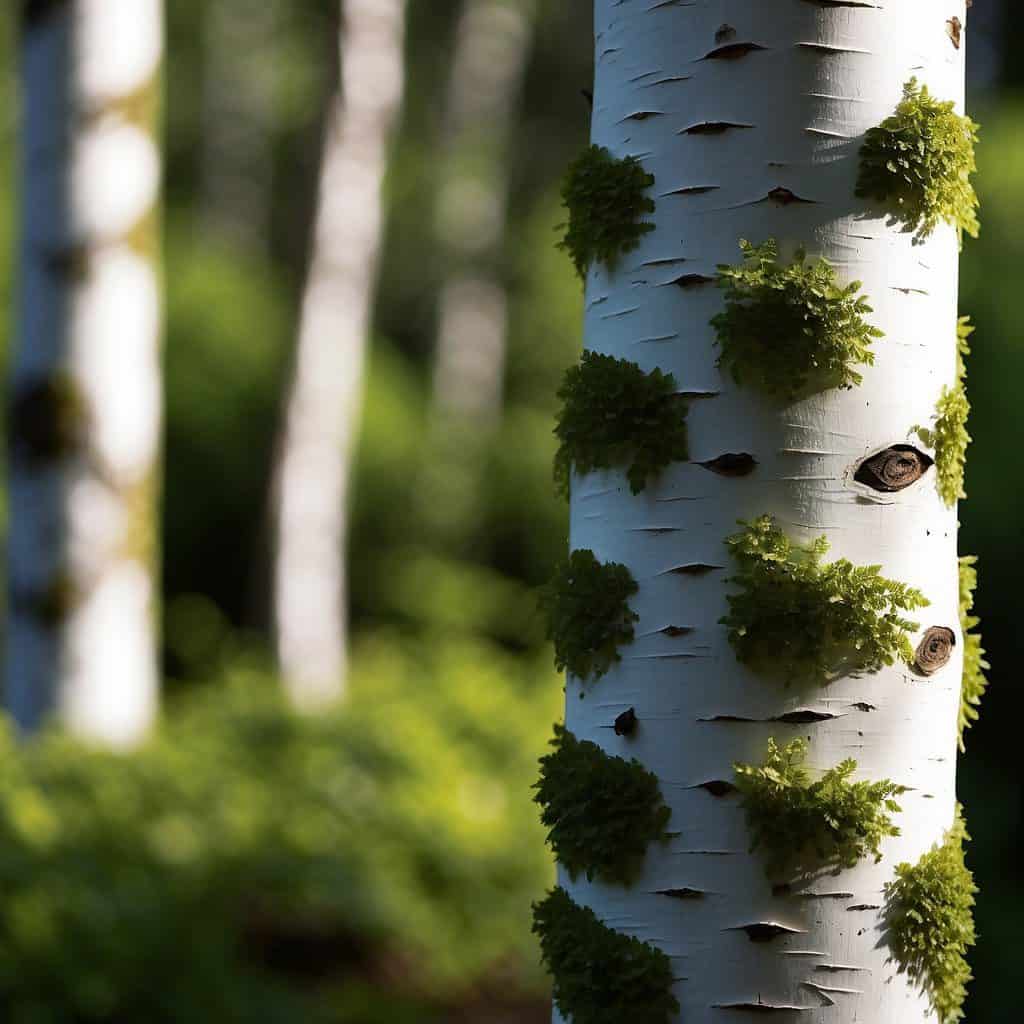
Paper birches play an important ecological role in northern forests. They provide habitat and food for a variety of insects, birds, and small mammals. The bark of the paper birch is unique, as it peels off in thin, paper-like layers. This bark provides shelter for insects and other small animals, while the leaves and twigs of the tree provide food for herbivorous insects.
The taxonomy of paper birch is complex, with three intergrading geographical varieties recognized. The species exhibits considerable ecotypic variation, and its scientific name is Betula papyrifera Marsh.
In summary, the paper birch is a deciduous tree that is a pioneer species in northern forests. Its unique bark and leaves provide habitat and food for a variety of insects and small animals. The species classification of the paper birch is Betula papyrifera, and it is widely distributed throughout North America.
Physical Attributes
When identifying a paper birch, there are a few physical attributes to keep in mind. These include the tree’s size and shape, as well as its branch and twig structure.
Tree Size and Shape
Paper birches can grow up to 60 feet tall but can also be small and shrubby in certain conditions. They have an open crown, which means that the branches are not tightly packed together, allowing light to filter through the canopy. The trunk of a paper birch is typically straight and slender, with a diameter of up to 2 feet.
Branch and Twig Structure
The branches of a paper birch are relatively thin and flexible, and they tend to grow upward. The twigs are slender and brown, with small buds covered in sticky resin. The stems of the leaves are also covered in this resin, which gives them a slightly sticky feel.
When identifying a paper birch, it’s important to note that the bark is a key characteristic. The bark of a paper birch is white and peels off in thin layers, giving the tree its distinctive appearance. This bark is highly ornamental and is often used in landscaping.
Overall, the paper birch is a deciduous tree that is fast-growing but short-lived. Its physical attributes make it easy to identify, and its ornamental value makes it a popular choice for landscaping.
Cultural and Historical Significance
Traditional Uses
The paper birch, also known as Betula papyrifera, has been an important tree for indigenous communities in North America for centuries. The native tree has been used for various traditional purposes, such as building canoes, baskets, and snowshoes. The bark of the paper birch has been used for centuries to make canoes, which were an essential mode of transportation for many native communities.
In addition to canoe building, the bark of the paper birch has been used to make baskets and containers for storing food and other items. The tree’s leaves and twigs have also been used to make teas and natural remedies for various ailments. The tree also has cultural significance, as it has been used in traditional ceremonies and as a symbol of strength and resilience.
Symbolism and Heritage
The paper birch has a rich cultural and historical significance, as many indigenous communities have used it for centuries. The tree symbolizes strength, resilience, and adaptability, as it can thrive in a variety of environments. It has also been used as a symbol of heritage, as it is one of the most common birch species in North America.
The tree has been used in various ways in popular culture, such as in making birch beer, a popular soft drink made from the sap of the tree. The paper birch has also been featured in literature and art, as it is known for its striking white bark, which has inspired many artists and writers.
In conclusion, the paper birch is a significant tree with a rich cultural and historical heritage. It has been used for various traditional purposes and has cultural significance for many indigenous communities in North America. The tree has also been used in popular culture and has inspired many artists and writers.
Challenges and Threats
Pests and Diseases
Identifying paper birch trees is not the only challenge. They are susceptible to pests such as borers and leaf miners. Additionally, canker and chlorosis are common diseases that can affect paper birch trees. These pests and diseases can weaken the tree and make it more vulnerable to other environmental stresses.
One of the most significant threats to paper birch trees is the bronze birch borer (BBB). This pest can cause significant damage to the tree, leading to its decline and eventual death. However, some paper birch varieties, such as the Renaissance Reflection, are resistant to BBB.
Environmental Stresses
Paper birch trees are also vulnerable to environmental stresses like polluted conditions and drought. These stresses can cause the tree to become weak and more susceptible to pests and diseases.
Another significant threat to paper birch trees is fire. While they are not highly flammable, fire can damage or kill them. This is especially true for younger trees with thinner bark that is more susceptible to damage.
To ensure the health of your paper birch tree, it is essential to monitor it for signs of pests and diseases. Providing proper care, such as regular watering and fertilization, can help the tree withstand environmental stresses.
In summary, paper birch trees face various challenges and threats, including pests, diseases, and environmental stresses. By providing proper care and monitoring the tree for signs of distress, you can help ensure its health and longevity.
Practical Uses and Applications
Paper birch trees have a variety of practical uses and applications, making them a versatile choice for both commercial and residential settings. Here are some of the most common uses of paper birch trees:
Wood and Paper Products
Paper birch is a fast-growing cultivar that is widely used for lumber, veneer, plywood, and pulpwood. The wood is light in color and has a fine, even texture, making it ideal for furniture, flooring, cabinets, and other millwork. The species is also a favorite of the wood-turning industry, used to make everything from broom handles and dowels to toys and crafts.
Landscaping and Ornamental Value
Due to its striking white bark and yellow fall color, paper birch is popular for landscaping and ornamental purposes. It is often planted as a shade tree in parks, gardens, and residential areas, where it can provide a beautiful focal point. Paper birch can also be used to create natural screens or windbreaks, and its branches can be pruned to create interesting shapes.
When it comes to paper products, paper birch is commonly used to make popsicle sticks, toothpicks, and other small wooden items. The tree’s bark is also used to make paper, and its leaves and twigs can be used to create natural dyes.
In conclusion, paper birch trees have a wide range of practical uses and applications, from providing shade and ornamental value to producing wood and paper products. Whether you’re looking to add a striking focal point to your garden or need a reliable source of lumber, paper birch is a versatile and valuable choice.
Identification Tips and Techniques
Visual Identification Guide
To identify a paper birch, look for its distinctive white bark that peels in paper-like layers from the trunk. The bark can also have a coppery-grey tint. The paper birch is a medium-sized deciduous tree that grows up to 4 inches in diameter. Its foliage is dark green in the summer and turns yellow in the fall. The tree has low-arching branches in a small, open crown.
Seasonal Changes
In the winter, the paper birch can be identified by its white bark, which stands out against the snow. Its branches are slender, and its twigs are brown and hairy. The buds are small and pointed. In the spring, the tree produces small, greenish-yellow, wind-pollinated flowers. The leaves emerge shortly after the flowers and are oval-shaped with a pointed tip. In the fall, the leaves turn yellow before dropping off.
The paper birch provides a habitat for small mammals and birds, and its sap is a source of food for sapsuckers. To identify birch trees, look for their unique white bark and foliage. Use this visual identification guide and pay attention to seasonal changes to accurately identify a paper birch.
Frequently Asked Questions
What are the distinguishing characteristics of paper birch leaves?
Paper birch leaves are simple, alternate, and ovate in shape. They have a pointed tip and are doubly serrated along the margins. The leaves are 2 to 4 inches long and 1.5 to 3 inches wide, with a dark green color on top and a lighter green color on the underside.
How can one differentiate paper birch bark from other birch species?
Paper birch bark is white, with horizontal lenticels that are raised and elongated. The bark peels off in thin, papery layers. Other birch species have bark that is darker in color and does not peel as easily.
What are the visual differences between white and paper birch trees?
White birch and paper birch are the same species. “white birch” is often used to refer to paper birch trees with completely white bark. Paper birch trees can have white bark with black markings or black bark with white markings.
What unique features should I look for to identify a paper birch tree?
In addition to its distinctive bark, paper birch trees have slender branches that grow upward and slightly outward. The tree’s canopy is narrow and conical in shape, and its leaves turn bright yellow in the fall.
How does paper birch bark change with the tree’s age?
As paper birch trees age, their bark becomes thicker and develops black markings. The bark may also become rougher and less papery.
What are the common uses for white birch wood?
White birch wood is used for a variety of purposes, including furniture, plywood, and paper pulp. It also makes baskets, toys, and other decorative items. The wood is lightweight and easy to work with, making it a popular choice for many applications.

Growing up in the Pacific Northwest, we’ve always felt at home in the outdoors. We created Evergreen Adventures PNW to share our love of hiking, camping, and exploring, and to help others discover the best adventures this region has to offer. Along with trip guides and tips, we also enjoy diving into the science behind the landscapes—thanks to a background in Environmental Science—because understanding nature makes every adventure even more meaningful.