
So, what is lichen? Lichen, a remarkable and often overlooked organism, is not actually a single organism but a symbiotic association between a fungus and an alga or cyanobacterium.
The fungus provides a protective structure and absorbs water and minerals from the environment, while the alga or cyanobacterium provides food through photosynthesis. This symbiotic partnership enables them to survive in environments where neither the fungus nor the alga or cyanobacterium could survive alone.
Lichen is a complex organism with a variety of forms and colors. It can be found all over the world and in a variety of environments, from deserts to rainforests. It also reproduces through fragmentation, where a piece breaks off and grows into a new lichen, or through the production of spores. The spores are dispersed by wind or water and can grow into a new lichen when they land on a suitable surface.
In ecosystems, lichen plays a crucial role. It is a source of food for many animals, including reindeer, caribou, and some insects. It also helps to stabilize soil and prevent erosion. It can absorb pollutants from the air and water, making it a valuable indicator of environmental health.
Key Takeaways
- Symbiotic association between a fungus and an alga or cyanobacterium.
- It reproduces through fragmentation or the production of spores.
- It plays an important role in many ecosystems and can absorb pollutants from the environment.
Table of Contents
What is Lichen?
Definition and Nature
Lichen is a unique organism that consists of a symbiotic association between fungi and algae or cyanobacteria. The fungi, known as mycobiont, provide a protective environment and mineral nutrients to the algae or cyanobacteria, known as photobiont, which in turn provide organic nutrients to the fungi. This mutualism creates a new organism, the lichen, which is capable of surviving in a wide range of environmental conditions.
Components of Lichen
The thallus, or body, is composed of three main layers: the cortex, medulla, and photobiont layer. The cortex is the outermost layer that provides protection. The medulla is the middle layer that provides support and storage of water and minerals. The photobiont layer is the innermost layer that houses the algae or cyanobacteria.
Main Growth Forms
There are three main growth forms: crustose, foliose, and fruticose. Crustose grows flat against the substrate, foliose has leaf-like structures, and fruticose has a branching or hair-like structure. These growth forms allow it to colonize a wide range of substrates, including rocks, soil, tree bark, and man-made structures.
They are fascinating organisms that exhibit a unique symbiotic relationship between fungi and algae or cyanobacteria. Their ability to survive in harsh environmental conditions and colonize a wide range of substrates makes them important pioneers in ecological succession.
Lichen Biology
Symbiotic Relationships
Lichen is a composite organism that arises from a symbiotic association of algae or cyanobacteria and fungi. This association is mutualistic, meaning both organisms benefit from the relationship. The algae or cyanobacteria provide the fungus with photosynthetic products, such as carbon and sugar, while the fungus provides the algae or cyanobacteria with a protected environment and access to nutrients.
Reproduction
Reproduction is unique and can occur asexually or sexually. Asexual reproduction occurs through the production of spores, soredia, or isidia. Spores are produced by the fungus and can germinate into new organisms when they come into contact with a suitable partner. Soredia and isidia are small, vegetative propagules that are produced and can detach to form new individuals.
Sexual reproduction occurs when the fungal component produces specialized structures called apothecia, which contain asci that produce spores. The spores are dispersed and can germinate when they come into contact with a suitable partner.
Photosynthesis and Nutrition
Lichen does not have a waxy cuticle or vascular tissue like plants do. Instead, everything in the environment is absorbed into the structure of the organism. The algae or cyanobacteria are responsible for photosynthesis, producing organic compounds that are used by both organisms for nutrition. The fungus component is responsible for absorbing and storing water and minerals from the environment.
Lichen is a unique organism that arises from a symbiotic association of algae or cyanobacteria and fungi. This association is mutualistic, and reproduction can occur asexually or sexually. It does not have a waxy cuticle or vascular tissue as plants do, and instead, everything in the organism’s environment is absorbed into the structure.
Lichen Ecology
Habitats and Distribution
These ecosystem pioneers, thriving in diverse habitats from deserts to rainforests, are found worldwide. They grow on various substrates, such as rocks, bark, and trees, and are particularly abundant in areas with low nutrient availability. They are distributed worldwide, and their distribution is influenced by environmental factors such as temperature, humidity, and precipitation.
Environmental Indicators
These organisms are sensitive to changes in their environment and can be used as indicators of air quality and climate change. They can absorb pollutants from the air, such as sulfur dioxide and heavy metals, and their health can be affected by acid rain. Monitoring populations of these organisms can provide valuable information about the health of an ecosystem.
Interactions with Wildlife
They are also an important source of food for many animals, including reindeer and caribou. They also provide habitat for small invertebrates, such as mites and springtails. In turn, they can be affected by the grazing and browsing activities of these animals.
They play an important role in the environment and can provide valuable information about ecosystem health. By understanding their ecology and distribution, we can better protect and preserve these fascinating organisms.
Human and Cultural Uses
For centuries, humans have harnessed lichens for various purposes. They have been used in medicine, as dyes, and as a source of food.
Role in Medicine
Lichens have been used in traditional medicine for their antibacterial and anti-inflammatory properties. Cetraria islandica, also known as Icelandic moss, is a lichen that has been used to treat respiratory ailments. Lichens have also been used to produce antibiotics and anti-cancer drugs.
Used as Dye and Food Source
They have also been used as a source of dye for centuries. The purple and blue orchil lichens were used by the Greeks and Romans to create dyes that represented high status. Lichens have also been used as a source of food by indigenous cultures. They are a source of carbohydrates and have been used as a famine food.
Lichen in Science and Research
They have also been used in science and research. Lichenometry is a method of dating geological events based on the size of the organism. They are also commonly used to study air pollution and climate change.
Identification and Classification
Morphological Characteristics
Lichen is a composite organism that arises from algae or cyanobacteria living among filaments of multiple fungi species in a mutualistic relationship. The morphology varies widely, with different species exhibiting different colors, textures, and shapes. They can be crustose, foliose, fruticose, or squamulose, and their thallus is the vegetative body of the organism. The thallus is often the most distinctive feature, and it can be used to identify different species.
Lichen Taxonomy
Taxonomy is part of the subject of fungal classification, and it is based on the fungal partner on which the classification is based. The classification is complex, and it involves the use of common household chemicals and some not-so-common chemicals to test the color reaction of the unique compounds found in the structure of the organism. Lichenologists also use a key to distinguish between species and identify them at the species level.
They belong to two major classes of fungi: Ascomycota and Basidiomycota. The Ascomycota are the most common, and they include the Cladonia and Usnea genera. The Basidiomycota are less common, and they include the genera Dictyonema and Cyphobasidium. They are also classified based on their growth forms, which include crustose, foliose, fruticose, and squamulose.
Conservation and Threats
Threats to Lichen
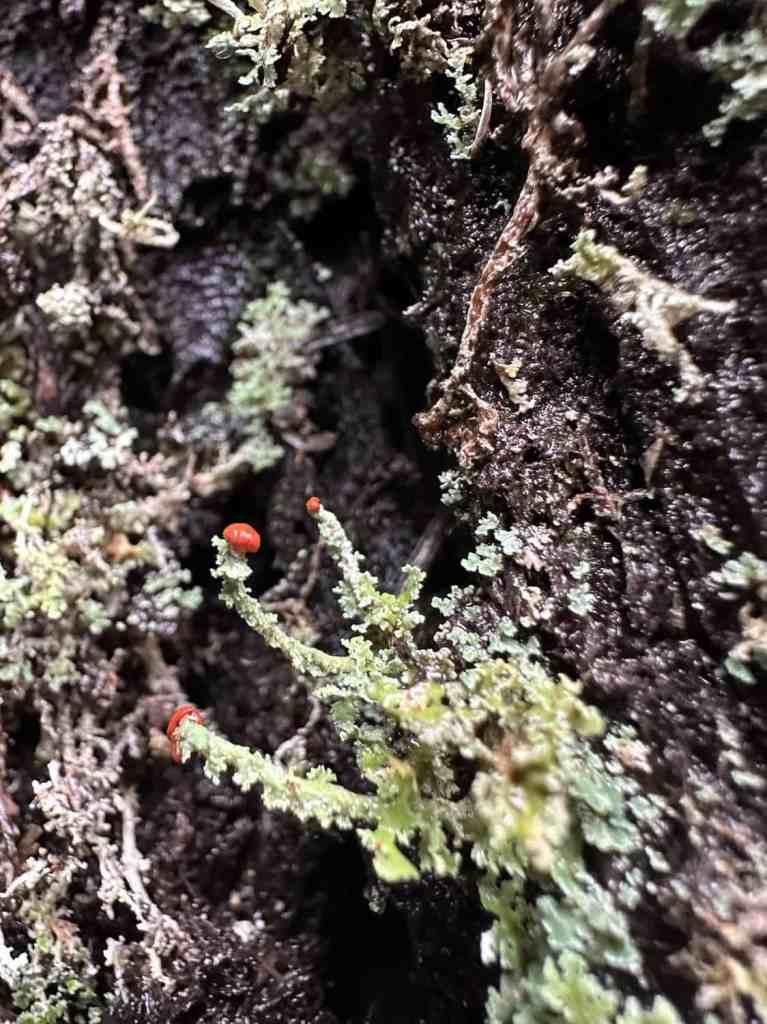
Lichens are highly sensitive to environmental changes and are threatened by habitat loss, pollution, and climate change. Habitat loss is a significant threat to lichens, as they require specific substrates to grow, such as rocks, soil, and trees. Deforestation, urbanization, and mining activities are the primary causes of habitat loss, leading to the decline of lichen populations.
Pollution is another significant threat, particularly air pollution. Lichens are bioindicators of air quality, and their presence or absence can indicate the level of pollution in the environment. Acid rain, sulfur dioxide, and nitrogen oxides are the main pollutants that affect growth and survival.
Climate change is also a significant threat. As temperatures rise, lichen populations may shift to higher elevations or latitudes, where suitable habitats exist. However, some species may not be able to adapt to these changes, leading to their decline or extinction.
Conservation Efforts
Conservation efforts involve protecting their habitats, reducing pollution, and monitoring populations. Protected areas, such as national parks and nature reserves, play a crucial role in conserving lichens by providing suitable habitats for their growth and survival.
Reducing pollution is also essential for conservation. Governments and industries must take measures to reduce air pollution, including the regulation of emissions from factories and vehicles.
Monitoring populations is essential for their conservation. Citizen science initiatives, such as the Lichen Air Quality Monitoring Network, allow volunteers to collect data on populations and air quality, providing valuable information for conservation efforts.
Lichen in Popular Culture
Lichen has been a part of human culture for centuries, appearing in mythology, folklore, literature, and art.
Mythology and Folklore
In many cultures, it was believed to have magical properties. In Norse mythology, they were thought to protect against evil spirits. In some Native American tribes, they were used in healing rituals. It was also associated with longevity and immortality in Chinese folklore.
Lichen in Literature and Art
It has also been featured in literature and art throughout history. In the 19th century, lichen was a popular subject in botanical illustration. It has also been used as a symbol in literature. For example, in the novel “The Scarlet Letter,” Nathaniel Hawthorne uses it as a metaphor for the decay of society.
Join the Conversation
Are you as fascinated by lichens as we are? Share your thoughts and experiences in the comments below, or spread the wonder by sharing this post with fellow nature enthusiasts! Thanks for reading!
Growing up in the Pacific Northwest, we’ve always felt at home in the outdoors. We created Evergreen Adventures PNW to share our love of hiking, camping, and exploring, and to help others discover the best adventures this region has to offer. Along with trip guides and tips, we also enjoy diving into the science behind the landscapes—thanks to a background in Environmental Science—because understanding nature makes every adventure even more meaningful.