
If you’re looking to add a touch of green to your garden, you might want to consider the sword fern. This native North American evergreen plant is popular for gardeners due to its attractive foliage and easy maintenance.
But before you can start growing and caring for sword ferns, you need to know how to identify them.

Identifying sword ferns, also known as Polystichum munitum, is relatively easy once you know what to look for. Large ferns with long, arching fronds can grow up to 4 feet tall and 7 feet wide.
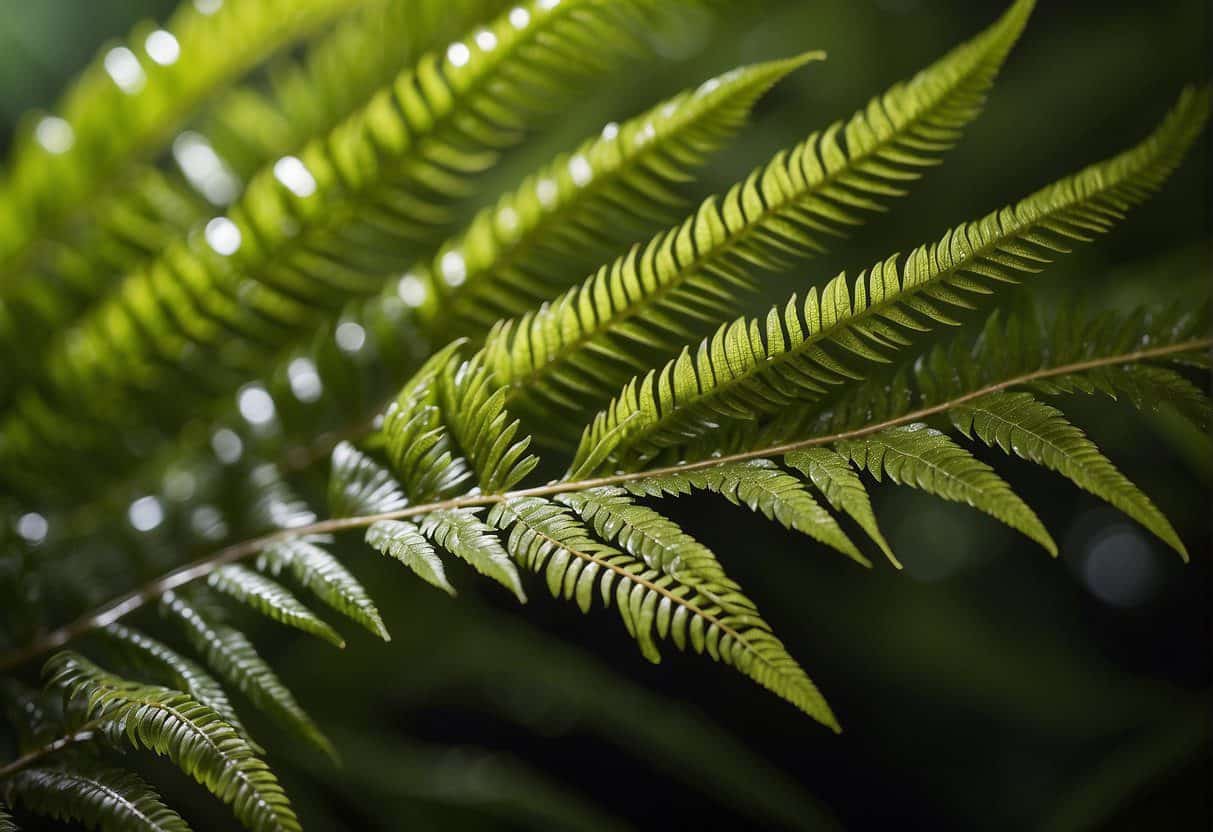
The fronds are bright green and lance-shaped, with toothed edges that resemble a sword, hence the name “sword fern.”
One of the most distinctive features of the sword fern is its spores, which are located on the underside of the fronds and look like small brown dots.
Sword ferns (Polystichum munitum) are a common fern species found in coastal regions of North America. They are popular for their dark green fronds and sword-shaped leaves. Here are some distinctive features, foliage characteristics, and information about sori and spores that can help you identify a sword fern.

Distinctive Features
Sword ferns have a distinctive appearance that sets them apart from other ferns. They have evergreen fronds that grow in a rosette pattern, with each frond reaching up to 5 feet in length.
The fronds are dark green and leathery, with a glossy surface that reflects sunlight. As the fronds mature, they develop a slightly drooping appearance.
Foliage Characteristics
Long, narrow leaves characterize sword ferns’ foliage. Each leaf is divided into smaller leaflets called pinnae, which are toothed along the edges.
The pinnae are arranged in a row along the stem, giving the frond a feather-like appearance. The leaves are also slightly curved, which helps them to shed water more easily.
Sori and Spores
Sword ferns reproduce through spores, which are produced in structures called sori. The sori are located on the underside of the fronds, near the edges of the pinnae.
They appear as small, brownish dots that are arranged in rows. When the spores are mature, they are released into the air and can be carried by the wind to other locations.

Sword ferns are native to the Pacific Northwest region of North America. They are found along the Pacific coast from southeastern Alaska to southern California and also inland east to southeastern British Columbia, northern Idaho, and western Montana. In addition, there are disjunctive populations in northern British Columbia, South Dakota, and Idaho.
Geographical Distribution
Sword ferns are among the most abundant ferns in forested areas of the Pacific Northwest. They grow in conifer forests at low elevations and are widespread throughout them. Sword ferns are also found in a few places in the United Kingdom and Ireland.
Preferred Soil and Shade
Sword ferns prefer moist, well-drained soil rich in organic matter. They prefer partial to full shade and are often found growing under tree canopy.
When planting sword ferns, it is important to prepare the soil by adding organic matter and ensuring that the soil is well-drained. Sword ferns should be planted in a location that receives partial to full shade.

Sword ferns are evergreen ferns that are perfect for growing in full shade. They are relatively low-maintenance plants but still require proper care to thrive. This section will discuss the watering needs, light requirements, and common pests and diseases that you should be aware of when growing sword ferns.
Watering Needs
Sword ferns are drought-resistant plants that do not require much water except during the first year after planting. During this time, they should be kept evenly moist.
After the first year, you can cut back on watering, and the fern will still thrive. Overwatering can cause root rot and other problems, so make sure to water sword ferns only when necessary.
Light Requirements
Sword ferns prefer full shade and will not tolerate direct sunlight. They can grow in a wide range of soil types, but they prefer well-draining soil that is rich in organic matter.
If you’re growing sword ferns indoors, make sure to place them in a location that receives bright, indirect sunlight.
Common Pests and Diseases
Sword ferns are relatively pest-free, but they can still be prey to aphids and other pests. If you notice any signs of infestation, you should treat the plant with an insecticide.
Leaf spot is a common disease that affects sword ferns. It is caused by a fungus that thrives in warm, moist conditions.
To prevent leaf spots, water the fern at the base of the plant and avoid getting the foliage wet. If you notice any signs of leaf spot, remove the affected fronds and treat the plant with a fungicide.
In terms of maintenance, sword ferns are relatively easy to care for. They do not require much pruning, but you can trim back any dead or damaged fronds in the spring.
Fertilizing sword ferns is also important, as it can help ensure healthy growth and vibrant foliage.
You should fertilize your sword ferns once a month during the growing season using a balanced, slow-release fertilizer.
If you’re interested in propagating sword ferns, two main methods are the division of rhizomes and spore cultivation. Both methods can be effective, but they have their own unique requirements.
Division of Rhizomes
To propagate a sword fern through rhizome division, you’ll need to carefully separate the roots and plant them in their own containers. This method is best done in the spring when the fern is actively growing.
First, select a healthy and mature fern. Gently remove it from its pot or the ground and shake off any excess soil.
Look for the rhizomes, which are thick, horizontal stems that grow just below the surface of the soil. Use a sharp, clean knife to cut the rhizomes into sections, making sure each section has a few fronds and healthy roots.
Plant each section in its own container using a well-draining potting mix. Keep the soil moist and place the containers in a bright, indirect light.
You should see new growth emerging from the rhizomes within a few weeks.
Spore Cultivation
Spore cultivation is a more complex method of propagation, but it can be rewarding if done correctly. To propagate sword ferns through spores, you’ll need to collect them and grow them into gametophytes, eventually developing into ferns.
First, collect the spores from mature fronds. Place the fronds in a paper bag and let them dry out for a few days.
Once the spores have fallen off the fronds, carefully collect them using a clean paintbrush or similar tool.
Next, prepare a container with a sterile growing medium. Sow the spores on the surface of the medium and cover them with a clear plastic lid or wrap.
Keep the container in a warm, humid location with bright, indirect light.
Within a few weeks, small green gametophytes should emerge from the spores. As they grow, you can transplant them into their containers and continue caring for them until they develop into mature ferns.

Sword ferns have a rich cultural significance in native cultures, especially in the Pacific Northwest region. This section will explore the historical uses and symbolism of sword ferns in native cultures.
Historical Uses
Native cultures have used sword ferns for various purposes throughout history. For example, the Quileute tribe used sword ferns to make baskets, while the Makah tribe used them to make game traps.
The Klallam tribe used sword ferns as medicine to treat various ailments, and the Squamish and Sechelt tribes used them to make a tea believed to have healing properties.
Symbolism in Native Cultures
Sword ferns are also rich in symbolism in native cultures. They are often associated with endurance, resilience, and a new beginning. This symbolism is likely due to the fact that sword ferns are hardy plants that can withstand harsh conditions and continue to grow and thrive.
In Haida culture, sword ferns are associated with the spirit of the forest and are believed to protect the forest from harm. The ferns are also associated with the concept of balance. They grow in the shade of larger trees and help to maintain a healthy ecosystem.
Landscaping with Sword Ferns
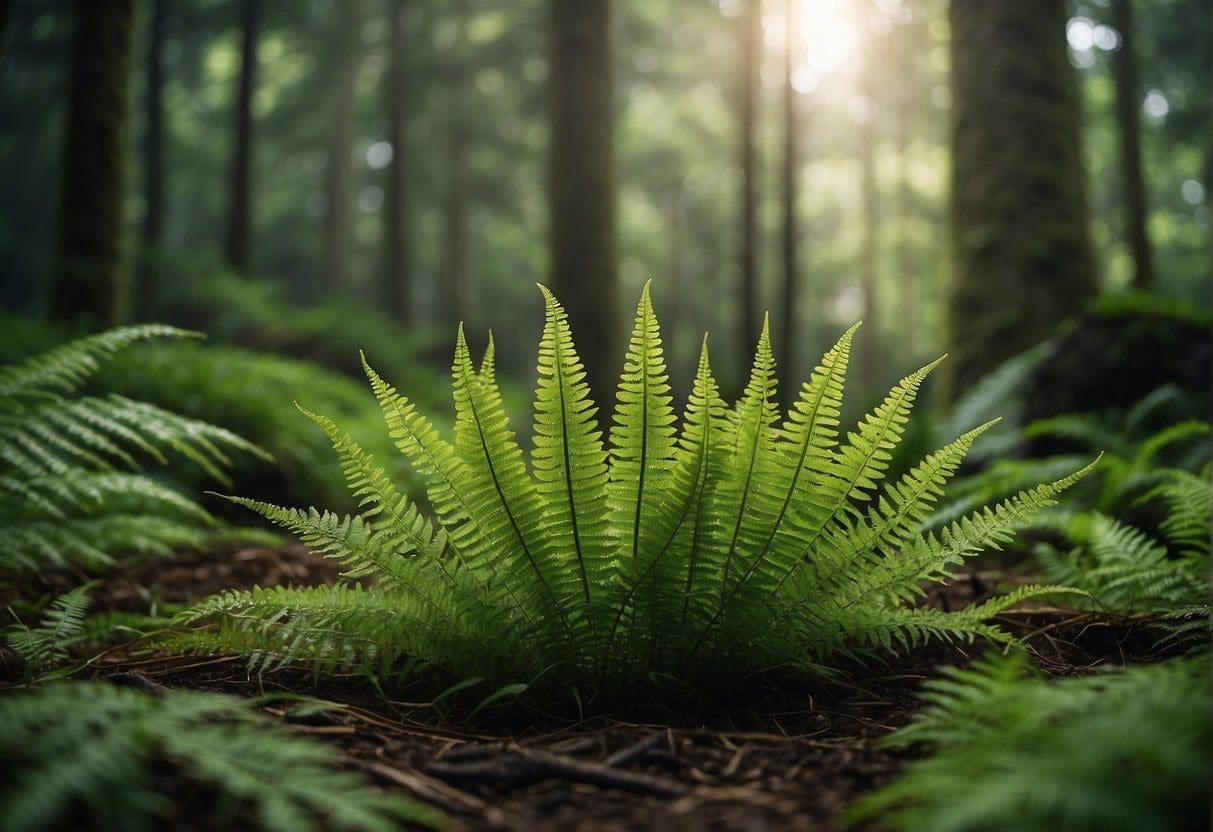
Are you looking to add some greenery to your garden? Sword ferns are a great option for adding texture and interest to your landscape. In this section, we’ll explore companion plants and design ideas that will help you make the most of your sword ferns.
Companion Plants
Sword ferns are a great addition to woodland gardens, providing a lush backdrop for other shade-loving plants. They also work well as a specimen plant, drawing the eye with their striking fronds.
If you’re looking to create borders, consider pairing sword ferns with roses or coral bells for a pop of color. Rhododendrons are another great companion plant for sword ferns, as they both thrive in acidic soil.
Design Ideas
Consider planting sword ferns in a group to create a focal point when incorporating them into your landscape. You can also use them to create a natural-looking border along a path or walkway.
Try planting sword ferns on a slope or hillside to add height and dimension to your garden. Consider planting them in a row or using them to frame a garden bed for a more formal look.
Frequently Asked Questions
What are the distinguishing features to look for when identifying a sword fern?
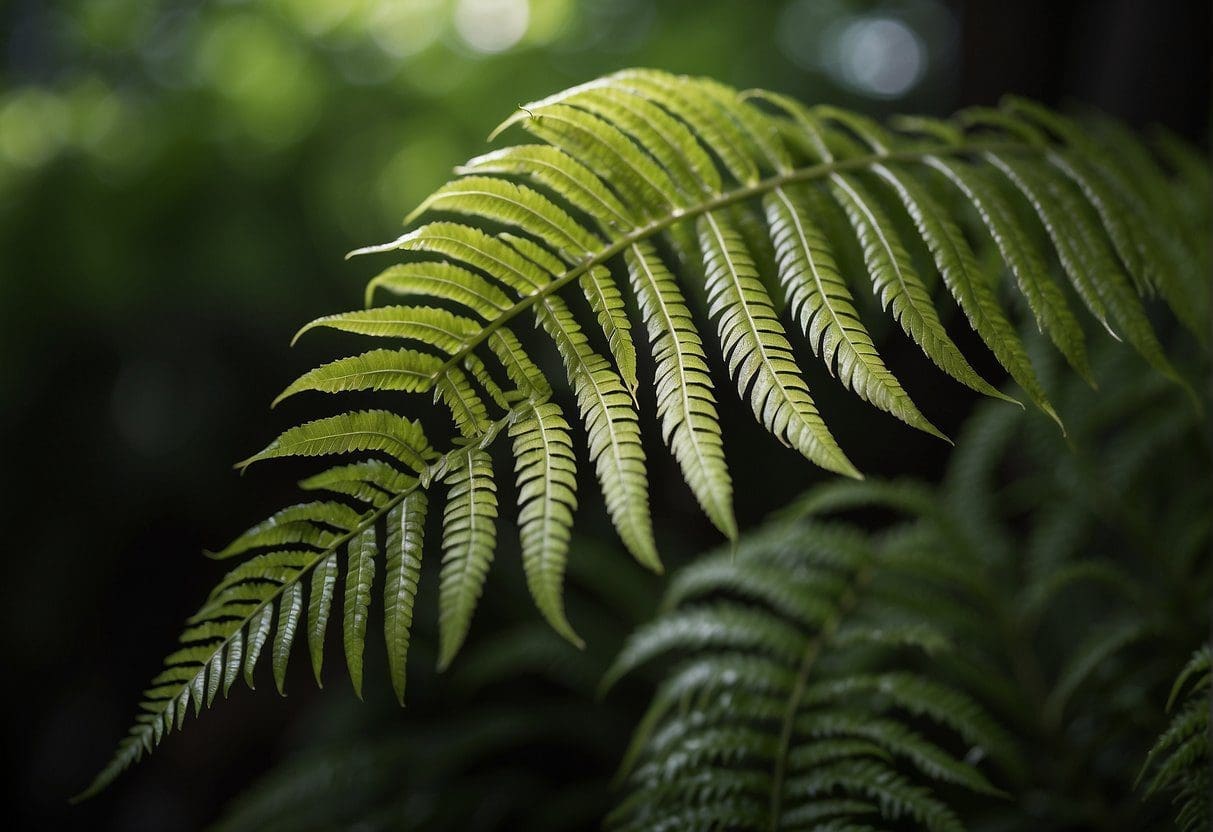
Sword ferns are characterized by their long, narrow fronds that grow in a vase-like shape. The fronds are dark green and leathery, with a glossy sheen on the upper surface. They have a central rib that runs the length of the frond and is covered in small, brown, spiky projections called scales. The scales are a distinguishing feature of sword ferns and are present on both the upper and lower surfaces of the frond.
How can you tell apart a sword fern from a Boston fern?
Sword ferns and Boston ferns can look similar, but there are a few key differences to look for when identifying them. Sword ferns have fronds that grow in a vase-like shape, while Boston ferns have fronds that grow in a more upright, fountain-like shape.
Sword ferns also have scales on the central rib of their fronds, while Boston ferns do not. Sword ferns are typically larger than Boston ferns and have a more robust appearance.
What should you know about the life cycle of a sword fern?
Sword ferns are perennial plants that grow from rhizomes, which are underground stems that produce roots and shoots. They reproduce by spores, which are produced on the undersides of the fronds. The spores are dispersed by wind and can germinate to form new plants.
Sword ferns can live for many years and can grow to be quite large if they have enough space and resources.
Can you list some indigenous uses of sword ferns?
Sword ferns have been used by indigenous peoples for a variety of purposes. The fronds were used for weaving baskets, mats, and other items. The rhizomes were used for food and medicine. The spores were used as a natural dye. Sword ferns were also used in ceremonies and as a symbol of strength and resilience.
Are there any unique characteristics of a giant sword fern?
Giant sword ferns are a subspecies of sword ferns that can grow up to six feet tall. Their large size and robust appearance characterize them. Like other sword ferns, they have long, narrow fronds with scales on the central rib. Giant sword ferns are native to the Pacific Northwest and are often found growing in moist, shady areas.
Is there any toxicity concern regarding sword ferns for humans or pets?
Sword ferns are not toxic to humans or pets. However, the fronds’ scales can irritate the skin if handled roughly.
Additionally, the spores can cause respiratory irritation if inhaled in large quantities.
Always remember to wash your hands after handling plants and to keep them out of reach of pets and children.

Growing up in the Pacific Northwest, we’ve always felt at home in the outdoors. We created Evergreen Adventures PNW to share our love of hiking, camping, and exploring, and to help others discover the best adventures this region has to offer. Along with trip guides and tips, we also enjoy diving into the science behind the landscapes—thanks to a background in Environmental Science—because understanding nature makes every adventure even more meaningful.