
Mount Rainier snowshoeing is an excellent way to experience the beauty of this National Park during the winter. With over 230,000 acres of pristine wilderness, Mount Rainier offers a variety of snowshoeing trails for all skill levels. Whether you’re a beginner or an experienced snowshoer, there’s a trail for you at Mount Rainier.
One of the best things about snowshoeing at Mount Rainier is the opportunity to explore the winter landscape in a way that’s not possible during other seasons. Snowshoes allow you to traverse deep snow and explore areas that are inaccessible by foot. As you snowshoe through the park, you’ll be surrounded by snow-covered trees and stunning views of the mountains.
Before embarking on your snowshoeing adventure, it’s important to understand the basics of snowshoeing and plan your visit accordingly. This includes choosing a trail that’s appropriate for your skill level, checking the weather conditions and road status, and bringing the necessary gear and supplies. By taking these steps, you’ll be able to fully enjoy your snowshoeing experience at Mount Rainier National Park.
Key Takeaways
- Mount Rainier National Park offers a variety of snowshoeing trails for all skill levels.
- Snowshoeing allows you to explore the winter landscape in a unique way.
- Proper planning and preparation are essential for a safe and enjoyable snowshoeing experience.
Jump to a section…
Mount Rainier National Park Overview
If you’re looking for an unforgettable snowshoeing experience, look no further than Mount Rainier National Park. The park, located in Washington State, is home to some of the best trails in the country.
The park is divided into several areas, including Longmire, Paradise, and the Nisqually Entrance. Longmire is the park’s historic district and home to the National Park Inn and Longmire General Store. Paradise is known for its stunning views of the mountain and is a popular destination for snowshoers. The Nisqually Entrance is the park’s southern entrance and provides access to the park’s many trails.
Snowshoeing at Mount Rainier National Park is a great way to experience the park’s natural beauty during the winter months. The park receives abundant snowfall, creating a winter wonderland for visitors to explore.
Whether you’re a beginner or an experienced snowshoer, Mount Rainier National Park has trails for all skill levels. The park offers ranger-led programs and guided walks for visitors of all ages.
Be sure to check the park’s website or call ahead to check current conditions before planning your trip. And don’t forget to pack warm clothing and plenty of water for your snowshoeing adventure.
Understanding Snowshoeing
Choosing the Right Equipment
When snowshoeing, it’s essential to have the right equipment. Invest in snowshoes that fit your weight and the type of terrain you’ll be traversing. Bring the ten essentials, including gloves, sunglasses, and trekking poles.
Snowshoeing Basics
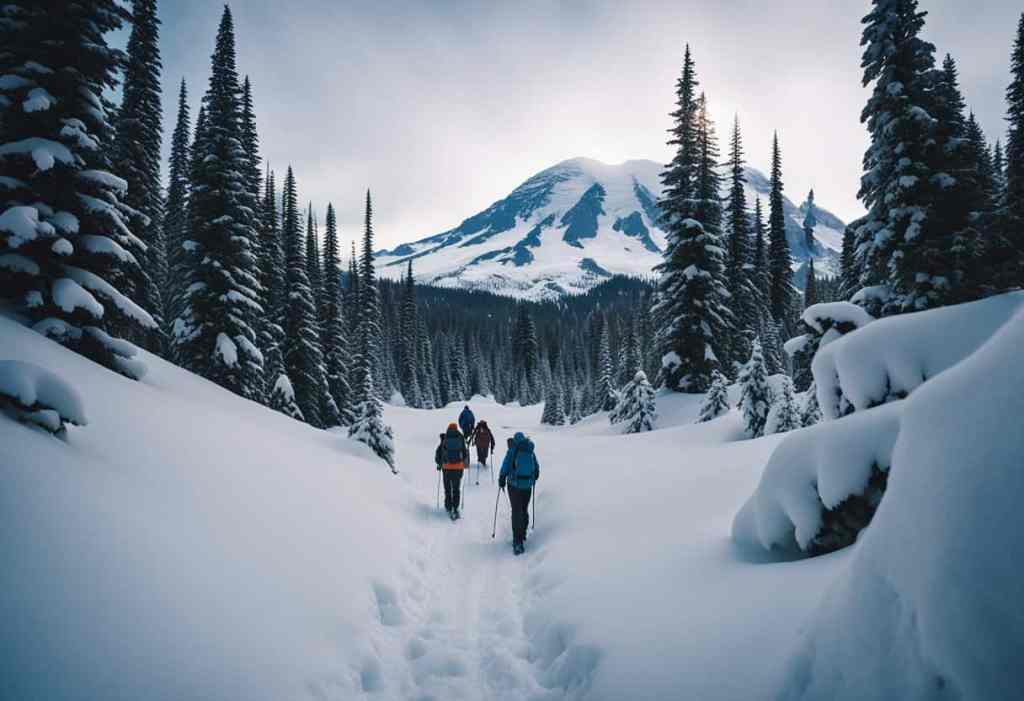
Snowshoeing is a beginner-friendly winter sport that requires little experience. Walk with a wider stance, keeping your balance centered. Move slowly and steadily, lifting your feet higher than usual. Avoid walking on other people’s tracks to prevent postholing.
Safety Measures
Stay safe by following the winter 10 essentials. Check the weather forecast and trail conditions before heading out. Bring extra layers, food, and water. Avoid snowshoeing alone and tell someone your itinerary. Carry a map and compass and know how to use them.
Snowshoeing at Mount Rainier National Park is a popular winter activity, but it requires preparation and knowledge. Choose the right equipment, follow snowshoeing basics, and take safety precautions to ensure a successful and enjoyable trip.
Snowshoeing Trails at Mount Rainier
If you’re looking to explore the winter wonderland of Mount Rainier National Park, snowshoeing is a great way to do it. With abundant snowfall, the park offers plenty of trails for all skill levels.
Paradise Area Trails
The Paradise area is the most popular destination for snowshoeing in the park. The Mazama Ridge trail offers stunning views of Mount Rainier and the surrounding mountains. The trail is intermediate level, and snowshoes can be rented at the Paradise Visitor Center.
Longmire Area Trails
The Longmire area offers several snowshoeing trails, including the Wonderland Trail. You can snowshoe a section of the famous 93-mile trail, which winds around the base of Mount Rainier. The trail is easy and suitable for families.
Mowich Lake Trails
The Mowich Lake area offers several snowshoeing trails, including the Reflection Lakes trail. The trail offers stunning views of Mount Rainier and the Tatoosh Range. The trail is intermediate level and is suitable for experienced snowshoers.
When snowshoeing at Mount Rainier, it’s essential to be prepared for changing weather conditions. Always check the weather forecast before heading out and dress in layers. Bring plenty of water and snacks, and be sure to carry a map and compass.
Snowshoeing at Mount Rainier is a unique and unforgettable experience. With its stunning scenery and variety of trails, it’s the perfect winter activity for outdoor enthusiasts of all skill levels.
Planning Your Visit
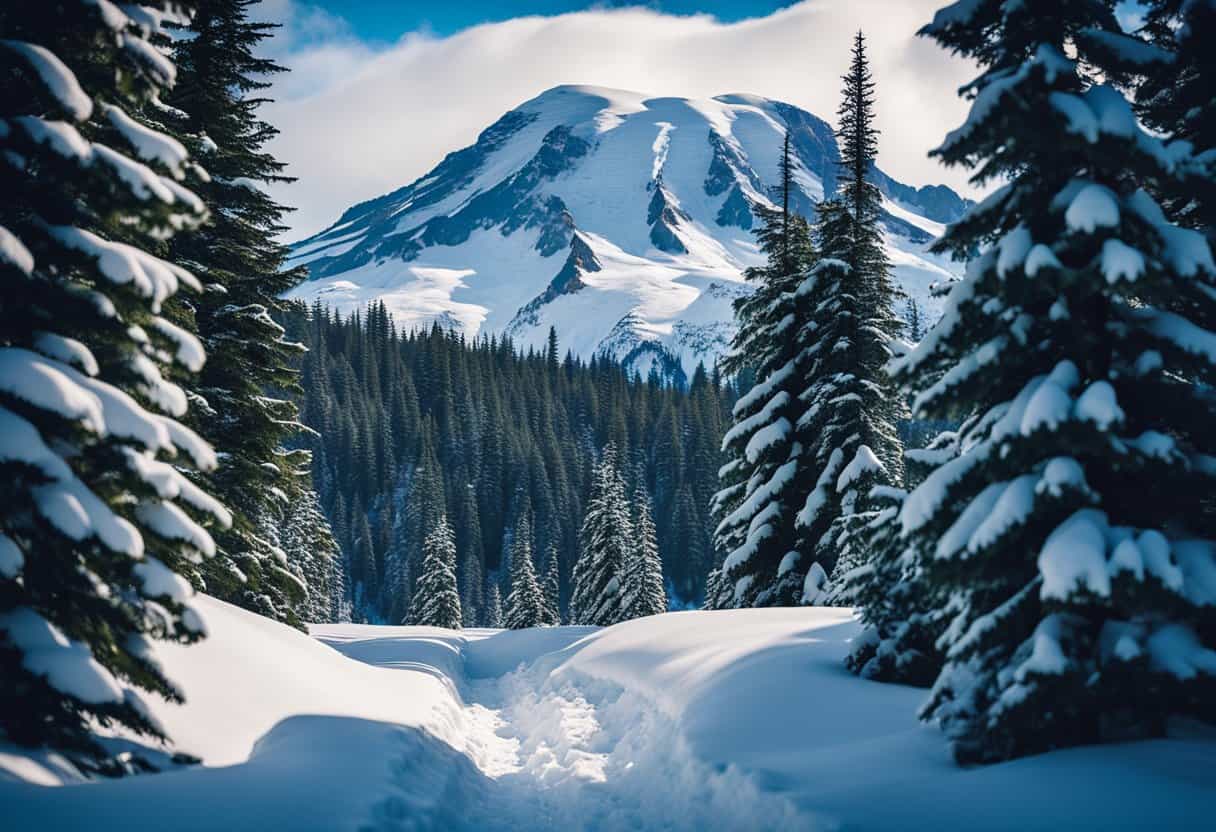
Before embarking on a snowshoeing adventure at Mount Rainier, it’s important to plan your visit. Keep in mind that weather conditions can change rapidly, so it’s best to check the weather forecast ahead of time. December through March are generally the best months for snowshoeing, but weekends can be crowded.
To drive to the park, you’ll need to check the road status and conditions. It’s recommended to carry tire chains in your vehicle during the winter months. The National Park Service website provides up-to-date information on road conditions and closures.
If you plan to camp, be sure to obtain a permit and check the regulations and requirements for winter camping. Note that winter camping is closed and not yet open for the 2023-2024 season as of September 19, 2023. The Paradise area requires at least five feet of snow before camping is allowed.
For those who prefer to stay in a lodge or cabin, there are several options available within and near the park. Reservations are recommended, especially during peak season.
In summary, plan ahead and be prepared for extreme weather conditions. Check the weather forecast, road status and conditions, and regulations and requirements for camping. Make reservations for lodging and carry tire chains in your vehicle during the winter months.
Winter Conditions and Safety

When snowshoeing at Mount Rainier, it’s crucial to be aware of the winter conditions and safety measures. The mountain receives abundant snowfall, and the scenery is spectacular. However, you need to be prepared for the cold, windy, and snowy conditions.
Avalanche danger is a significant hazard to be aware of when snowshoeing. Avalanches are most common during or immediately after a storm. Never travel or camp in an avalanche zone. Ensure you have the necessary equipment, such as an avalanche transceiver, avalanche probe, and the ability to assess mountain weather and avalanche hazards.
Hypothermia and frostbite are also significant risks when snowshoeing in the winter. Dress appropriately in layers, wear a hat, gloves, and warm boots. Bring extra clothing, such as a jacket, gloves, and hat, in case you get wet or cold.
Traction devices, such as microspikes, are necessary when snowshoeing on snow and ice. They provide better traction and reduce the risk of slipping and falling. It’s also essential to carry a map, compass, and GPS with extra batteries to navigate the terrain.
In conclusion, when snowshoeing at Mount Rainier, it’s crucial to be prepared for the winter conditions and safety measures. Ensure you have the necessary equipment, dress appropriately, and use traction devices for better traction. Stay safe and enjoy the winter wonderland at Mount Rainier.
On The Day Of Snowshoeing
You’re ready for your snowshoeing adventure at Mount Rainier National Park. Make sure to wear a warm hat, dress in layers, and wear waterproof boots. Pack food, water, and sunscreen.
Before hitting the trail, check in with the ranger station. They can provide information on trail conditions, wildlife sightings, and any hazards to be aware of.
Start your snowshoeing adventure at the upper parking lot. From there, head to Reflection Lake for stunning views of Mount Rainier. Then, continue on to Narada Falls for a breathtaking sight of the icy waterfall.
If you’re up for a longer trek, head down Westside Road to take in the peaceful winter scenery. Keep an eye out for wildlife, such as elk and deer.
For some family fun, check out the sledding area near Paradise. Or, if you’re feeling adventurous, head to Mowich Lake for a more remote snowshoeing experience.
Don’t have your own snowshoes? Rent them from Enumclaw Ski & Mountain Sports before arriving. Bring mittens and extra layers for warmth, and be sure to stay hydrated throughout your adventure.
Enjoy your snowshoeing experience at Mount Rainier National Park!
Other Winter Activities
In addition to snowshoeing, Mount Rainier National Park offers several other winter activities.
Skiing is a popular choice for those seeking a more adrenaline-fueled experience. The park has several areas designated for cross-country skiing, including the Paradise area.
For those who prefer to stay overnight, winter camping is also available. The park has several campgrounds open year-round, although some may require reservations.
Snowboarding is another exciting winter activity available at Mount Rainier National Park. The park has several areas designated for snowboarding, including the Paradise area.
Sledding, inner tubing, saucers, hard toboggans, and runner sleds are also popular winter activities at Mount Rainier National Park. However, it is important to note that these activities are only permitted in designated areas of the park.
Overall, Mount Rainier National Park offers a wide variety of winter activities for visitors to enjoy. Whether you prefer a more relaxed or adrenaline-fueled experience, there is something for everyone.
Snowshoeing Resources
When planning a snowshoeing trip to Mount Rainier, it’s essential to have access to reliable resources. Here are some helpful resources to ensure a successful and enjoyable snowshoeing experience.
Snow Conditions
Before heading out on your snowshoeing adventure, it’s crucial to check the snow conditions. You can find the most up-to-date information by calling the Longmire Information Center at 360-569-6575 or checking the park’s webcams.
Snowshoe Rental
If you don’t own snowshoes, don’t worry. You can rent them from outdoor retailers such as REI or Whittaker Mountaineering. Renting snowshoes is an affordable and convenient option for those who don’t want to invest in their equipment.
Hiking Boots
Wearing appropriate footwear is crucial for a comfortable and safe snowshoeing experience. Make sure to wear waterproof hiking boots with good ankle support.
Henry M. Jackson Visitor Center
The Henry M. Jackson Visitor Center is a great resource for snowshoers. Here, you can learn about the park’s history, pick up trail maps, and get advice from knowledgeable rangers.
Difficulty
Mount Rainier offers snowshoeing trails for all skill levels, from beginner to advanced. Make sure to choose a trail that matches your skill level and fitness level.
Affiliate Links
Some websites offer affiliate links to outdoor retailers. If you use these links to purchase your snowshoeing equipment, the website may receive a small commission.
By utilizing these resources, you can ensure a successful snowshoeing trip to Mount Rainier. Remember to always check the snow conditions, wear appropriate footwear, and choose a trail that matches your skill level.
Frequently Asked Questions
What are the best snowshoeing trails in Mount Rainier?
Mount Rainier offers an abundance of snowshoeing trails. Some of the most popular trails include Paradise, Nisqually Vista, and Mazama Ridge. Each trail offers stunning views of the mountain and surrounding landscapes.
What should I pack for a snowshoeing trip in Mount Rainier?
Be sure to pack warm clothing, waterproof boots, gloves, and a hat. Bring plenty of water and snacks, as well as a map and compass. Don’t forget your snowshoes and poles.
Can you rent snowshoes in Mount Rainier?
Yes, snowshoes and poles can be rented at the Longmire General Store and the Jackson Visitor Center. Rentals are available on a first-come, first-served basis.
What are the dangers of snowshoeing in Mount Rainier?
Snowshoeing can be dangerous if you’re not prepared. Be aware of the weather conditions and potential hazards such as avalanches and falling trees. Stick to marked trails and avoid hiking alone.
What is the best time of year to go snowshoeing in Mount Rainier?
The best time to go snowshoeing in Mount Rainier is from December to March when the snow is at its deepest. However, the park is open year-round, so you can go snowshoeing anytime.
Are there guided snowshoe tours available in Mount Rainier?
Yes, guided snowshoe tours are available through the Mount Rainier Institute and the park’s ranger-led programs. These tours offer a unique and informative experience for all skill levels.
Growing up in the Pacific Northwest, we’ve always felt at home in the outdoors. We created Evergreen Adventures PNW to share our love of hiking, camping, and exploring, and to help others discover the best adventures this region has to offer. Along with trip guides and tips, we also enjoy diving into the science behind the landscapes—thanks to a background in Environmental Science—because understanding nature makes every adventure even more meaningful.