
If you’ve ever spent time in nature, you’ve likely encountered moss and lichen. These two plant-like organisms often grow in similar habitats, but they are actually quite different. While both are known for their ability to thrive in harsh environments, they have unique characteristics that set them apart.
In this article, we’ll explore the differences of moss versus lichen, including their physical and biological characteristics, habitats, and ecological roles.
Lichen and moss are often lumped together as “mossy” organisms, but they are actually distinct entities. Lichen is a composite organism made up of a fungus and an alga or cyanobacterium, while moss is a non-vascular plant that belongs to the Bryophyta division.
Lichen is often described as a “fungi-algae sandwich” because it is made up of two different organisms that work together in a symbiotic relationship. Moss, on the other hand, is a multicellular organism with leaflets made of photosynthetic cells, similar to trees, ferns, and wildflowers.
Lichen and moss can both be found in a variety of habitats, from forests to deserts to tundras. However, they have different preferences when it comes to growth conditions. Lichen is often found in areas with high humidity and low light, such as on rocks, tree bark, and soil.
Moss, on the other hand, prefers damp and shady environments, such as on the forest floor or on the side of a tree. While both organisms are known for their ability to survive in harsh conditions, they have different adaptations that allow them to thrive in their respective habitats.
Key Takeaways
- Lichen and moss are distinct entities with unique characteristics.
- Lichen is a composite organism made up of a fungus and an alga or cyanobacterium, while moss is a non-vascular plant.
- Lichen prefers areas with high humidity and low light, while moss prefers damp and shady environments.
Table of Contents
Moss versus Lichen: Characteristics
Lichen and moss are two distinct types of organisms that are often found growing in similar environments. While they may look similar at first glance, they have some key differences in their structure, growth, and life cycle.
Characteristics of Lichen
Lichen is a composite organism made up of a fungus and an alga or cyanobacteria. The fungus provides a protective structure for the alga or cyanobacteria, while the alga or cyanobacteria provide photosynthesis to produce food for the fungus. This symbiotic relationship allows lichen to grow in a wide variety of environments, from deserts to tundras.
Lichen does not have roots, leaves, or stems like traditional plants. Instead, it grows in a variety of structures, including crustose, foliose, and fruticose. Lichen reproduces through soredia, small clusters of fungal cells and algae that break off and grow into new lichen.
Characteristics of Moss
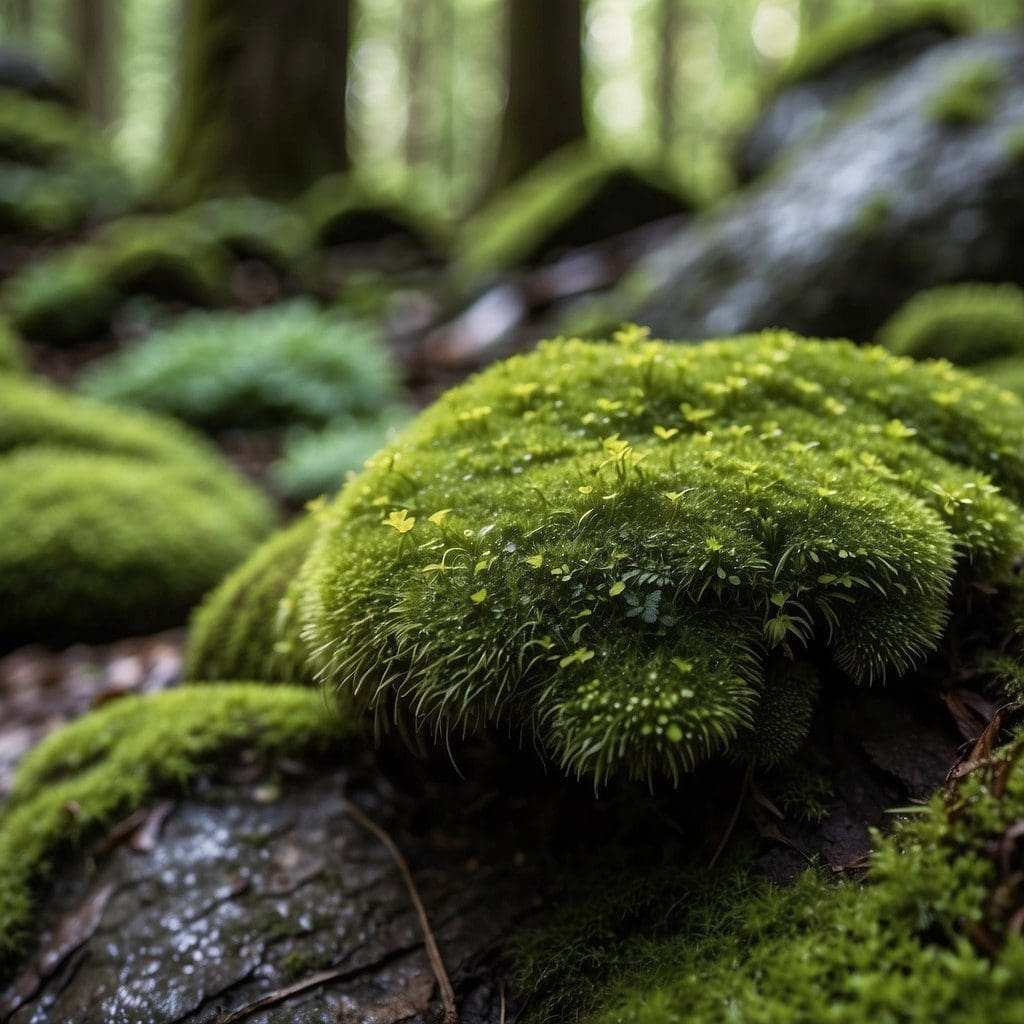
Moss is a type of bryophyte, a non-vascular plant that reproduces through spores. Moss does not have true roots, but instead has rhizoids that anchor it to the ground and absorb water and nutrients. Moss grows in dense green mats or clumps in damp or shady locations.
Moss has a life cycle that alternates between a gametophyte and sporophyte stage. The gametophyte stage is the dominant stage and produces the familiar green mats of moss. The sporophyte stage produces the spores that allow moss to reproduce.
In conclusion, while lichen and moss may look similar at first glance, they are two distinct types of organisms with different structures, growth patterns, and life cycles. Understanding the differences between them can help you better appreciate the diversity of life in the natural world.
Habitats and Growth Conditions



Lichen Habitats
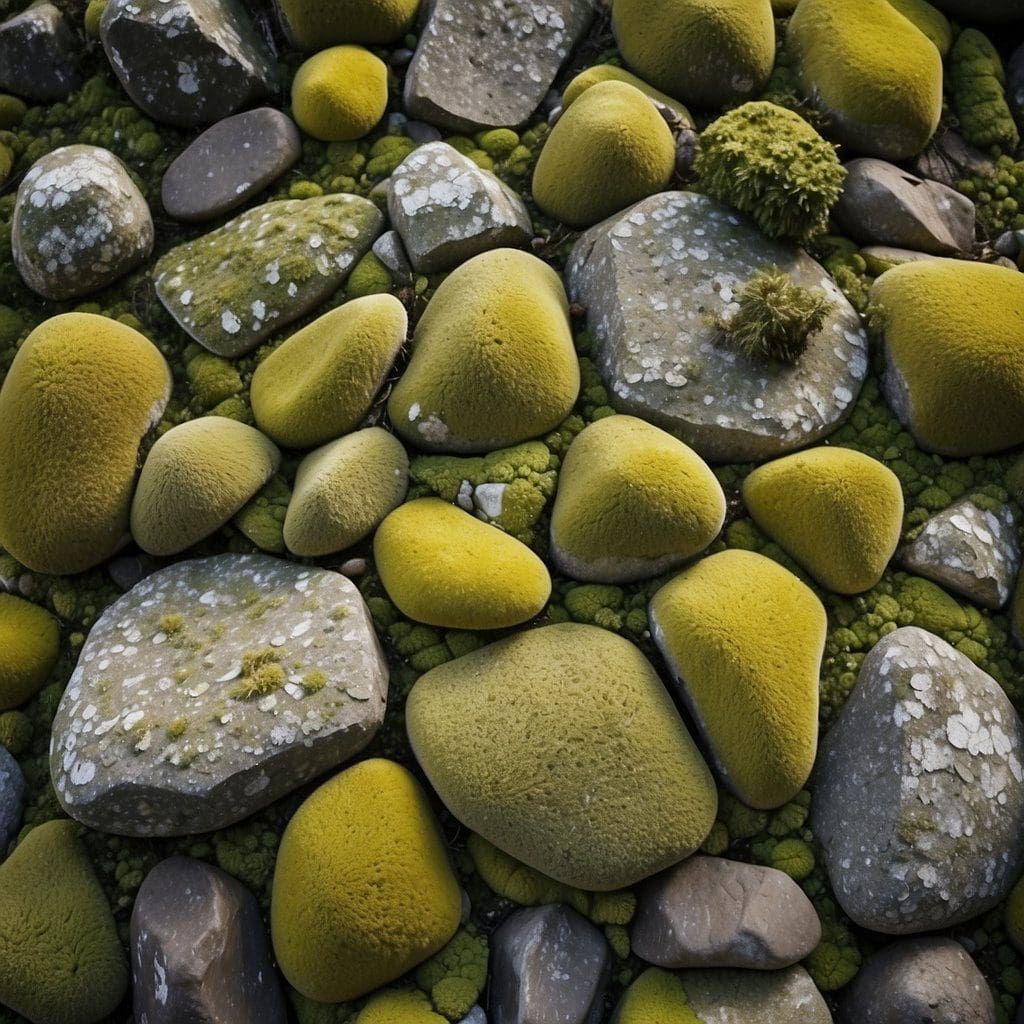
Lichens can grow on any surface that provides the right conditions for their survival. They grow on trees, rocks, and soil, and can even survive in extreme environments such as the Arctic tundra. Lichens require a moist environment to grow, and they can absorb moisture from the air. They are also able to grow in areas with little sunlight, such as in shaded forests. Lichens are often found in areas with high humidity, and they can survive in drought conditions by going dormant until water becomes available again.
Moss Habitats
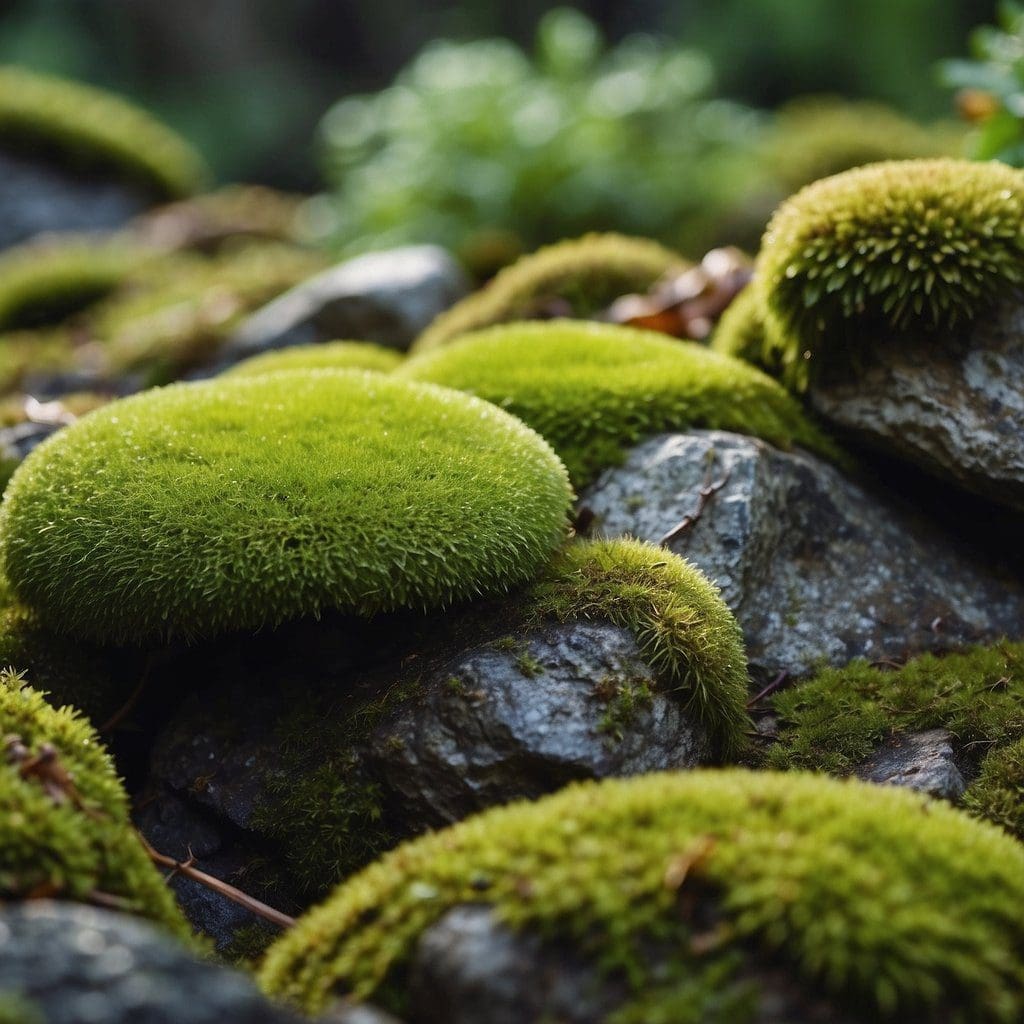
Mosses are found in a variety of habitats, including forests, wetlands, and rocky areas. They prefer damp environments, and can often be found growing on tree trunks, rocks, and soil. Mosses require moisture to grow, and they are able to absorb it from the air and surrounding environment. They can also grow in areas with little sunlight, such as in shaded forests. Mosses are often found in areas with high humidity, and they can survive in drought conditions by going dormant until water becomes available again.
In conclusion, both lichens and mosses can grow in a variety of habitats, but they require different conditions to thrive. Lichens prefer moist environments and can survive in extreme conditions, while mosses require moisture to grow and are often found in damp environments. Understanding the growth conditions of lichens and mosses can help in their identification and management.
Reproduction and Life Cycle
Lichen Reproduction
Lichens are symbiotic organisms composed of algae and fungi. They reproduce through fragmentation or soredia, which are small clusters of algal cells surrounded by fungal filaments. Lichen reproduction is asexual, and the soredia are dispersed by wind or water. When the soredia land on a suitable substrate, they can grow into a new lichen.
Moss Reproduction
Mosses reproduce by spores, which are produced in capsules that grow on the gametophyte stage of the plant. The sporophyte stage of the moss is dependent on the gametophyte stage for nutrients and support. When the spores are mature, they are released into the air and can be dispersed by wind or water. When the spores land on a suitable substrate, they can grow into a new moss.
Both lichens and mosses have a life cycle that alternates between a haploid gametophyte stage and a diploid sporophyte stage. The gametophyte stage is the dominant stage in both lichens and mosses, and it is where the reproductive structures are formed.
In conclusion, while lichens reproduce asexually through fragmentation or soredia, mosses reproduce sexually through spores. Both have a life cycle that alternates between a haploid gametophyte stage and a diploid sporophyte stage.
Physical and Biological Differences
Structural Differences
Mosses are simple, non-flowering plants that belong to the Bryophyta division. They possess leaves and stems, which can be tiny, and typically form dense green mats or clumps in damp or shady locations. Lichens, on the other hand, are not plants, but rather symbiotic associations between a fungus and a photosynthetic partner, usually algae or cyanobacteria. Lichens do not have leaves or stems, but instead have a thallus, which is a simple structure that can vary in shape and color.
Symbiosis vs. Autonomy
Mosses are autonomous organisms that produce their own food through photosynthesis. Lichens, on the other hand, are the result of a symbiotic relationship between a fungus and an alga or a cyanobacterium. The fungus provides a protective structure, while the alga or cyanobacterium provides food through photosynthesis. This partnership allows lichens to thrive in harsh environments where neither the fungus nor the photosynthetic partner can survive alone.
In summary, the main structural differences between mosses and lichens are the presence of leaves and stems in mosses and the absence of these structures in lichens. Additionally, while mosses are autonomous organisms that produce their own food, lichens are the result of a symbiotic relationship between a fungus and a photosynthetic partner.
Ecological Roles and Uses
Lichen’s Ecological Impact
Lichen plays a crucial role in the ecosystem as it is a pioneer species, meaning it is one of the first organisms to colonize a barren or disturbed area. It is also an indicator of air quality, as it absorbs pollutants such as sulfur dioxide and nitrogen oxides. Lichen is used in dye-making, and some species have medicinal properties.
Moss’s Ecological Impact
Moss is a key player in soil formation and water retention, making it an important component of the ecosystem. It also helps prevent erosion and provides a habitat for small animals. Moss is used in moss gardens and as a decorative element in landscaping.
Overall, both lichen and moss have ecological roles and uses that are essential to the environment. Understanding the differences between these two organisms can help us appreciate their unique contributions to the ecosystem and inspire us to protect them.
Adaptations to the Environment
Lichen Adaptations
Lichens are a type of composite organism that consists of a fungus and an alga or a cyanobacterium. They are capable of surviving in a variety of habitats, from tropical rainforests to deserts to the frozen tundra of Antarctica. Lichens can tolerate extreme temperatures, high levels of UV radiation, and low nutrient levels. They have adapted to their environment by developing a symbiotic relationship between the fungus and the alga or cyanobacterium, which allows them to survive in harsh conditions. Lichens also have the ability to go dormant in the absence of water, turning dry and brittle until water becomes available again.
Lichens have evolved different pigments to adapt to varying levels of sunlight exposure. Some lichens have pigments that protect them from high levels of UV radiation, while others have pigments that allow them to absorb more sunlight in low-light environments. The color of lichens can also vary depending on the climate they live in. For example, lichens in dry environments tend to be lighter in color than those in wet environments.
Moss Adaptations
Mosses are non-vascular plants that lack roots and a vascular system. They are primitive plants that have adapted to their environment in several ways. Mosses require a moist environment for survival and growth. They have adapted to retain water by developing a waxy cuticle on their leaves. This helps to prevent water loss through transpiration. Mosses also have the ability to go dormant during periods of drought, allowing them to survive in harsh conditions.
Mosses have also developed adaptations to help them reproduce. They have adapted to produce spores that can be dispersed by wind or water. This allows them to colonize new areas and expand their range. Mosses have also developed adaptations to help them compete for resources. They have adapted to grow close to the ground, which allows them to absorb nutrients from the soil more efficiently.
In conclusion, both lichens and mosses have evolved unique adaptations to survive in their respective environments. Lichens have adapted to tolerate extreme temperatures, high levels of UV radiation, and low nutrient levels, while mosses have adapted to retain water, reproduce, and compete for resources.
Identification and Classification
Classifying Lichen
Lichens are not plants, but rather a combination of a fungus and an algae or a cyanobacteria. They come in a variety of textures, including foliose, crustose, and leprose. Foliose lichens have leaf-like structures, while crustose lichens form a crusty layer on surfaces. Leprose lichens are powdery in texture. Lichens are classified based on their growth form, reproductive structures, and secondary metabolites. Lichen biology is an intriguing subject with much still to be discovered.
Classifying Moss
Moss is a type of bryophyte, along with liverworts, and hornworts. They are small, non-vascular plants that lack true roots, stems, and leaves. Mosses come in a variety of growth forms, including carpets and tufts. They are classified based on their morphology and reproductive structures. Mosses belong to the phylum Bryophyta, which has over 12,000 species worldwide.
In summary, lichens and mosses are two distinct types of organisms that share some similarities in their growth habits. However, they are classified differently based on their morphology, reproductive structures, and secondary metabolites. Understanding the differences between lichens and mosses can help you identify them in the wild and appreciate their unique characteristics.
Frequently Asked Questions

How do lichen and moss differ in their biological structure?
Lichens are composite organisms that consist of a fungus and a photosynthetic partner, such as algae or cyanobacteria. Mosses, on the other hand, are non-vascular plants that absorb water and nutrients through their leaves.
What are the key characteristics for identifying lichens and mosses?
Lichens have a unique appearance, with a crusty or leafy texture and a variety of colors. Mosses have green, leafy structures that grow in clumps.
Can lichen and moss coexist on the same surface, and if so, how?
Yes, lichen and moss can coexist on the same surface. Lichen can grow on top of moss, or the two can grow side by side.
Are there any ecological benefits or drawbacks to having lichen or moss on trees?
Lichen and moss can provide ecological benefits, such as improving air quality and providing habitat for insects and other small animals. However, they can also weigh down branches and cause damage to trees in extreme cases.
In what ways do the symbiotic relationships of lichen contrast with the growth of moss?
Lichen forms a symbiotic relationship between a fungus and a photosynthetic partner, while mosses grow independently and do not have a symbiotic relationship.
What are the environmental conditions that favor the growth of lichen over moss?
Lichens prefer areas with high humidity and low light, while mosses prefer areas with high moisture and moderate to high light.
Remember, understanding the differences between lichen and moss can help you identify and appreciate these unique organisms in nature.
Growing up in the Pacific Northwest, we’ve always felt at home in the outdoors. We created Evergreen Adventures PNW to share our love of hiking, camping, and exploring, and to help others discover the best adventures this region has to offer. Along with trip guides and tips, we also enjoy diving into the science behind the landscapes—thanks to a background in Environmental Science—because understanding nature makes every adventure even more meaningful.