
Thinking about a camping trip soon? A well-organized camping kitchen can make or break your outdoor experience. Organizing your camping kitchen is key to efficient meal prep, fresh food, and a tidy, safe space. Imagine being able to focus more on enjoying nature and less on searching for missing utensils!
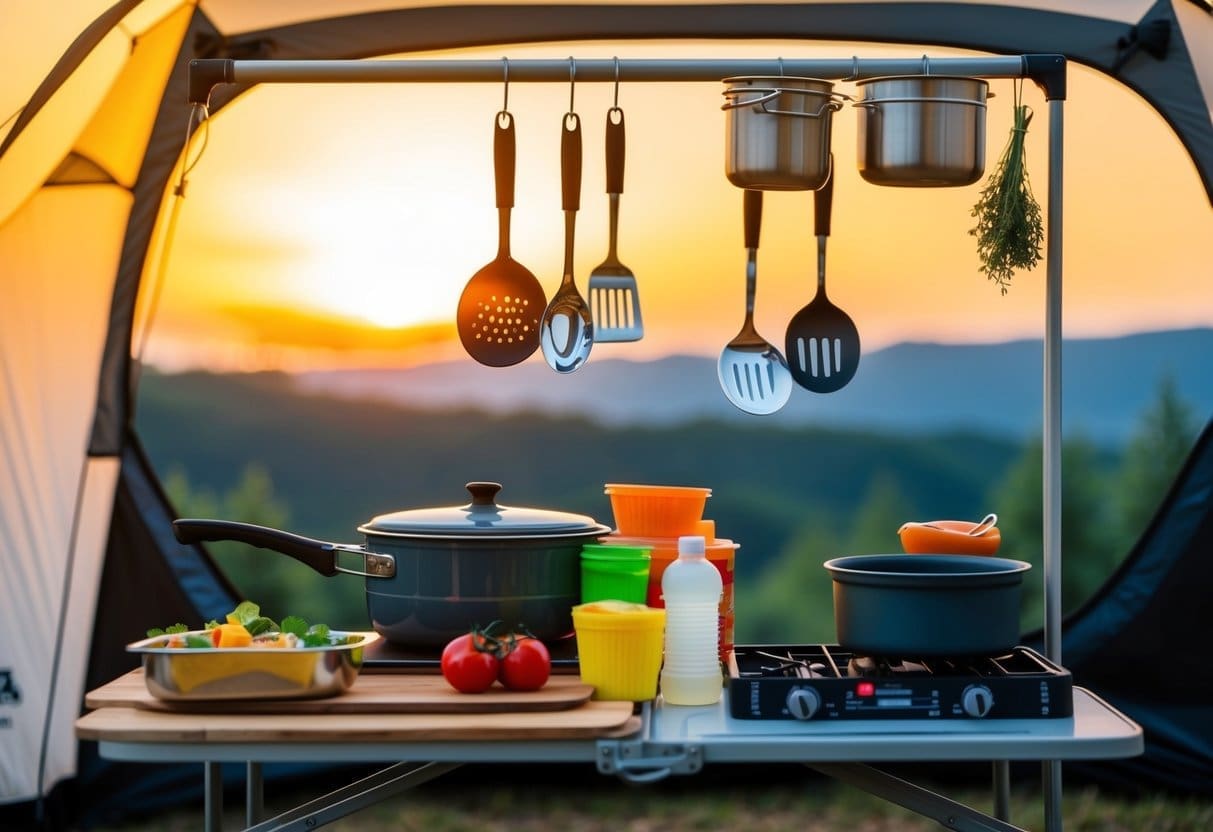
Setting up your camp kitchen doesn’t have to be a chore. By dividing your space into zones or labeling containers, you can make your campsite feel like a home away from home. You might discover that cooking under the stars is much more enjoyable when everything is in its right place. Plus, you’ll spend less time cleaning up, leaving more time for fun activities with friends and family.
Without a doubt, the benefits of a well-arranged camping kitchen are numerous. Not only do you cook more efficiently, but you also cut down on waste. Are you ready to become a camp kitchen pro and make the most of your outdoor cooking experience?
Key Takeaways
- An organized camping kitchen enhances outdoor enjoyment.
- Divide your kitchen space into clear zones for efficiency.
- Proper organization leads to a cleaner, safer campsite.
Planning Your Camping Kitchen Setup
Creating a well-organized camping kitchen can change your outdoor experience. With the right gear and some clever planning, you can enjoy cooking and dining in nature without the hassle. Focus on choosing appropriate equipment and setting up the space for both function and fun.
Choosing the Right Camping Gear
Picking the best camping gear is like selecting the right tools for a chef’s kitchen. Look for portable items that pack well and are multi-functional. Compact stoves, lightweight cooking pots, and utensils are essential. Collapsible or nesting products save space and reduce weight.
Don’t forget about lighting gear. A good lantern or headlamp helps when cooking in low light. Eco-friendly options, like solar-powered gear, are great for reducing your environmental impact. Always check the weight and durability of gear, so you’re prepared for any situation.
Essentials for a Functional Camp Kitchen
A great camp kitchen needs a few essentials to keep everything running smoothly. Begin with a sturdy table or surface for food prep. A folding table can be a versatile solution, offering easy setup and takedown. Coolers or insulated bags are vital to keep perishable food fresh. Opt for models with good ice retention.
Pack key items like a reliable knife, cutting board, and a pot or pan suitable for your stove. Also, include basic spices and oils. Think about what dishes you’ll cook and bring non-perishable ingredients that match. Dish soap, a sponge, and a small basin for cleaning make post-meal chores a breeze.
Storage Solutions for Your Kitchen Items
Staying organized while camping is crucial. Consider dividing your kitchen items into separate storage bins. Labeling helps you find things easily. Keep food, cooking gear, and cleaning supplies in different containers. Airtight containers maintain freshness and protect from pests.
Mesh bags or hanging organizers save space by keeping utensils and small items off the ground. Using a camping cupboard or portable shelving can maximize your workspace at the campsite. Always remember to keep trash bags handy and to pack out what you pack in, ensuring a safe and eco-friendly camp environment.
Camp Cooking Strategies
Cooking at a campsite can be both fun and a little adventurous. In this section, you’ll discover tips to make meal preparation easier, choose the right tools, and get the best use out of your camp stove. Let’s turn your campsite into a delightful outdoor kitchen!
Efficient Meal Preparation
Prepping meals ahead of time saves both time and energy while camping. Plan and pack meals that are simple to prepare, yet nourishing. Chopping vegetables and marinating meats ahead can make on-site cooking much easier. Think about meals that can be pre-assembled, like foil packet dinners or pasta salads.
Packing a basic spice kit can make all the difference. A few pinch pouches of salt, pepper, and maybe a favorite seasoning blend can jazz up any dish. Don’t forget to include a few ziploc bags or airtight containers to keep ingredients fresh.
Consider creating a menu plan before you head out, listing meals for each day. It helps ensure you don’t overpack and makes shopping stress-free. Remember: a well-fed camper is a happy camper!
Multi-Use Tools and Equipment
Choosing multi-use cooking tools can greatly reduce what’s in your camping gear. Look for versatile items, like a spork or a pan that doubles as a lid. This cuts down on the number of things you need to pack, leaving room for more important items, like marshmallows.
Investing in a high-quality camping knife is a great idea. A good knife can handle most food prep tasks and has the advantage of being compact. Consider an all-in-one cooking utensil; it saves space and minimizes the clutter.
When thinking of cooking over open flames or a camp stove, a cast iron skillet is your friend. It’s durable and improves cooking quality in the wilderness.
Using Your Camp Stove Effectively
A camp stove is a crucial element of your camp kitchen. Before setting out, ensure your stove is in good working order. Check fuel levels and carry extra fuel canisters, just in case. Get familiar with setting it up and maintaining a steady flame. This little powerhouse helps simmer soups, boil water, and cook pancakes to perfection.
Try practicing at home with different heat settings. Adjusting heat levels based on what’s cooking will prevent burning or undercooking. Why not make a game of it? Bet on how long it takes to get the coffee ready!
Keep safety in mind, especially if camping with kids. Ensure the stove is on a stable surface, away from flammable materials, and watch those wandering hands. Plan your meals around this reliable piece of equipment to make sure your camp stays cozy and delicious.
Organizing Your Camp Kitchen

Planning your camp kitchen setup involves designating spaces, choosing efficient gear, and ensuring everything is easy to reach. Here’s how you can make your outdoor cooking experience amazing.
Designating Specific Spaces
Keeping your camp kitchen organized starts with assigning specific areas for different cooking tasks. Think of it like cooking in your kitchen at home. You might have one area for food preparation, another for cooking, and a separate space for cleaning.
Use labeled containers to sort items by meal or purpose. For example, have a “Breakfast” box and another labeled “Snacks.” This ensures you don’t end up with a messy camp kitchen. Setup an area with bins or totes for staples like utensils and fresh food, further simplifying your meal-making process. Picture how much easier it’ll be to find your granola bars when you’re rushing to start your day!
Utilizing Collapsible and Compact Items
Using collapsible and compact items can save you precious space. Look for gear that can be folded down or nested together. This might include collapsible bowls, foldable camping tables, and compact cooking stoves.
These items make it much easier to pack your gear in the car and offer great portability. They also help reduce clutter, giving you room to maneuver when preparing meals. Imagine yourself flipping pancakes on a tiny stove without bumping elbows! Collapsible containers and tubs also come in handy for storing leftovers or washing dishes with minimal fuss.
Maintaining Easy Accessibility
Ensuring easy access to your cooking tools and ingredients is key. Hang items like spoons and tongs on hooks or an old coat rack. This keeps them off the rough ground and within reach when you need them.
Using a shower caddy, as suggested by some campers, provides a nifty way to hang lightweight items. Think about how you can keep your frequently used items visible and within arm’s reach. Position your cooler close by and handily label it like “Meat Cooler” or “Drink Cooler” to save you the stress of searching. A well-organized camp kitchen means you’ll spend less time hunting for ketchup and more time enjoying the view!
Food Storage and Preservation

Keeping your food fresh and safe while camping is crucial. Using the right containers, having a dependable cooler, and ensuring you can protect your food from wildlife are key steps to a worry-free camping experience.
Choosing the Right Containers
Picking the right containers is like choosing the right shoes for a hike—super important! Zip-lock bags are perfect for keeping things tidy and air-tight containers are stars at keeping freshness locked in. Plus, they prevent nasty spills in your backpack.
Consider using vacuum-seal pouches for meats or leftovers. They’re lightweight and preserve food for longer periods. Look for containers that are stackable to save space and make packing easier. Remember, it’s all about making your camp meals easy to prepare and enjoy.
Using an Insulated Cooler
Chilled food on a hot day? Yes, please! An insulated cooler is your best buddy for keeping food and drinks cool. Before you pack your cooler, pre-chill it with ice packs or frozen water bottles to maximize its cooling power.
Layer your items strategically with the most perishable foods at the bottom. Add ice packs or blocks between layers to maintain a steady chill. Remember to pack your cooler tightly, as less air means better cooling. Always keep it in a shaded spot and avoid opening it too often. This way, all your favorite camping meals stay fresh and tasty.
Protecting Food from Wildlife
Nobody wants a curious raccoon to discover their snacks! Keep wildlife away with some smart tricks. One of the best methods is to hang your food in a durable bag from a high, sturdy tree branch if you’re in the woods. At designated campsites, you might find bear poles, which are great for keeping your food out of reach.
You can also use bear-proof containers where hanging isn’t an option. Store all food, trash, and anything with a scent in a secured area, preferably in a hard-sided vehicle if allowed. These steps will ensure that your camp meals are safe and you’ll avoid any unexpected visitors at night!
Ensuring Cleanliness and Sustainability

When setting up your camp kitchen, keeping things clean and eco-friendly is key. You’ll be learning how to use green cleaning products, effectively manage waste, and dispose of it without leaving a trace.
Eco-Friendly Cleaning Supplies
Choosing the right cleaning supplies can make all the difference. Look for items labeled as biodegradable. Biodegradable soap is a great option for washing dishes. It’s gentle on the environment and effectively cleans your cookware.
In addition to soap, bring scrubbing pads and microfiber cloths. These are reusable and reduce waste. A collapsible sink is handy for washing dishes and conserving water.
Using natural options can help protect the environment and make your camping experience more sustainable.
Welcome laughter into the process! Who knew dishes could be fun when they’re part of your outdoor adventure?
Effective Trash Management
Trash management is essential to keep your campsite neat. Use trash bags to separate recyclables from regular waste. It makes recycling much easier once you’re back home. Look for durable bags that won’t tear easily. You don’t want surprises halfway through your trip!
Create a simple system for your waste. List each type of trash you generate, including food scraps and packaging. Keeping things organized will prevent unpleasant surprises later.
Remember, a tidy camp is a happy camp!
Slide your way into the perfect night by moonlight with ease!
Leaving No Trace with Proper Waste Disposal
Leaving no trace means taking all your waste with you. Even small items like fruit peels can harm the local wildlife. Aim to find a balance between adventure and respect for nature.
Dig a small hole at least 6 inches deep for biodegradable waste. The dirt will mask odors and aid decomposition. For everything else, pack it out with you.
Use maps or apps to find local trash and recycling facilities nearby to dispose appropriately.
Leaving no trace isn’t just a rule—it’s a way to show respect for the Earth and ensure future campers can enjoy its beauty too!
Making the Most of Your Outdoor Cooking Experience

Setting up a camping kitchen is not just about practicality; it’s also about creating memorable moments. Whether you’re bonding over meals or utilizing cookware effectively, these tips will help enhance your outdoor dining adventures.
Enjoying Meals with Family and Friends
Think about the last time you gathered around a campfire. It’s magical, right? Sharing meals with loved ones is the heart of any camping trip. To make the most of these moments, plan meals that are easy to share, like tacos or skewers.
Involve everyone in the process. Let kids help by stirring or seasoning. Adults can take turns cooking, bringing their favorite recipes to life.
A simple seating setup, like a picnic blanket or foldable chairs, adds coziness.
Music or a good story creates a relaxed atmosphere. A bluetooth speaker with a favorite playlist can transform meal preparation into a fun group activity. Encourage everyone to reminisce about favorite camping tales or create new ones. Laughter and storytelling make these moments unforgettable.
Maximizing the Use of Outdoor Cookware
You don’t need the fanciest gear to cook outdoors. What’s crucial is making the best use of what you have.
Start with a basic set: a pot, a pan, and some utensils. These are versatile and cover most of your needs.
Use a checklist to ensure you don’t forget essentials like tongs, a spatula, or a cutting board.
Consider multipurpose items. A Dutch oven is great – you can bake bread, make stews, or cook a roast. Bring a handy cooler to keep ingredients fresh.
Remember, the simpler, the better. Efficient packing means less clutter and more space for fun. With a bit of organization, you’ll find outdoor cooking both efficient and enjoyable.
Wrapping Up and Next Steps
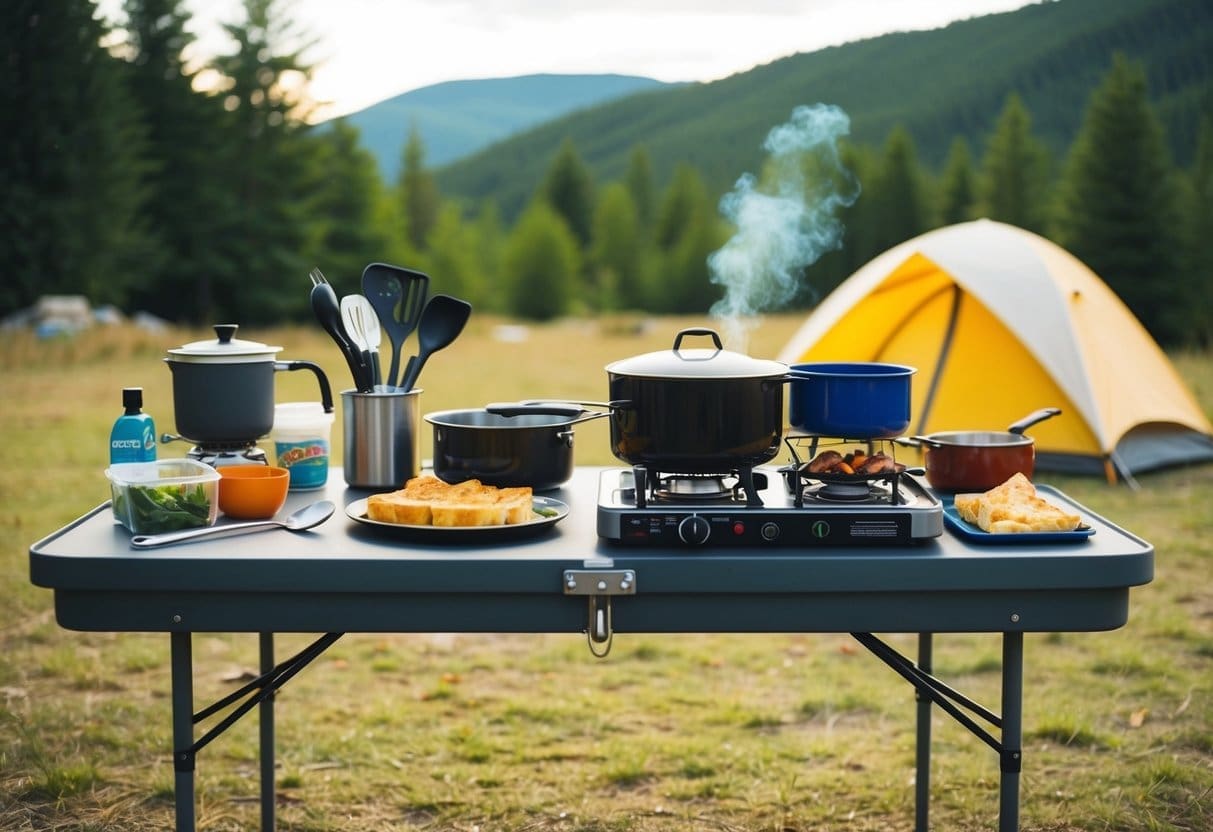
As your camping trip comes to a close, you want to make sure your setup was effective. Reflect on how you can make future trips even better by refining your camp kitchen gear. Plus, sharing your experiences can help others and might give you new ideas for next time.
Reviewing Your Camp Kitchen Setup
Once you’ve cleaned up and packed away your gear, take a moment to think about what worked and what didn’t. Did you have everything you needed? Maybe those collapsible bowls came in handy, or the old cooler didn’t keep things cold enough.
Evaluate your gear and consider any changes for your next outing.
Write down any items you wish you had or those you never used. Could a portable coffee maker be a game-changer for mornings?
Keeping a checklist on your phone ensures you don’t forget anything when packing for your next adventure. Armed with better insights, your next camping kitchen can be easier and more fun.
Encouraging Feedback and Sharing Experiences
Camping is more than just a solo activity. Connect with others who enjoy it as much as you do.
Did a particular setup strategy work wonders? Or maybe you crafted a clever way to store utensils. Share these on social media or camping forums. You might receive helpful feedback or inspire someone else.
Invite friends to sign up for your camping newsletter if you have one. It’s cool to learn tricks from fellow campers, and you can even swap gear recommendations. Sharing helps build a community that’s all about enjoying the great outdoors with a well-organized camp kitchen.
Frequently Asked Questions
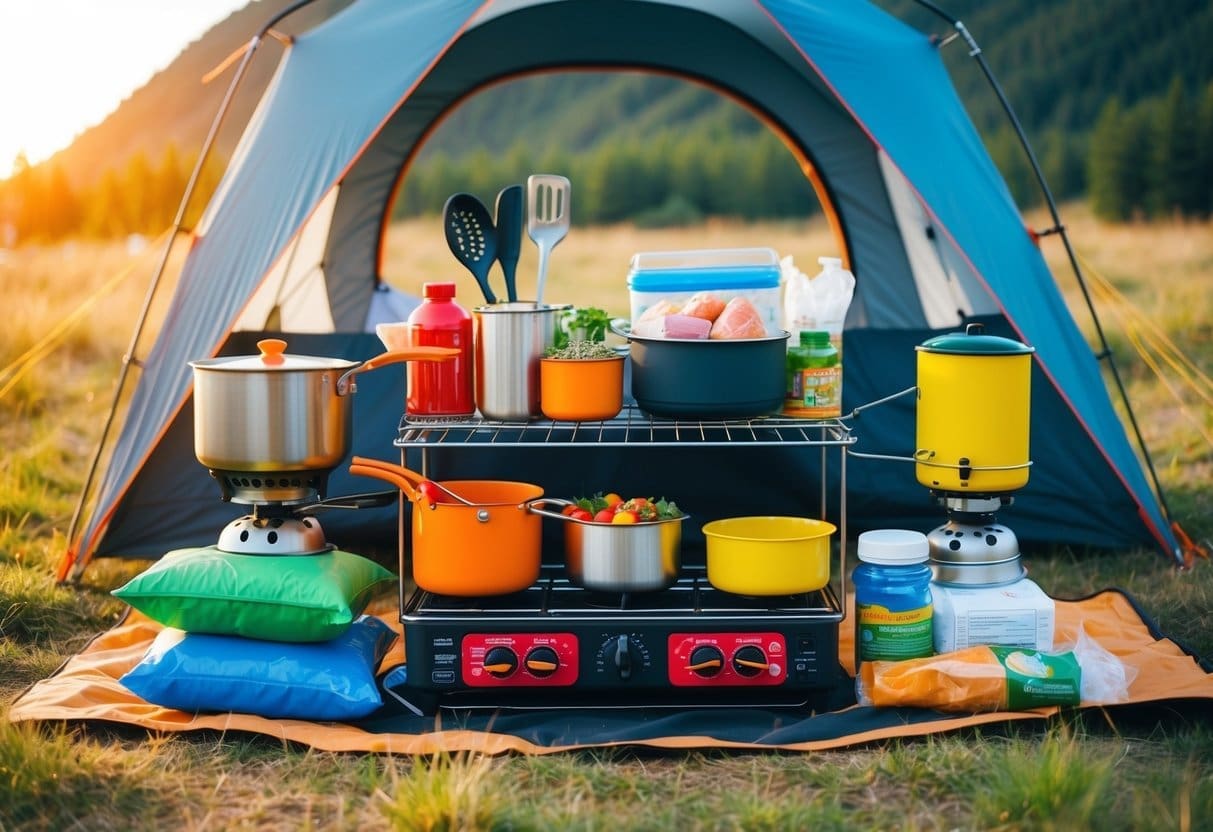
Organizing a camping kitchen can transform your outdoor experience. With the right essentials and smart packing techniques, you’ll make cooking and storing food a breeze.
What are some must-have essentials for setting up an efficient camping kitchen?
Your camping kitchen needs some basics to keep it running smoothly. Don’t forget sturdy pots and pans, cutting boards, and a reliable set of utensils. A portable stove is also crucial for cooking in the wild. Consider adding collapsible sinks and drying racks to make cleaning up easier.
How can you create a DIY camping kitchen that’s both functional and easy to transport?
Creating a DIY camping kitchen doesn’t have to be complicated. Use plastic bins to store kitchen supplies and keep them organized. They’re stackable and easy to carry. Pack an all-in-one camping cookware set, which nests together, reducing space. A folding table gives you a perfect prep area without taking much room.
What is the most space-efficient way to pack pots and pans for a camping trip?
Nesting pots and pans is the key! Choose cookware sets designed to stack inside each other. Wrap the lids in a cloth to prevent clattering. You can also use the inside space of larger pots for storing other items like spices or cooking tools. This method saves space and keeps things secure.
What are the best methods for storing and organizing food while camping?
Packing food in airtight containers keeps it fresh and critter-free. Label each container for easy identification. Divide food into meal-sized portions before you leave. A cooler with a dedicated ice pack section will help maintain the right temperature. Mesh bags are perfect for hanging fruits and vegetables to keep them safe and ventilated.
Can you recommend any innovative ideas for a camp kitchen that maximizes limited space?
Think vertical! Utilize hanging organizers for utensils and smaller items. Magnetic strips can hold knives and metal tools securely. A collapsible shelf system can give you layered storage without taking ground space. Multi-purpose items like a pot lid that doubles as a frying pan can also help conserve space.
What cooking equipment is considered the best for a comprehensive camp kitchen experience?
Invest in durable, lightweight cooking equipment. A versatile camping stove with dual burners lets you multitask. Cast iron skillets are excellent for even cooking and can be used over open flames.
Don’t forget a compact coffee maker for those early mornings, and a solar lantern for nighttime meal prep.
Growing up in the Pacific Northwest, we’ve always felt at home in the outdoors. We created Evergreen Adventures PNW to share our love of hiking, camping, and exploring, and to help others discover the best adventures this region has to offer. Along with trip guides and tips, we also enjoy diving into the science behind the landscapes—thanks to a background in Environmental Science—because understanding nature makes every adventure even more meaningful.