
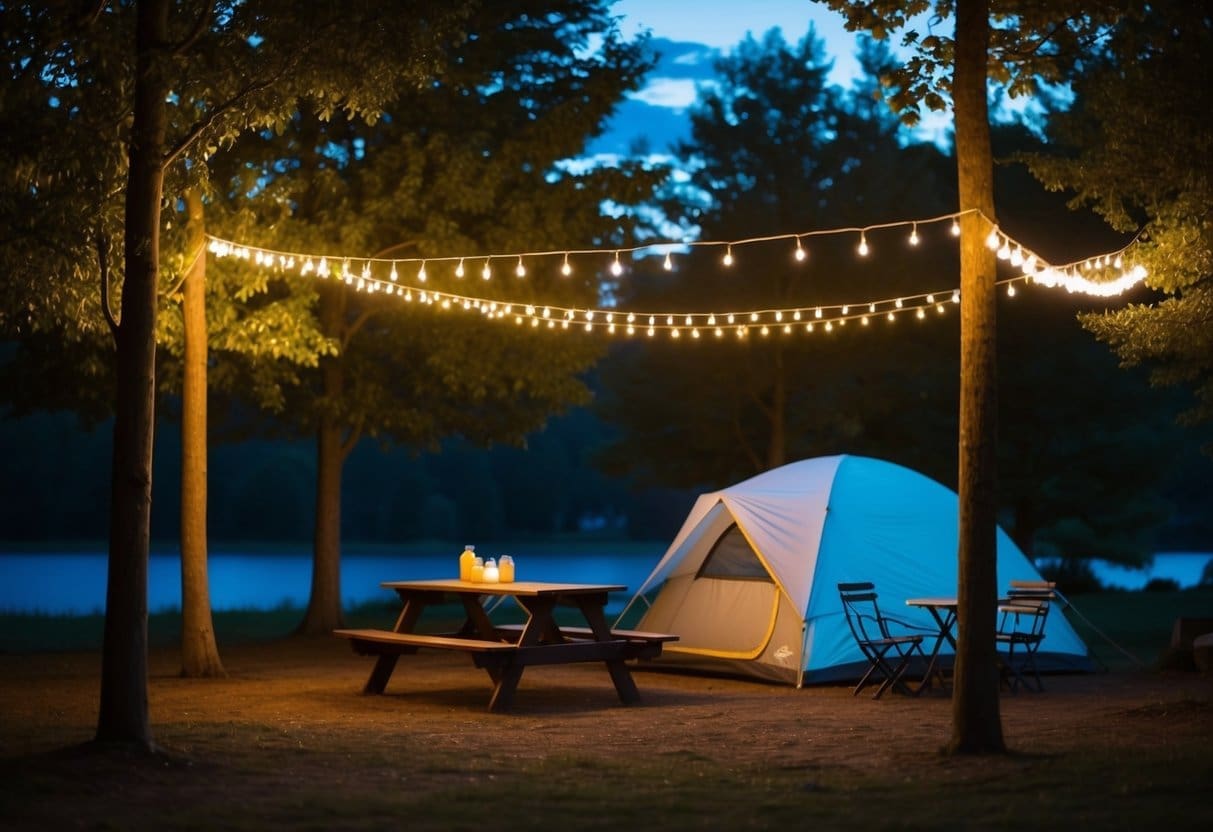
For most campgrounds, pack a headlamp and one dimmable lantern. The headlamp keeps your hands free when you arrive late or walk to the restroom. The lantern helps at the picnic table. Keep both pointed where you need them and switch them off when you’re done.
Here’s what to bring, what to leave at home, and how to keep enough light on hand for a rainy or cloudy Pacific Northwest trip.
- Solar string lights: optional
- Inside the tent: one low light
- The picnic table: battery lantern
- Rechargeable lights: pack a backup
- Avoid open flames for light
- Inflatable solar lanterns
- Guy lines and trip hazards
- A clip-on light for reading
- How to choose campsite lighting
- Battery or solar?
- Can I use a red headlamp?
Solar string lights: optional
If you bring a short string of lights, put it inside your own site, aim or shield it away from your neighbors, and turn it off when you are done. Solar lights may not charge enough under trees or after a cloudy day. Keep a separate light handy for getting to the restroom.
Inside the tent: one low light
A dim lantern or clip-on light is enough to find a zipper or get kids into sleeping bags. Skip cords along the tent floor and never use candles or fuel-burning lanterns inside the tent.
The picnic table: battery lantern
Set a dimmable lantern low on the table or use a light aimed at the cutting board. Bring spare batteries or a way to recharge it. For a quick trip to the restroom, use a headlamp instead of lighting up the whole site.
Rechargeable lights: pack a backup
Charge them at home and make sure you have the right cable. If you camp for more than one night without power, carry a backup headlamp or batteries. You don’t need to leave lights running between tasks.
Avoid open flames for light
A battery lantern is an easy alternative to a tiki torch or candle. Campfire rules vary by campground and can change during the season. Check the land manager’s current restrictions before lighting any flame outside.
Inflatable solar lanterns
A compact inflatable lantern can work for a short evening at the picnic table if it has charged. In a shaded Pacific Northwest campground, don’t count on the sun as your only power source.
Guy lines and trip hazards
Use reflective guy lines or markers, and route the lines away from the path between your tent and table. When setting up before dark, walk that route once to spot anything you might trip over.
A clip-on light for reading
A book light on the lowest usable setting lets someone read without lighting the whole tent. Aim it down and turn it off when you’re done.
How to choose campsite lighting
Start with a headlamp for each person who will walk around at night, then add one dimmable task light if you need to cook or clean up. Look for a low mode you can reach without cycling through full brightness. Follow DarkSky’s outdoor lighting guidance: use light only where and when you need it, keep it dim, and favor warmer tones.
Battery or solar?
Choose batteries or a charged rechargeable light for anything you rely on. Solar is fine as an extra, but a cloudy forecast, thick tree cover or a short winter day can limit charging.
Can I use a red headlamp?
Use a low red setting if it is bright enough to see what you are doing, such as getting organized inside a tent. For rough ground or reading trail signs, use the lowest white setting that lets you see clearly. Aim it at the ground and avoid shining it into other people’s eyes.
Growing up in the Pacific Northwest, we’ve always felt at home in the outdoors. We created Evergreen Adventures PNW to share our love of hiking, camping, and exploring, and to help others discover the best adventures this region has to offer. Along with trip guides and tips, we also enjoy diving into the science behind the landscapes—thanks to a background in Environmental Science—because understanding nature makes every adventure even more meaningful.