
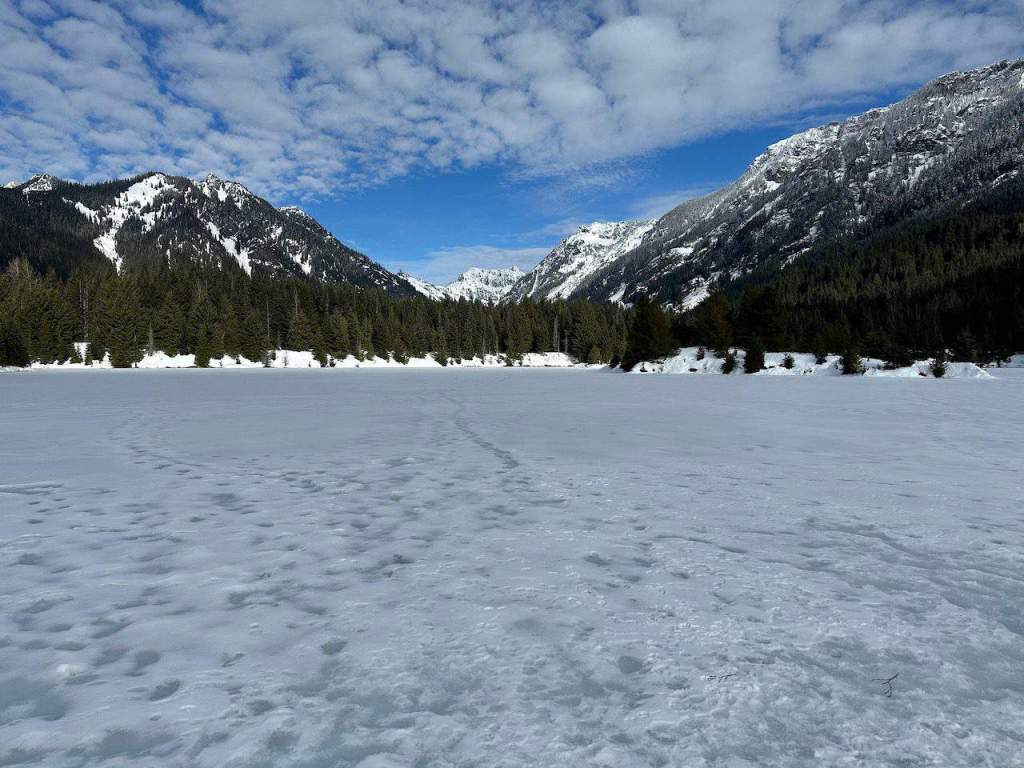
Gold Creek Pond is one of our family’s favorite places to snowshoe near Snoqualmie Pass. Check the Forest Service closure notice before you go: the pond day-use area and designated trails and access road are closed April 1 through November 30 while restoration order 06-17-03-2026-12 is in effect. Winter access is for nonmotorized recreation when the Forest Service determines conditions are safe.
On our past visits, the gentle terrain around the pond made it a good place for our toddler to try snowshoeing. The notes and photos here are from those trips.
Pro Tips:
- Bring a sled if you have one! There are lots of good sledding opportunities for little ones and grown-ups alike.
- Bring a collapsible hiking/backpacking chair and sit by Gold Creek Pond to enjoy the view and have a snack or lunch.
- Sand or snow toys are also great to bring for the kids, as there are plenty of open spaces for playing in the snow once you get to Gold Creek Pond or even making snow caves using the picnic tables if there’s enough snow!
The route is off I-90 at Exit 54. When winter access is open, follow signs for designated winter parking and check Sno-Park permit requirements. Don’t assume you can drive to the summer trailhead.
Key Takeaways
- Gold Creek Pond Snowshoe is a popular winter activity located in the Snoqualmie Pass area of Washington State.
- The pond loop has gentle terrain, but check winter conditions and the Forest Service closure before setting out.
- Use designated winter parking when the area is open and allow for the walk in.
Table of Contents
Planning Your Visit

If you’re planning a visit to Gold Creek Pond for a snowshoeing adventure, there are a few things you should keep in mind. Here are some tips to help you plan your trip.
Best Time to Visit
The best time to visit Gold Creek Pond for snowshoeing is during the winter months, of course, particularly in December and January, when the area is transformed into a winter wonderland. The snow-covered trees and frozen lake make for a picturesque backdrop for your snowshoeing adventure. However, keep in mind that the weather can be unpredictable, so be sure to check the forecast before you go.
What to Bring
It’s important to bring the right gear to keep you warm and safe. Here are some essentials to consider:
- Snowshoes: You’ll need a good pair of snowshoes to navigate the snowy terrain. If the trail is icy, consider bringing spikes or microspikes to help with traction.
- Warm Clothing: Dress in layers to stay warm and comfortable. Be sure to bring a hat, gloves, and a warm jacket to protect yourself from the cold.
- Thermos: Bring a thermos filled with hot cocoa or tea to warm you up during your break.
- Snacks: Pack some snacks to keep your energy up during your snowshoeing adventure.
Safety Tips
Snowshoeing can be a fun and safe activity as long as you take the necessary precautions. Here are some safety tips to keep in mind:
- Stay on the trail: Stay on the designated snowshoe trail to avoid getting lost or injured.
- Check the weather: Be sure to check the weather forecast before you go and dress accordingly.
- Bring a map: Bring a map of the area and a compass in case you get lost.
- Travel in a group: Snowshoeing with a group is not only more fun, but it’s also safer in case someone gets injured or lost.
- Be aware of your surroundings: Keep an eye out for hazards such as icy patches, fallen trees, or wildlife.
Getting There

Directions to Trailhead
For winter access use Gold Creek Sno-Park when open. Check the official parking map and the Forest Service restoration order; don’t drive past signs or gates toward the summer lot. If the pond is closed or the approach is icy, see our Snoqualmie Pass snowshoe planning guide for alternatives.
Parking and Permits
A Sno-Park permit is required to park at Gold Creek Sno-Park during winter operations. Check current State Parks permit options and fees, and confirm the Sno-Park is operating before you leave.
Once you’ve parked, the trailhead is just a short walk away (but not always!). The flat terrain of this wide valley east of Snoqualmie Pass is the perfect place to practice snowshoeing with kids or first-timers. The trail is well-maintained and easy to follow, with plenty of signage along the way.
The Trail Experience




Trail Overview
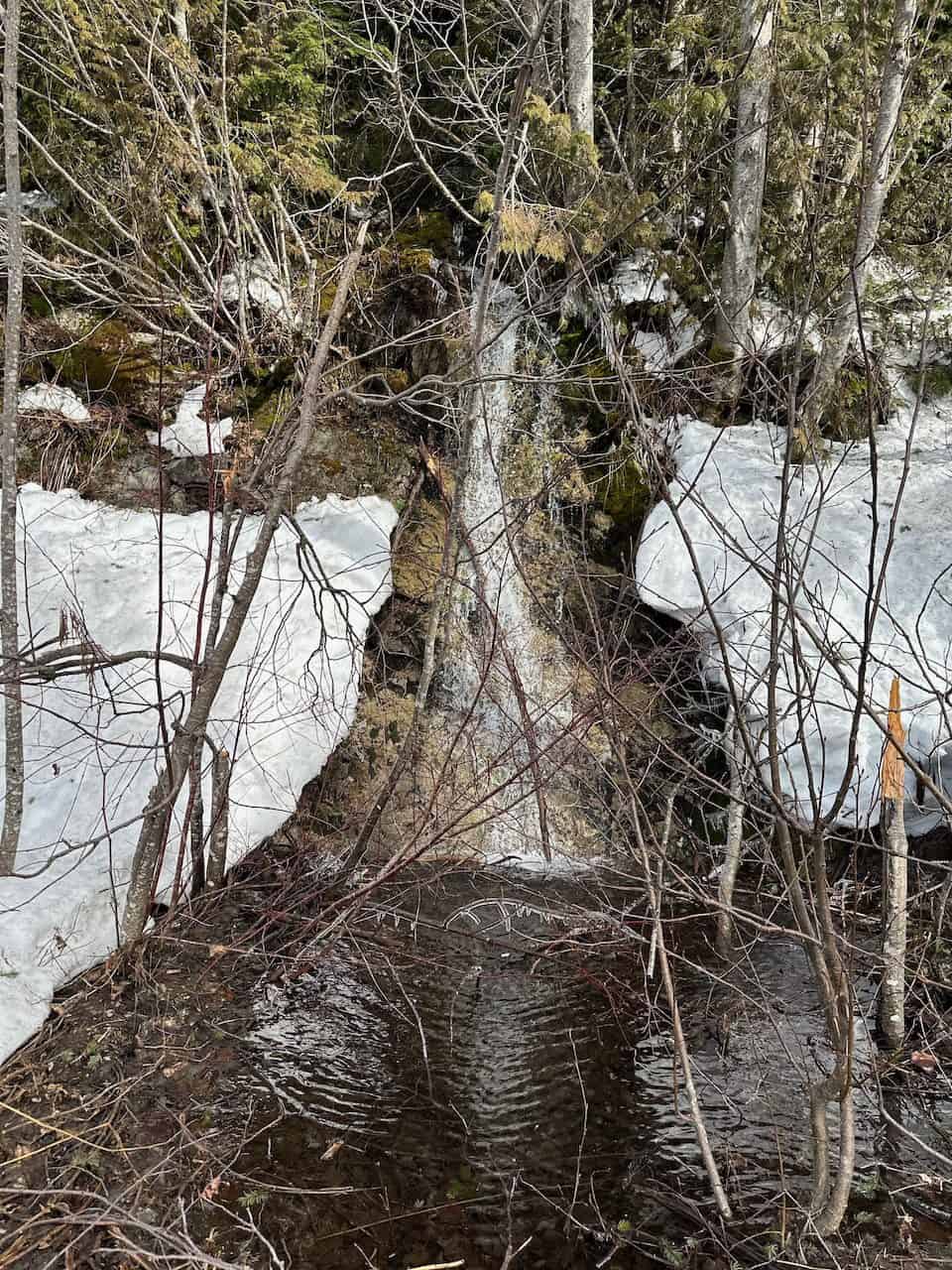
The paved route around the pond is roughly 1.2 miles on its own. A winter outing can be longer because you start from winter parking. Snow and ice can make the paved route inaccessible.
Wildlife and Scenery
The trail offers breathtaking views of the surrounding forest and snow-capped peaks such as Chikamin Peak and Alta Mountain. The trail is also home to a variety of winter wildlife, including beavers. Keep an eye out for beaver dams as you explore the trail. The wooden bridges on the trail add to the scenic beauty of the area.
Trail Landmarks
The highlight of the trail is the Gold Creek Pond, a serene mountain pond that is frozen in winter. The pond is surrounded by tall, evergreen trees, which makes for a beautiful winter landscape. The trail is also home to Heli Pond, which is a small pond that is often overlooked by visitors.
The pond loop can be a gentle outing when winter access is open and the approach has suitable conditions. Turn back if you can’t follow the route safely.
Snowshoeing Basics
If you’re new to snowshoeing, it can be a bit overwhelming to know where to start. Here are some basic tips to get you started on your Gold Creek Pond snowshoeing adventure.
Snowshoeing Techniques
One of the most important things to keep in mind when snowshoeing is to keep your weight centered. This will help prevent you from sinking into the snow. When walking, take small steps and lift your feet up high. This will help prevent you from tripping over your snowshoes.
When going uphill, lean forward slightly and use the toe crampons on your snowshoes to gain traction. When going downhill, lean back slightly and use the heel crampons to slow yourself down.
Choosing the Right Gear
When it comes to snowshoeing, the right gear can make all the difference. Here are some things to keep in mind when choosing your gear:
Snowshoes: Choose snowshoes that are appropriate for your weight and the type of terrain you’ll be hiking on. Look for snowshoes with good traction and a secure binding system.
Clothing: Dress in layers and wear waterproof and breathable clothing. Bring extra gloves, hats, and socks in case you get wet.
Footwear: Wear waterproof boots with good traction. Avoid cotton socks, as they will get wet and cold.
Other Gear: Bring trekking poles to help with balance and stability. Bring a pack with snacks, water, and a first aid kit.
If you’re snowshoeing with kids or first-timers, consider renting gear from a local outdoor retailer. This will give you a chance to try out different gear before making a purchase.
Check reopening and approach conditions before planning a family trip. If the pond is closed, look at Hyak or Lake Easton in our Snoqualmie Pass snowshoe planning guide.
Trail Details
When it’s open and conditions are manageable, the pond’s relatively flat loop can suit beginners. Factor in the winter walk from parking and turn back if the approach is too icy or hard to follow.
Elevation and Difficulty
The highest point of the Gold Creek Pond Snowshoe Trail is 3,000 feet, with an elevation gain of just 10 feet. The trail is considered an easy route, making it ideal for beginners. The calculated difficulty is low, making it a great option for those who want to enjoy the winter landscape without too much of a challenge.
Trail Length and Duration
Distance depends on where you start. Allow extra time in snow, and don’t count on the paved loop being accessible in winter.
Overall, the Gold Creek Pond Snowshoe Trail is a great option for those who are new to snowshoeing or want to enjoy a leisurely winter hike. The trail is easy and well-marked, making it a great option for families with kids. With its picturesque mountain pond and stunning views of the surrounding peaks, this trail is sure to leave you with lasting memories of your winter adventure.
Amenities and Accessibility
Facilities at Gold Creek Pond
Check the official notices for available winter facilities. Don’t count on the summer day-use restrooms being accessible.
In addition to restrooms, the area also has picnic tables and benches scattered throughout. These provide a great place to take a break and enjoy a snack or lunch. The picnic tables are also a great spot for groups to gather and enjoy each other’s company.
Accessibility for Groups and Families
For a quieter visit, try arriving early or going on a weekday. Follow current winter parking signs rather than driving to the summer lot.
For families with young children or those who are new to snowshoeing, Gold Creek Pond is an excellent choice. The terrain is relatively flat, making it easy for beginners to navigate. Additionally, the area is well-marked, so visitors can easily find their way around.
For those who are looking to make a weekend of it, there are several cabins available for rent in the area. These cabins are a great option for those who want to spend more time exploring the outdoors.
Conservation Efforts
Leave No Trace
When visiting Gold Creek Pond for snowshoeing, like any other hike in the PNW, it is important to practice Leave No Trace principles to minimize the impact on the environment. This means packing out all trash, staying on designated trails, and avoiding disturbing wildlife. By following these principles, you can help preserve the natural beauty of the area for future generations.
Local Conservation Initiatives
Gold Creek Pond is in the Okanogan-Wenatchee National Forest. The Forest Service restoration order sets out the closure area and dates.
Conservation efforts also include protecting the wildlife in the area. The Gold Creek Restoration Project, led by the Kittitas Conservation Trust, aims to restore the habitat of Gold Creek and its surrounding areas. This includes enhancing habitat with large wood structures, restoring adjacent floodplains, and increasing the number of deep pools with cover. These efforts will encourage the return of healthy riparian forests and decrease the duration and extent of seasonal dewatering.
By supporting these conservation initiatives and practicing Leave No Trace principles, we can help preserve the natural beauty of Gold Creek Pond and its surrounding areas for future generations to enjoy.
Additional Resources
Trail Maps and Guides
To make the most of your Gold Creek Pond Snowshoe adventure, it’s always a great idea to have a trail map or guide. The Green Trails Snoqualmie Pass No. 207 map is a great resource to help you navigate the area and find the best routes. You can purchase a copy of the map from local outdoor retailers or online.
Another helpful guide is the Washington Trails Association’s (WTA) trail guide for Gold Creek Pond Snowshoe. The guide provides detailed information about the trail, including its length, elevation gain, and difficulty level. It also includes tips on what to bring and what to expect on the trail.
Local Hiking Communities
Joining a local hiking community is an excellent way to meet new people and explore the Gold Creek Pond Snowshoe trail. The Mountaineers is a popular hiking community that offers guided hikes and snowshoe trips in the Snoqualmie region. They also provide training courses and other resources for hikers of all skill levels.
Stay Connected
Looking to stay up-to-date on the latest news and events related to Gold Creek Pond Snowshoeing? Here are some resources to help you stay connected:
Hiking Clubs and Newsletters
Joining a hiking club is a great way to stay connected with other outdoor enthusiasts in your community. The Washington Trails Association is a great resource for finding hiking clubs and other outdoor groups in your area. You can also subscribe to their free email newsletter to stay up-to-date on the latest trail news and events.
Social Media and Apps
Social media and apps are another great way to stay connected with other snowshoers and outdoor enthusiasts. Follow Gold Creek Pond Snowshoeing on social media to stay up-to-date on the latest trail conditions and events. You can also download apps like AllTrails and Snowshoeing Trails to find new trails and connect with other snowshoers in your area.
Whether you prefer to stay connected through hiking clubs, newsletters, social media, or apps, there are plenty of resources available to help you stay up-to-date on the latest news and events related to Gold Creek Pond Snowshoeing. So why wait? Start exploring today!
Frequently Asked Questions
What type of pass do I need to explore Gold Creek Pond on snowshoes?
To explore Gold Creek Pond on snowshoes, you will need a Sno-Park Permit. This permit is required for parking at designated winter recreation sites in Washington State. You can purchase a daily or seasonal Sno-Park Permit online or from various vendors in the area.
What winter activities are allowed at Gold Creek Pond?
When winter access is available under the Forest Service restoration order, recreation in the project area is nonmotorized. Snowmobile routes that also start at Gold Creek Sno-Park are separate; follow the posted routes and closure map, and do not ride at the pond.
How many miles will I trek if I take on the Gold Creek Pond trail?
The Gold Creek Pond Trail is a 2.8-mile roundtrip snowshoe trail. It has a minimal elevation gain of 10 feet and is considered an easy trail suitable for all ages and skill levels.
Are kayaks welcome on Gold Creek Pond, or should I leave mine at home?
Do not plan a summer paddling trip to the pond while the seasonal closure is in effect.
Where can I find a map to guide me through my Gold Creek Pond snowshoe adventure?
You can find maps of the Gold Creek Pond snowshoe trail at the trailhead or online on the Washington Trails Association and AllTrails websites. It is recommended to carry a physical map or a GPS device to ensure you stay on the designated trail.
What are the current conditions like at Gold Creek Pond for a snowshoe outing?
The current conditions at Gold Creek Pond for a snowshoe outing can vary depending on the weather. It is recommended to check the weather forecast and snow conditions before heading out. Additionally, it is important to dress appropriately for the weather and bring necessary gear such as snowshoes, poles, and extra layers.
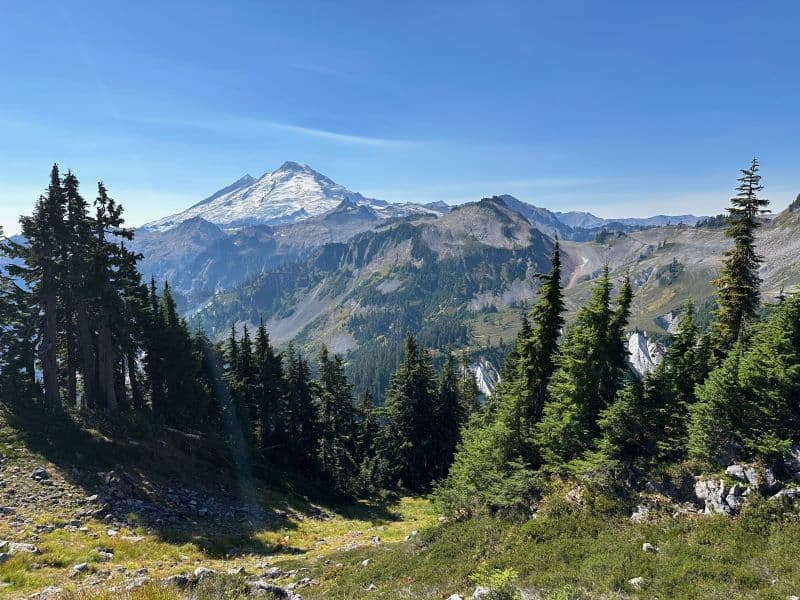
Growing up in the Pacific Northwest, we’ve always felt at home in the outdoors. We created Evergreen Adventures PNW to share our love of hiking, camping, and exploring, and to help others discover the best adventures this region has to offer. Along with trip guides and tips, we also enjoy diving into the science behind the landscapes—thanks to a background in Environmental Science—because understanding nature makes every adventure even more meaningful.