
Packing for a weekend camping trip can seem overwhelming, especially if you’re new to the great outdoors. With nature as your backdrop, it’s vital to have the right gear for comfort and fun. Start by making sure you have reliable shelter, like a tent and sleeping bag, to ensure a good night’s rest beneath the stars.

For clothing, think about layering. The weather can change quickly, and you’ll want to be prepared for anything from warm sunshine to chilly evening breezes. Don’t forget sturdy footwear for hiking or trekking. It’s equally important to plan for meals with essential cooking tools and a menu that’s easy to prepare, so you’re fueled for your adventure.
To truly enjoy your time, pack those little extras that bring joy, like a book or a frisbee. Being prepared with a first-aid kit also ensures that any minor bumps or scrapes won’t slow you down. Fill your bag with only what you need, and keep it organized so you can focus on the fun, not the packing!
Key Takeaways
- Bring shelter, clothing layers, and essential cooking items.
- Pack a first-aid kit and organize your gear for easy access.
- Include fun items to enhance your camping experience.
Planning Your Camping Trip

Planning a camping trip is key to having a great time outdoors. Picking the right campsite and checking the weather conditions can shape your entire experience.
Choosing Your Campsite
Choosing the right campsite is one of the first steps. Start by deciding on the type of spot you prefer: developed sites with amenities or backcountry sites for a more rugged experience.
Budget is another important factor. Developed campsites often charge fees, while some backcountry areas are free. Research campgrounds online or use a camping app to compare prices, facilities, and user reviews.
Location plays a big role too. Consider how far you want to travel and what activities you enjoy. Using a map will help you find campsites near hiking trails, lakes, or other attractions. Think about the terrain—whether it’s forested, hilly, or flat—since this can affect your camping setup.
Checking the Weather Forecast
The weather can greatly impact your camping adventure, so check the forecast a few days before your trip. You can use a reliable weather app or website for up-to-date information.
Pack according to the expected weather conditions. If rain is predicted, bring waterproof gear like raincoats and tarps. For cold nights, pack extra layers, blankets, and sleeping bags rated for low temperatures.
Windy conditions might require securing your tent with additional stakes or guy lines. Keep an eye on the forecast for sudden changes, especially during transitional seasons like spring and fall. It’s wise to have a backup plan if severe weather hits, such as knowing the location of nearby shelters or alternative campsites.
Shelter and Comfort

Choosing the right shelter and accessories is crucial for a fun camping adventure. With the right tent, sleeping gear, and added comforts, you’ll feel at home in nature’s embrace.
Tents and Footprints
A sturdy tent is your home away from home. Look for one that is waterproof and can withstand strong winds. Choose the size based on two factors: the number of campers and your camping gear. For solo or couple camping, a 2-person tent might do, but for family trips, opt for a 4-person or larger tent.
Don’t forget the footprint! A footprint, or a ground tarp, protects your tent’s bottom from rocks and moisture. It makes your tent last longer and keeps you dry. Some tents come with fitted footprints, but a generic tarp can work too. Just make sure it doesn’t extend beyond the tent to avoid water pooling during rain.
Sleeping Bags and Pads
Your sleeping bag is key to staying warm. Check the temperature rating to match the weather of your campsite. For summer camping, a light sleeping bag is a good pick. For colder nights, choose one with more insulation.
Sleeping pads add a layer of cushioning and insulation. They protect you from the cold ground. Foam pads are lightweight and inexpensive, while inflatable pads offer comfort and pack small. If you want an extra plush experience, think about an air mattress. It’s like bringing your bed into the woods, but you’ll need a pump to fill it.
Camping Pillows and Cots
Never underestimate the power of a good pillow. Camping pillows are lightweight, compressible, and can greatly improve your sleep quality. You can also use a stuff sack filled with clothes to save space.
For those who like added comfort, consider a cot or a hammock. Cots lift you off the ground, keeping you away from cold and dampness. Foldable and portable, they’re a great option if your car camping. A hammock offers a breezy sleeping setup. Just ensure you have sturdy trees and good weather!
Clothing and Footwear

When packing for your camping trip, choosing the right clothing and footwear is essential for comfort and protection. Make sure you’re ready for both sunny days and cool nights with versatile clothing options. Pay special attention to your feet, as the right footwear can make all the difference during activities like hiking.
Daytime Attire
During the day, you’ll want clothing that keeps you comfortable and able to move freely. Lightweight and moisture-wicking fabrics are key. Breathable shirts and quick-drying shorts will help you stay cool. If you’re hiking, hiking pants can protect your legs from scrapes or bugs and are often tough enough to handle rough trails.
Don’t forget accessories! Hats shield you from the sun, while sunglasses protect your eyes. If you’re near water, a lightweight rain jacket or poncho is smart to have in case of sudden showers. Roll up your clothes and use a clothesline for drying them quickly and efficiently.
Nighttime and Layering
Temperatures can drop at night, so layers are your best friend. Start with a base layer, like a thermal shirt, to keep your body heat in. Next, add a fleece or light jacket for insulation. Finally, a windbreaker or water-resistant outer layer is perfect for extra protection against cold air or unexpected drizzle.
Don’t forget warm gloves and a beanie if you’re expecting cooler weather. These small items make a big difference in staying cozy. Keep extra socks handy, as nothing beats the feeling of fresh, dry socks before turning in for the night.
Footwear Essentials
Your feet will thank you for choosing good footwear. A solid pair of hiking boots is a must, offering support and preventing injury on uneven terrain. If you plan on shorter hikes or easy trails, lighter trail shoes can be a good alternative.
Make sure your boots are water-resistant or waterproof. Unexpected streams and morning dew can quickly make your feet wet, leading to discomfort. Pack several pairs of socks designed for hiking, as they help reduce friction and wick moisture away from your skin.
Campsite Kitchen
At the heart of outdoor cooking is a well-equipped campsite kitchen. In this section, you’ll find key information to make mealtime easy and fun. You’ll need essential cooking gear, proper eating utensils, and methods for food storage.
Cooking Gear
A camp stove is a must-have. It gives you the ability to prepare hot meals even when there’s no campfire. Consider a two-burner option for flexibility. Another great piece of equipment is a camp grill. It lets you enjoy grilled dishes right in the wilderness.
Bringing a Dutch oven can expand your cooking options. This versatile pot is good for stews, soups, and even baking. Make sure to pack a lighter or matches to start cooking.
Here’s a quick list of basics:
- Sturdy pots and pans for various cooking tasks
- A multi-tool with a knife, bottle opener, and more
- A camp table for prepping and serving meals
Don’t forget cooking essentials like oil and spices for added flavor to your dishes.
Eating Utensils and Dishware
You’ll need some basic items to enjoy your meals comfortably. Pack plates, bowls, and mugs that are lightweight and easy to clean. Choose reusable materials to minimize waste.
Eating utensils like forks, knives, and spoons are needed for each camper. Consider a set that includes a storage case for easy packing. Bring a cutting board and a sharp knife for food prep tasks.
A camp sink can be helpful for cleaning up. It makes washing dishes simple and keeps the campsite tidy. Keeping a small towel for drying items is also a smart idea.
Food Storage and Preservation
A reliable cooler is key to keeping your food fresh. Choose one with thick insulation, and don’t forget to pack ice packs. Pre-chill the cooler before your trip for better performance.
Use sealed containers for dry goods and snacks. This helps protect them from animals and the elements. Store essentials like a water jug for safe, clean drinking water.
Bring a mix of perishable and non-perishable foods to enjoy a variety of meals. Using airtight containers can help keep foods fresh and extend their shelf life. Plan your meals to minimize waste and ensure you have everything you need without over-packing.
Campsite Essentials
Packing for a campsite involves preparing for comfort, safety, and cleanliness. Bring necessary tools and navigational items to ensure a successful camping experience. Remember to account for hygiene to keep everyone refreshed and healthy.
Furniture and Tools
Creating a comfortable spot is key for a fun camping trip. Camp chairs offer a cozy seat around the campfire while a sturdy table provides a spot for meals and games. Don’t forget a nice tablecloth for easy cleanup! For protection from the sun, a sunshade can make a huge difference.
Tools are important too. A hatchet comes in handy for firewood while rope can secure gear or act as a clothesline. A ** lantern** or even a few candles ensure that everyone can find their way back to the tent once the sun sets. Having these essentials will help make your campsite feel like a home away from home.
Safety and Navigation
Safety should always come first in the great outdoors. A first aid kit is essential for treating scrapes and minor injuries. Keep a fire extinguisher close to your camping gear, just in case. Navigation tools like a compass and binoculars help prevent you from getting lost while exploring.
Planning on night hikes or just trying to navigate your campsite in the dark? Flashlights and a compass won’t let you down. These items ensure that you stay on track and can tackle any unexpected situations. Pack these must-haves and you’ll be ready to enjoy your adventure with peace of mind.
Hygiene and Cleanliness
Keeping clean while camping is easier with the right supplies. Toilet paper and biodegradable soap are necessary for quick cleanups. Use hand sanitizer to keep germs at bay when washing isn’t possible. Fill your water bottles with safe drinking water for hydration.
Tidying up after meals is important, so bring dish soap and trash bags. Recycling bags help minimize your environmental impact. These essentials ensure that you leave the campsite as beautiful as you found it. With this checklist, staying clean and organized is easy, letting you focus on fun and relaxation.
Health and Safety
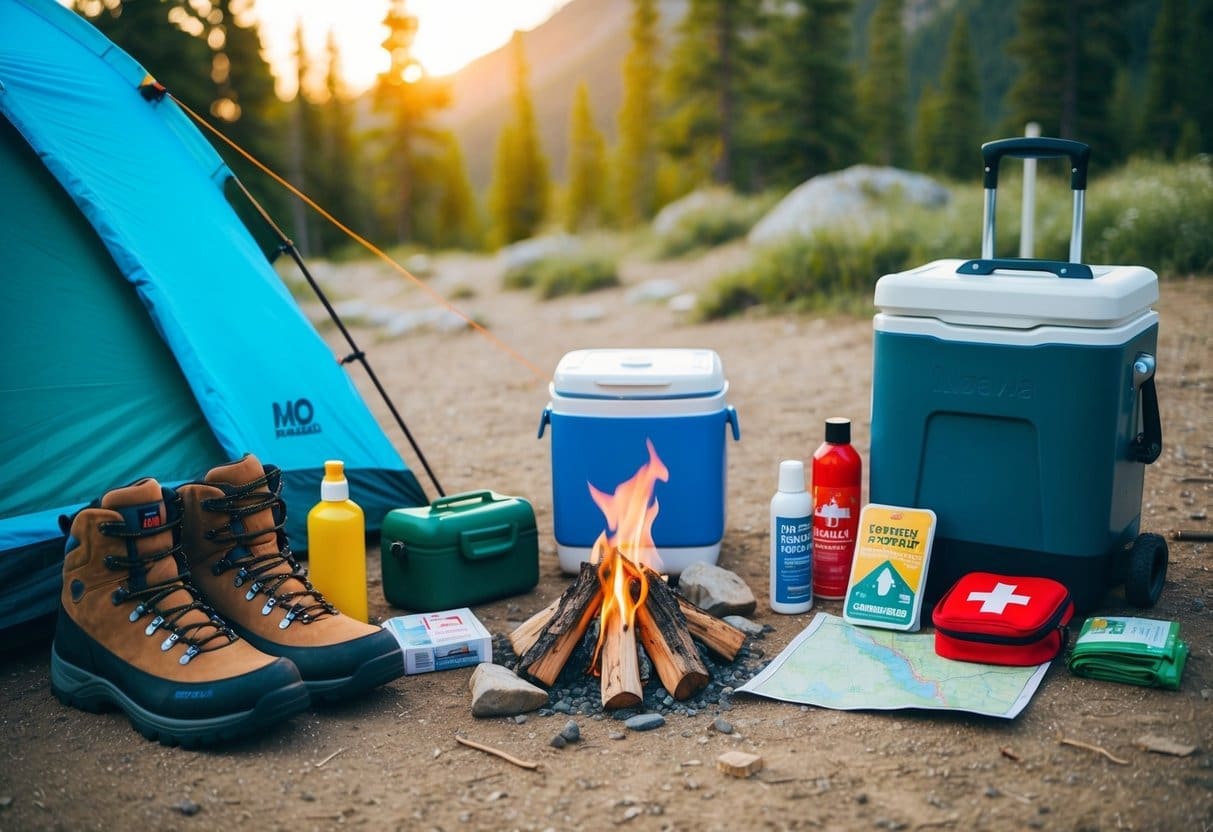
Your safety and health are top priorities during a camping trip. Knowing how to handle injuries, protect yourself from critters, and shield against the sun is essential. Let’s explore these key areas to help you stay safe while having fun outdoors.
First-Aid Measures
Packing a first-aid kit is crucial for handling minor mishaps. Make sure your kit includes adhesive bandages, gauze pads, antiseptic wipes, and medical tape. Don’t forget tweezers for splinters and scissors for quick fixes.
It’s smart to pack any medications you take regularly. Consider adding over-the-counter pain relievers and allergy medications too.
Bringing a basic first-aid guide can help you handle common injuries confidently. Keep hand sanitizer handy for quick hygiene after treating injuries or before meals. It’s better to be prepared and not need it than the other way around.
Insect and Wildlife Precautions
Becoming bug bait isn’t fun, so insect repellent is a must. Choose one with DEET or picaridin to help keep mosquitoes and ticks away.
Wear long sleeves and pants to cover your skin, especially during hikes in wooded areas. Tuck your pants into your socks for extra protection. Keeping bug bites at bay helps you enjoy your trip more.
Respect wildlife by storing food properly. Use airtight containers and stow them away from your tent to avoid attracting curious animals. Pack a whistle too, which can be useful for deterring wildlife or signaling for help if necessary.
Sun Protection and Hydration
A weekend in nature equals lots of sun. Sunscreen with SPF 30 or higher should be applied regularly. Don’t forget to reapply after swimming or sweating.
Cap and sunglasses offer additional protection. For drinking, a water filter or purification tablets ensure fresh water when supplies run low.
Stay refreshed by drinking plenty of water. A hydration pack is an efficient way to carry water during activities. It’s not just about drinking, but also about staying cool. Keep an eye on your group to ensure everyone is staying hydrated, especially kids.
Packing and Organizing
Get ready to hit the trails with everything you need neatly packed and organized. From crafting your detailed lists to properly distributing your gear, it’s all about preparation and smart packing strategies.
Lists and Checklists
Start with a detailed packing list. It’s like your map to a successful camping trip. Jot down everything you’ll need—from tents and sleeping bags to camping food and duct tape for those unexpected repairs.
Use a notebook or a digital app, whatever suits your style. A comprehensive camping checklist ensures you have items like a stove, flashlight, and repair kit. Double-check smaller essentials, such as a dustpan for quick cleanups.
Check things off as you pack them. This keeps you organized, ensuring nothing important gets left behind.
Load Distribution
Once you’ve got your items ready, it’s time to pack them properly. Distributing the weight in your pack or car for car camping is key for comfort and efficiency.
Heavier items should be placed low and centered. This helps keep balance during hikes. For car camping, heavier items at the bottom prevent shifting during transit.
Keep often-used gear like snacks or maps easily accessible. This way, you won’t need to unpack everything to find them.
Leave No Trace Principles
Adventure responsibly by packing with the Leave No Trace principles in mind. Focus on minimizing your impact on nature.
Bring along bags for trash. Plan meals carefully to avoid excess waste. Duct tape is versatile for repairs, saving you from leaving behind broken gear.
Think of packing items like reusable cutlery and plates to cut down on disposables. Ensuring everything is accounted for helps you savor nature’s beauty without leaving anything behind.
By focusing on lists, efficient weight distribution, and minimizing waste, you set yourself up for a memorable, hassle-free camping adventure. Happy camping!
Fun and Leisure
Embrace the joy of camping by engaging in fun activities and discovering the wonders of nature. With the right gear and some creativity, your camping trip can be packed with memorable experiences. Let’s dive into some ideas that will keep everyone entertained and excited.
Recreational Activities
Pack a variety of games to enjoy both during the day and night. You can bring a deck of cards, a travel-friendly board game, or play classic outdoor games like frisbee and tag. If you’re near a body of water, swimming or fishing can also be entertaining.
Don’t forget to include a notebook or field guide in your backpack. They’re great for sketching or jotting down notes about the plants and wildlife you see. Setting up a small scavenger hunt around the campsite can be another fun way to engage with nature. Simply make a list of common trees or rocks to find and let everyone explore.
Stargazing and Exploration
At night, the sky reveals a different part of nature’s wonder. Stargazing is a magical experience while camping. Bring along a pair of binoculars to get a closer look at the stars and planets. You can use a book or an app to help you identify constellations and satellites.
Daytime exploration is just as exciting. Mark interesting trails on a map before your trip. Hiking through these trails is a fantastic way to discover wildlife and hidden gems like a serene brook or an unexpected meadow. Keep your notebook handy to record these discoveries and any exciting thoughts or stories that you want to remember.
Departure Day

Ready to wrap up your camping adventure and ensure a smooth departure? Make sure your campsite is spotless and you know the check-out procedures. This will help you leave the area pristine for others and stay in good standing with the campsite management.
Campsite Clean-Up
Start by gathering all trash and recycling bags. Ensure all waste is packed up for proper disposal. It’s essential to follow the “Leave No Trace” principle, which means leaving the campsite as clean as or cleaner than when you arrived. Use a map to locate nearby disposal points before departure.
Check your site for overlooked items. A quick walkthrough can save you from accidentally leaving behind camping gear. As you pack, take a moment to shake out any tents, blankets, and towels to remove dirt and debris. It’s a good practice to neatly fold and store everything so it’s ready for your next trip. This also helps make your departure efficient and hassle-free.
Check-Out Procedures
Before heading out, check with the campsite regarding any specific check-out procedures. This might include confirming your departure time or signing out at the main office. It’s a good idea to know where to return any borrowed equipment or where you should park for an easy exit.
If you’re leaving early in the morning, be mindful of other campers who might still be asleep. Keep conversations and activities quiet to avoid disturbing them. Review the map to plan your route home, and ensure you have all your belongings securely packed. A hassle-free check-out marks the end of a great camping adventure and ensures you leave with fond memories and a clean conscience.
Frequently Asked Questions

Planning a weekend camping trip can be thrilling. You’ll want to be sure to have the essential items that make your adventure comfortable and safe. Pay attention to some common packing oversights and follow a well-thought-out checklist.
What are the top essentials I should bring on a weekend camping adventure?
When hitting the trail, start with shelter essentials. Bring a tent, sleeping bags, and sleeping pads for a cozy night. Make sure to pack cooking gear like a portable stove and utensils to fuel your day with tasty meals. Don’t forget clothing suited to the weather, sturdy shoes, and rain protection.
Can you list the items people most commonly forget when packing for a camping trip?
Who hasn’t forgotten a key item here or there? But folks often overlook things like a first aid kit, extra batteries, or a flashlight. Another common oversight is a reliable water purification system. Keeping these in mind can save you from surprises.
Could you provide a quick checklist for a 3-day camping getaway?
- Shelter: Tent, sleeping bags, sleeping pads
- Cooking Gear: Portable stove, fuel, cooking utensils
- Food and Water: Non-perishable food, water purification
- Clothing: Weather-appropriate wear, sturdy shoes, rain gear
- Miscellaneous: First aid kit, flashlight, extra batteries
What are some must-have items for first-time campers to ensure a fantastic experience?
First-timers, take note! Having reliable gear is key. Add a comfortable chair or hammock to your pack for relaxation. Also, a multi-tool and a map of the area are invaluable. You’ll feel like a camping pro in no time.
How should I prepare for a weekend in the great outdoors?
Preparation is key! Start by researching your destination’s weather and terrain. Book your campsite early and make an itinerary with planned activities. Packing your gear a few days ahead helps avoid last-minute rushes and ensures nothing is left behind.
Do you have any tips for efficiently packing for a short camping trip?
Packing efficiently means rolling, not folding your clothes to save space. Use packing cubes to keep items organized. When it comes to gear, consider multi-purpose items that reduce load but still serve the same purpose. Compact gear, like foldable water bottles, works wonders.
Growing up in the Pacific Northwest, we’ve always felt at home in the outdoors. We created Evergreen Adventures PNW to share our love of hiking, camping, and exploring, and to help others discover the best adventures this region has to offer. Along with trip guides and tips, we also enjoy diving into the science behind the landscapes—thanks to a background in Environmental Science—because understanding nature makes every adventure even more meaningful.