
Solar power is an excellent option for camping when you need to power your devices off the grid. But how much solar power do you need for camping? The answer depends on several factors, such as the number of devices you plan to charge and the amount of sunlight available.
Understanding solar power basics is important before deciding on the right amount of power for your camping trip. Solar panels convert sunlight into electricity, which can then be stored in a battery for later use. Assessing your camping energy needs is the next step to determine the amount of solar power you require. By calculating the wattage of your devices and the number of hours you plan to use them, you can determine the amount of solar power needed to meet your needs.
Key Takeaways
- Assess your camping energy needs before choosing the right solar equipment.
- Portable solar solutions are ideal for camping trips.
- Proper installation, setup, and maintenance of your solar setup are crucial for optimal performance.
Table of Contents
Understanding Solar Power Basics
When camping, understanding solar power basics is essential. Solar power is harnessed using solar panels, which come in two types: monocrystalline and polycrystalline. Monocrystalline panels are more efficient, but they are also more expensive. Polycrystalline panels are less efficient, but they are more affordable.
Solar power storage is another crucial aspect of solar power. Batteries are used to store the energy generated by solar panels. When choosing a battery, consider its capacity, voltage, and type. Deep cycle batteries are ideal for camping as they can discharge most of their capacity without getting damaged.
Inverter functionality is also essential in understanding solar power basics. Inverters convert the DC power generated by solar panels into AC power, which is used to power appliances. When selecting an inverter, consider its wattage, efficiency, and waveform. Pure sine wave inverters are more efficient and produce a cleaner waveform, making them ideal for sensitive electronics.
Solar Panel Types
Solar panels come in two types: monocrystalline and polycrystalline. Monocrystalline panels are made from a single crystal of silicon, making them more efficient. Polycrystalline panels are made from multiple silicon crystals, making them less efficient but more affordable.
Solar Power Storage
Batteries are used to store the energy generated by solar panels. When selecting a battery, consider its capacity, voltage, and type. Deep cycle batteries are ideal for camping as they can discharge most of their capacity without getting damaged.
Inverter Functionality
Inverters convert the DC power generated by solar panels into AC power, which is used to power appliances. When selecting an inverter, consider its wattage, efficiency, and waveform. Pure sine wave inverters are more efficient and produce a cleaner waveform, making them ideal for sensitive electronics.
Assessing Your Camping Energy Needs
Before determining how much solar power you need for camping, you must assess your energy needs. Calculating energy consumption, determining required wattage, and assessing your appliances and electronics are crucial steps in this process.
Calculating Energy Consumption
To calculate your energy consumption, make a list of all the appliances and electronics you plan to use during your camping trip. Then, determine the power rating and estimated usage time for each item. Add up the wattage needs to determine your total energy consumption.
Determining Required Wattage
To determine the required wattage for your camping trip, you must consider the appliances and electronics you plan to use, the duration of your trip, and the weather conditions. It is recommended to add 20% to your total energy consumption to account for unexpected usage or weather conditions.
Appliance and Electronics Assessment
Assessing your appliances and electronics is critical in determining how much solar power you need for camping. Some appliances, such as electric coolers or grills, require more wattage than others. Consider using low-wattage appliances or electronics to reduce your energy consumption and the required wattage for your solar power system.
In conclusion, assessing your camping energy needs is the first step in determining how much solar power you need for camping. By calculating your energy consumption, determining the required wattage, and assessing your appliances and electronics, you can ensure that your solar power system meets your energy needs during your camping trip.
Choosing the Right Solar Power for Camping
When it comes to camping, choosing the right solar equipment is essential for a successful trip. The following are the key factors to consider when selecting the right solar equipment.
Solar Panel Size and Efficiency
The size and efficiency of your solar panel are crucial factors to consider when choosing the right solar equipment. The larger the solar panel, the more power it will generate, but it will also be heavier and bulkier. Efficiency is also important because it determines how much power your solar panel can generate from the available sunlight. Look for solar panels with high-efficiency ratings, as they can generate more power from the same amount of sunlight.
Battery Capacity and Type
The battery capacity and type are also important factors to consider when choosing the right solar equipment. Lithium batteries are more efficient and lightweight than lead-acid batteries, making them a popular choice for camping. However, lead-acid batteries are more affordable and can store more power than lithium batteries. Consider your power needs and budget when choosing the right battery type and capacity.
Inverter Size and Type
The inverter size and type are crucial factors to consider when choosing the right solar equipment. Inverters convert the DC power generated by your solar panel into AC power that can be used to power your electronic devices. Pure sine wave inverters are the best choice for camping because they provide clean and stable power that is safe for sensitive electronic devices. Consider the size and type of inverter that is suitable for your power needs.
Choosing the right solar equipment is important for a successful camping trip. Consider the size and efficiency of your solar panel, the battery capacity and type, and the inverter size and type when selecting the right solar equipment. By choosing the right solar equipment, you can enjoy a reliable source of power for all your camping needs.
Portable Solar Solutions for Camping
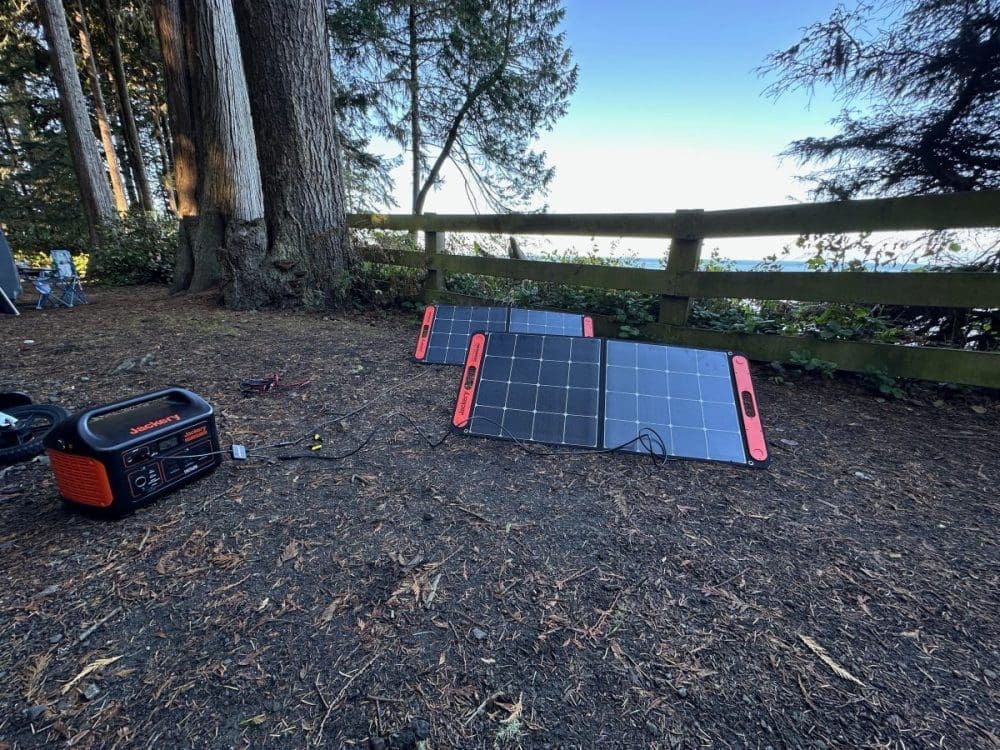
Portable solar solutions provide a sustainable and cost-effective way to power your camping gear. There are several options to choose from, including portable solar panels, solar chargers, and power stations.
Portable Solar Panels
Portable solar panels are an excellent option for campers who need a lightweight and compact power source. The Anker 625 Solar Panel and Biolite SolarPanel 5+ are both popular choices. These panels are easy to set up and can charge your devices directly or store energy in a battery bank.
Solar Chargers and Power Stations
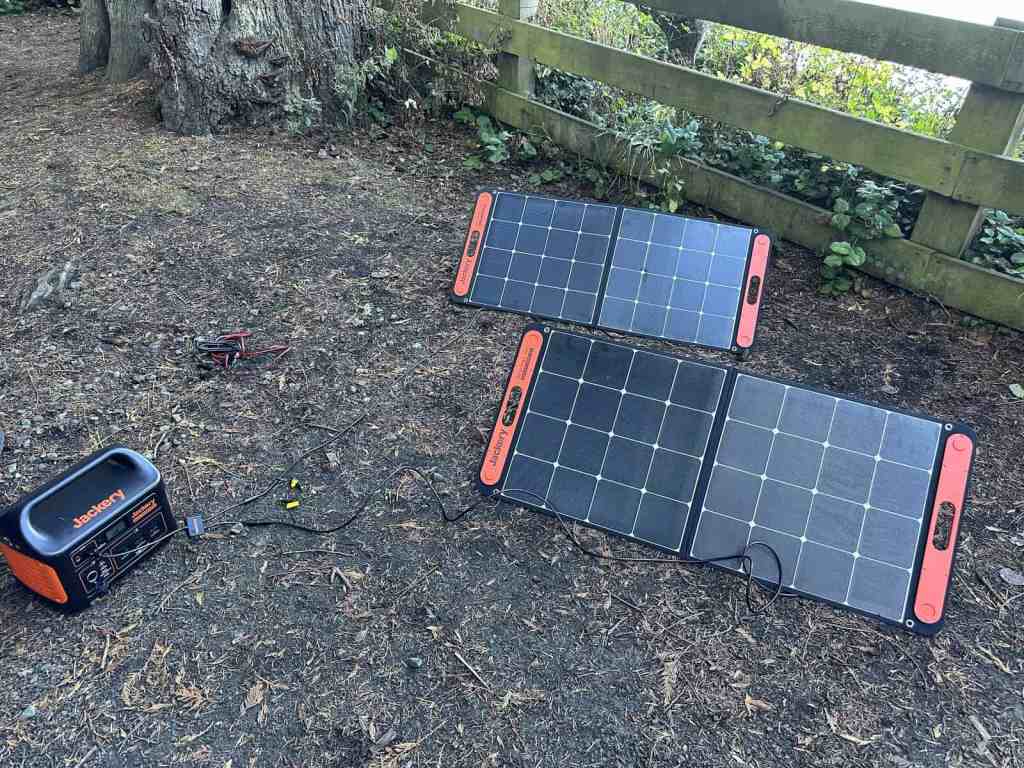
Solar chargers and power stations are perfect for campers who need to charge multiple devices or power larger equipment. The Goal Zero Yeti 500X and Jackery Explorer 1000 (picture above as well) are two popular options. These power stations can charge multiple devices simultaneously and provide enough power to run a small refrigerator or other appliances.
Lightweight and Durable Options
If you’re looking for a lightweight and durable option, consider the BigBlue 28W Solar Charger or the Renogy 50W Solar Panel. These options are perfect for backpackers and hikers who need to keep their gear light. They’re also built to withstand harsh outdoor conditions.
In conclusion, portable solar solutions are an excellent option for campers who need a reliable power source. Whether you’re looking for a portable solar panel, solar charger, or power station, there are plenty of options available. Choose the option that best fits your needs and enjoy the great outdoors without worrying about running out of power.
Installation and Setup Tips

Mounting and Positioning
When setting up your solar panels, ensure they are mounted securely and in a position that maximizes sunlight exposure. Position the panels facing south to get the most sunlight. You can use tilt legs to adjust the angle of the panels to optimize the amount of sunlight they receive. Make sure the panels are not obstructed by trees, buildings, or other objects that can cast shadows.
Wiring and Connectivity
When wiring your solar panels, use high-quality cables that can handle the amount of power being generated. Connect the panels in parallel to ensure that if one panel is shaded, the others can still produce power. Use a fuse between the panels and the charge controller to protect the panels from overloading. Connect the charge controller to the battery using the appropriate cables and connectors.
Charge Controller Setup
The charge controller regulates the amount of power going to the battery and prevents overcharging. Set the charge controller to the appropriate voltage for your battery and make sure it is compatible with your solar panels. Some charge controllers have additional features like load control, which can be used to power appliances directly from the battery. Make sure the charge controller is mounted in a cool, well-ventilated area to prevent overheating.
Remember to follow the manufacturer’s instructions for installation and setup. Always wear protective gear when working with electrical components. With proper installation and setup, your solar panels can provide clean, renewable power for your camping needs.
Maintaining Your Solar Setup
Cleaning and Care
Maintaining your solar setup is crucial to ensure optimal performance. Regularly clean your solar panels with a soft brush or cloth and mild detergent to remove dirt and debris. Avoid using abrasive materials that could damage the panels. Check for any cracks or defects and replace damaged panels immediately.
Monitoring System Performance
Monitoring your solar system’s performance is essential to ensure it is generating enough power for your needs. Keep an eye on the battery voltage, charge level, and solar panel output. Use a multimeter to measure the voltage and current of the system regularly. If you notice any significant drops in voltage or output, it may indicate a problem with the system.
Troubleshooting Common Issues
Even with proper maintenance, solar systems may encounter issues. Some common problems include low battery voltage, damaged panels, and faulty wiring. If you notice any issues, troubleshoot the system by checking the wiring connections, battery charge level, and solar panel output. If you are unsure how to troubleshoot the system, seek professional help.
Remember to keep your solar setup clean, monitor its performance, and troubleshoot any issues to ensure it is working efficiently. By following these simple steps, you can enjoy your camping trip with a reliable and sustainable power source.
Environmental Considerations
Weather Impact on Solar Efficiency
When it comes to camping with solar power, weather conditions can significantly impact efficiency. Solar panels work best in temperate climates, with temperatures around 75 degrees. When it gets too hot, the output will reduce slightly, leading to an unnoticeable difference. However, when it’s cloudy or raining, the panels produce less power. Therefore, it’s essential to check the weather forecast before setting up your solar panels.
Eco-Friendly Camping Practices
Camping with solar power is an eco-friendly alternative to using generators. However, it’s essential to practice other eco-friendly camping habits to reduce your environmental impact. For instance, pack reusable containers and utensils to reduce waste, and use biodegradable soaps to avoid contaminating the water sources. Additionally, avoid using disposable batteries and opt for rechargeable ones instead.
By considering the weather and practicing eco-friendly camping habits, you can maximize your solar power usage while minimizing your environmental impact.
Additional Resources
If you’re still unsure about how much solar power you need for camping, don’t worry. There are plenty of resources available to help you make an informed decision.
Solar Power Calculators
Using a solar power calculator can help you determine the right amount of solar power you need for your camping trip. These calculators take into account factors such as the size of your RV, the number of appliances you plan to use, and the amount of sunlight available in your camping location. Some popular solar power calculators include the Renogy Solar Calculator, the Go Power! Solar Calculator, and the Zamp Solar Calculator.
Expert Advice and Community Forums
If you want to get advice from real experts or fellow campers, there are several online forums and communities where you can ask questions and get answers. Some popular forums include the RV.net Forums, the iRV2 Forums, and the Forest River Forums. Additionally, many solar power companies have customer service representatives who can help answer your questions and provide expert advice.
When it comes to getting the right amount of solar power for your camping trip, it’s important to do your research and use the resources available to you. By using a solar power calculator and seeking advice from experts and fellow campers, you can ensure that you have the right amount of solar power to meet your needs.
Frequently Asked Questions
What size solar panel do I need to power a camping fridge?
The size of the solar panel depends on the fridge’s power consumption and the number of hours of use. A 100W panel can power a small fridge for a few hours, while a 200W panel can power a larger fridge for a more extended period.
How do I determine the appropriate solar panel wattage for my camping trailer?
To determine the appropriate wattage, calculate the total power consumption of all devices you plan to use and multiply by the number of hours of use per day. Divide by the number of peak sun hours in your area to determine the necessary wattage.
Can a 100W solar panel sufficiently supply power for basic camping needs?
A 100W panel can supply enough power for basic needs such as lighting and charging devices, but it may not be enough for larger devices or extended use.
What are the solar power requirements for a 30-amp RV?
A 30-amp RV requires approximately 3,600 watts of power. This can be achieved with a combination of solar panels and a battery bank.
Is a 200W solar setup adequate for my camping power needs?
A 200W setup can provide enough power for basic needs, but it may not be sufficient for larger devices or extended use. Consider your power requirements and usage patterns when determining the appropriate setup.
How many amps should my solar setup provide to reliably use a camping fridge?
A camping fridge typically requires 2-3 amps per hour of use. Ensure your solar setup can provide enough amps to power the fridge for the necessary number of hours per day.
Remember to consider your power consumption needs when determining the appropriate solar setup. A combination of solar panels and a battery bank may be necessary to meet your needs.

Growing up in the Pacific Northwest, we’ve always felt at home in the outdoors. We created Evergreen Adventures PNW to share our love of hiking, camping, and exploring, and to help others discover the best adventures this region has to offer. Along with trip guides and tips, we also enjoy diving into the science behind the landscapes—thanks to a background in Environmental Science—because understanding nature makes every adventure even more meaningful.