
If you’re a nature enthusiast or just someone who loves spending time outdoors, you might be curious about the Pacific Yew.
But how do you identify this tree?
Fortunately, with a little knowledge, you can learn to recognize it in no time.
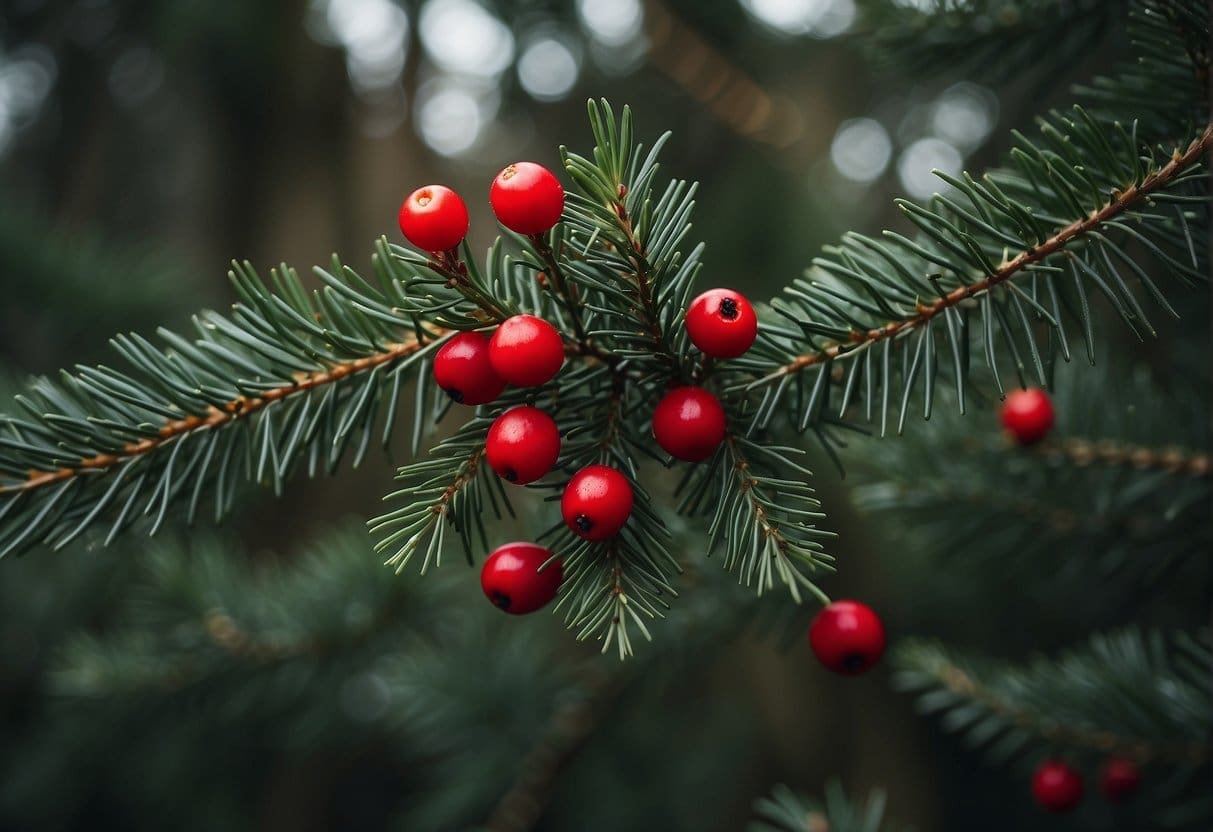
The Pacific Yew, also known as Taxus brevifolia, is a small to medium-sized evergreen coniferous tree that’s native to North America.
It’s often found in moist, shady regions and the underlying vegetation layers in dense forests.
Although it may resemble a large shrub, the Pacific Yew can grow up to 50 feet tall.
So, what should you look for when trying to identify a Pacific Yew?
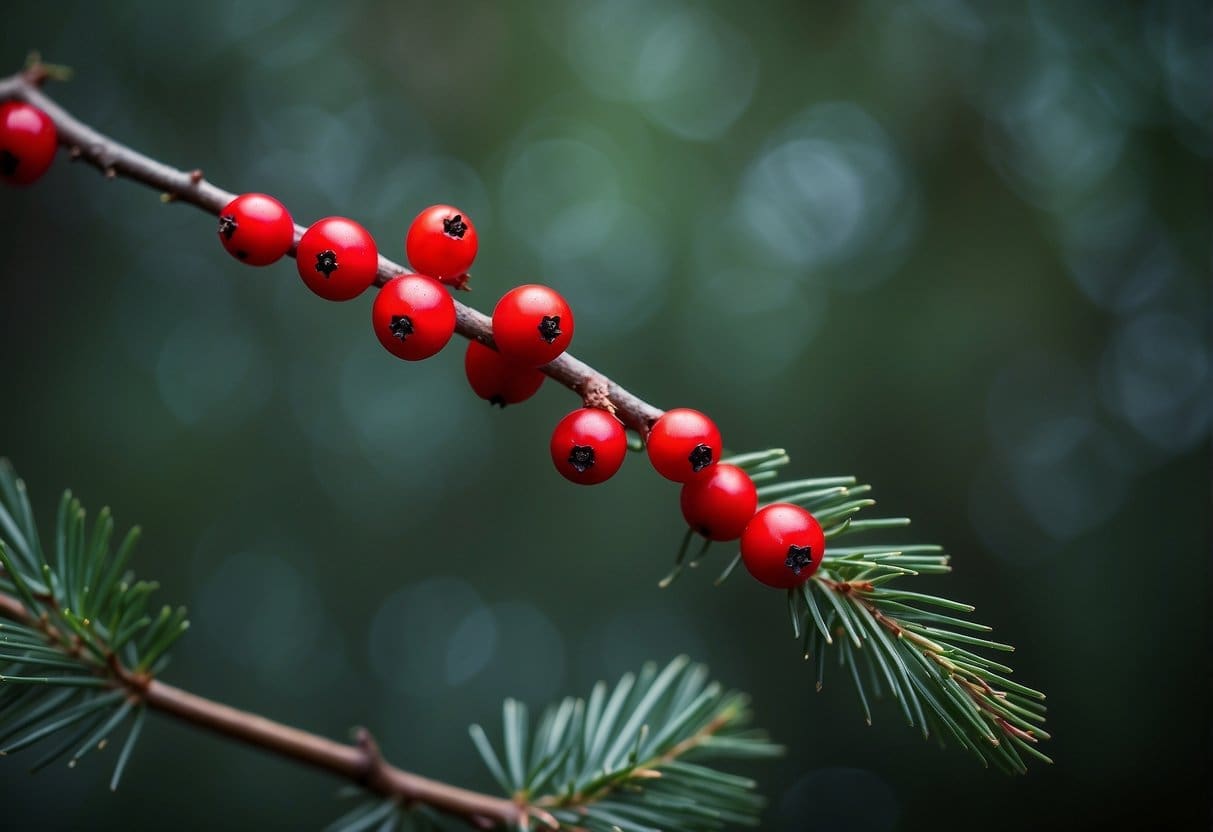
One of the easiest ways to spot this tree is by its red berry-like arils and long, flat, dark green needle-like leaves.
You can still identify it in winter by its evergreen foliage and the lack of seed-bearing ovoid or conical cones.
Keep reading for more practical tips on identifying this tree and its ecology, cultural significance, and conservation status.
Key Takeaways
- The Pacific Yew is a small to medium-sized evergreen coniferous tree native to North America.
- You can identify a Pacific Yew by its red berry-like arils and long, flat, dark green needle-like leaves.
- Understanding the ecology, cultural significance, and conservation status of the Pacific Yew is essential for appreciating this fascinating tree.
Table of Contents
Identifying Pacific Yew: Key Characteristics to Look For

If you’re looking to identify a Pacific Yew, there are a few things to keep in mind. Here are some tips to help you identify this evergreen coniferous tree.
By Scientific Name and Species
The scientific name for Pacific Yew is Taxus brevifolia. It is a species native to the Pacific Northwest of North America, including British Columbia, Idaho, and parts of the Rocky Mountains.
By Physical Characteristics
The Pacific Yew is a small to medium-sized tree, usually growing to a height of 30-50 feet. It has a dark brown bark that is scaly and rough to the touch.
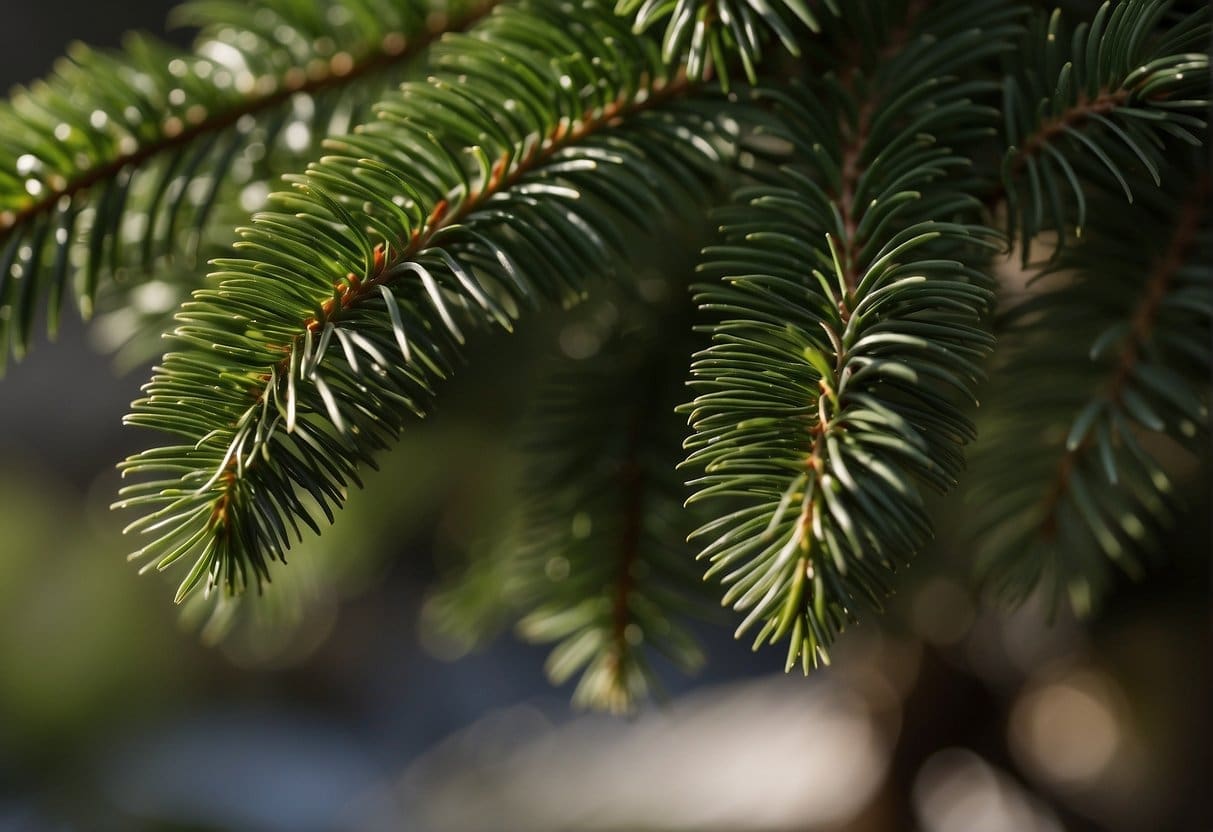
The leaves or needles are flat and short, measuring about 1-2 cm in length. They grow in a spiral pattern along the twig, with two rows of needles on each side. The needles are dark green on top and lighter green on the bottom.
The Pacific Yew’s cones are small, measuring only about 1 cm in diameter. They are reddish-brown and have a fleshy, berry-like aril surrounding the seed.
By Habitat and Distribution
The Pacific Yew is found in moist, shady regions, and the underlying vegetation layers are in dense forests. It can be found in rocky ravines, along streams, and at elevations ranging from sea level to about 6,000 feet.
In terms of distribution, the Pacific Yew is mainly found in the Pacific Northwest of North America, including British Columbia, Idaho, and parts of the Rocky Mountains. It is also found in the Coast Range and Sierra Nevada mountain ranges.
Understanding the Ecology
Pacific yew (Taxus brevifolia) is a coniferous evergreen shrub or small understory tree that is native to the Pacific Northwest region of North America. Understanding the ecology of this species is key to identifying it in the wild.
Growth Patterns and Lifespan
Pacific yew typically grows to a height of 30-50 feet (10-15 meters) and has a trunk diameter of up to 20 inches (50 cm). It is a slow-growing species and can live for up to 400 years.
It is often found growing in the understory of mixed hardwood-conifer forests, where it tolerates shade and can grow in a variety of soil types.
Reproduction and Pollination
Pacific yew is a dioecious species, meaning that male and female reproductive structures are found on separate plants.
The male plants produce pollen in small, cone-like structures called male cones, while the female plants produce seed cones that resemble small berries. The seeds themselves are enclosed in a fleshy, berry-like structure called an aril, which is often consumed by birds and other wildlife.
Interactions with Wildlife
The arils of Pacific yew are an important food source for a variety of wildlife, including birds and mammals such as moose. The seeds themselves are dispersed by birds that consume the arils and then excrete the seeds.
Pacific yew is also an important habitat for a variety of insects and other invertebrates.
Uses and Cultural Significance
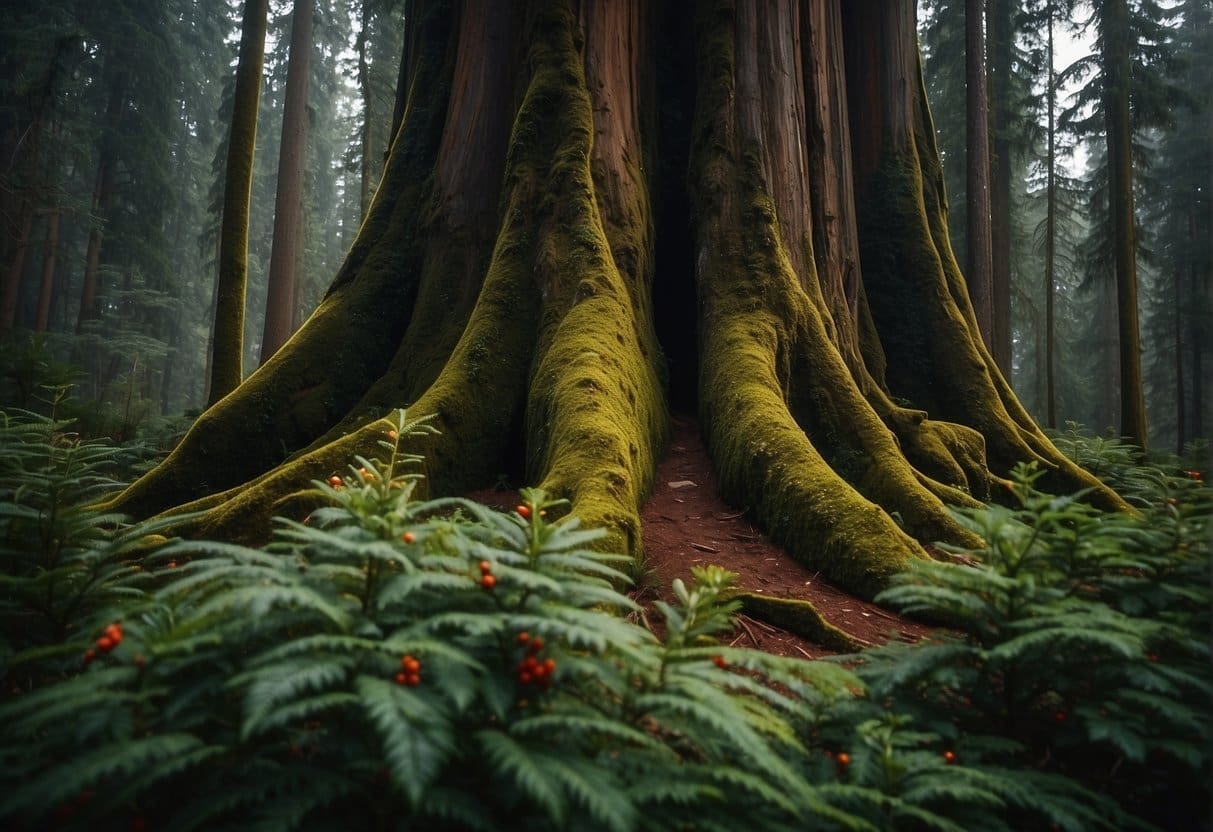
Pacific Yew, also known as Taxus brevifolia, is a tree with a rich history of traditional uses, medicinal properties, and ornamental value.
Traditional Uses
Native people traditionally used Pacific Yew’s wood to craft a number of implements, including bows, canoe paddles, clubs, spear and harpoon shafts, wedges, and spoons.
The tree’s remarkable heartwood, which is fine-textured, hard, heavy, and elastic, is prized for its attractive red color, easy workability, and resistance to decay.
Pacific yew wood is also used in topiary, a form of ornamental gardening.
Medicinal Properties
Pacific Yew’s bark contains paclitaxel, a compound that has been used to treat ovarian and breast cancer.
Paclitaxel, also known as Taxol, is one of the most successful cancer drugs ever developed. The bark of Pacific Yew has also been used to treat rheumatism, arthritis, and other inflammatory conditions.
Ornamental and Landscaping
Beyond its medicinal and traditional uses, Pacific Yew also holds considerable aesthetic and cultural value.
The tree’s lush, dense foliage and characteristic slow growth make it an ideal choice for ornamental and landscaping purposes.
Pacific Yew is also used as a bonsai tree, a form of art that involves growing miniature trees in containers.
Conservation and Threats
Conservation Status
The Pacific yew (Taxus brevifolia) is a facultative riparian conifer that grows in the understory of conifers such as Douglas fir and western hemlock.
The species is native to the Pacific Northwest of North America and is currently listed as a species of concern due to overharvesting for its medicinal properties.
The conservation status of the Pacific yew is currently of least concern, but the species is still at risk due to habitat loss and overharvesting.
Threats and Environmental Concerns
One of the main threats to the Pacific yew is habitat loss due to logging and urban development. The species is also at risk of overharvesting for its medicinal properties, which include the production of the cancer-fighting drug Taxol.
Overharvesting can lead to a decline in the population of the species, which can negatively impact the ecosystem.
Another environmental concern is the toxicity of the Pacific yew. The species is poisonous to humans and animals, and ingestion of the leaves and berries can cause severe illness or death.
The species’ toxicity can also negatively impact the ecosystem, as it can limit the number of herbivores that can consume the plant.
Differentiating Pacific Yew from Other Species
If you’re trying to identify a Pacific Yew, it’s important to know how it differs from other yew species. Here are some key differences to look out for:
Comparison with Other Yew Species
Pacific Yew (Taxus brevifolia) is just one of several yew species. Taxus baccata, also known as English Yew, and Taxus cuspidata, also known as Japanese Yew, are two other common species.
One key difference between Pacific Yew and other yew species is their bark. Pacific Yew has a scaly reddish-brown bark that peels off in thin flakes, while the bark of other yew species is usually darker and smoother.
Another difference is the shape of their needles. Pacific Yew has flat, needle-like leaves that are about 1-3 cm long, while the needles of other yew species are usually more rounded or pointed.
Unique Identifiers of Pacific Yew
In addition to its bark and needles, a few unique identifiers can help you identify Pacific Yew.
One of Pacific yew’s most distinctive features is its heartwood, a deep red color often used in woodworking and furniture making.
Another unique identifier is the grain of the wood. Pacific Yew has a very hard, dense grain, making it difficult to work with. This is in contrast to other yew species, which have a softer, more flexible grain.
Practical Tips for Pacific Yew Identification
If you are looking to identify a Pacific Yew, there are a few things to keep in mind. Here are some practical tips to help you with identification.
When to Observe
The best time to observe a Pacific Yew is during the growing season, which is typically from late spring to early fall.
The tree will have its characteristic needle-like leaves and woody cones during this time.
If you are trying to identify a Pacific Yew during winter, you can look for its evergreen foliage and lack of seed-bearing cones.
Tools and Resources
You can use various tools and resources to help with identification.
Botanists and field guides can be a great resource, as they have extensive knowledge of Pacific Yew and other plants.
You can also use online resources like websites and forums to get information and ask questions.
Additionally, many books and field guides are available that can help you identify Pacific Yew and other plants.
When identifying a Pacific Yew, pay attention to its needle-like leaves, which are dark green on top and lighter on the bottom.
The tree also has about 4-7 mm long woody cones that develop into an aril berry.
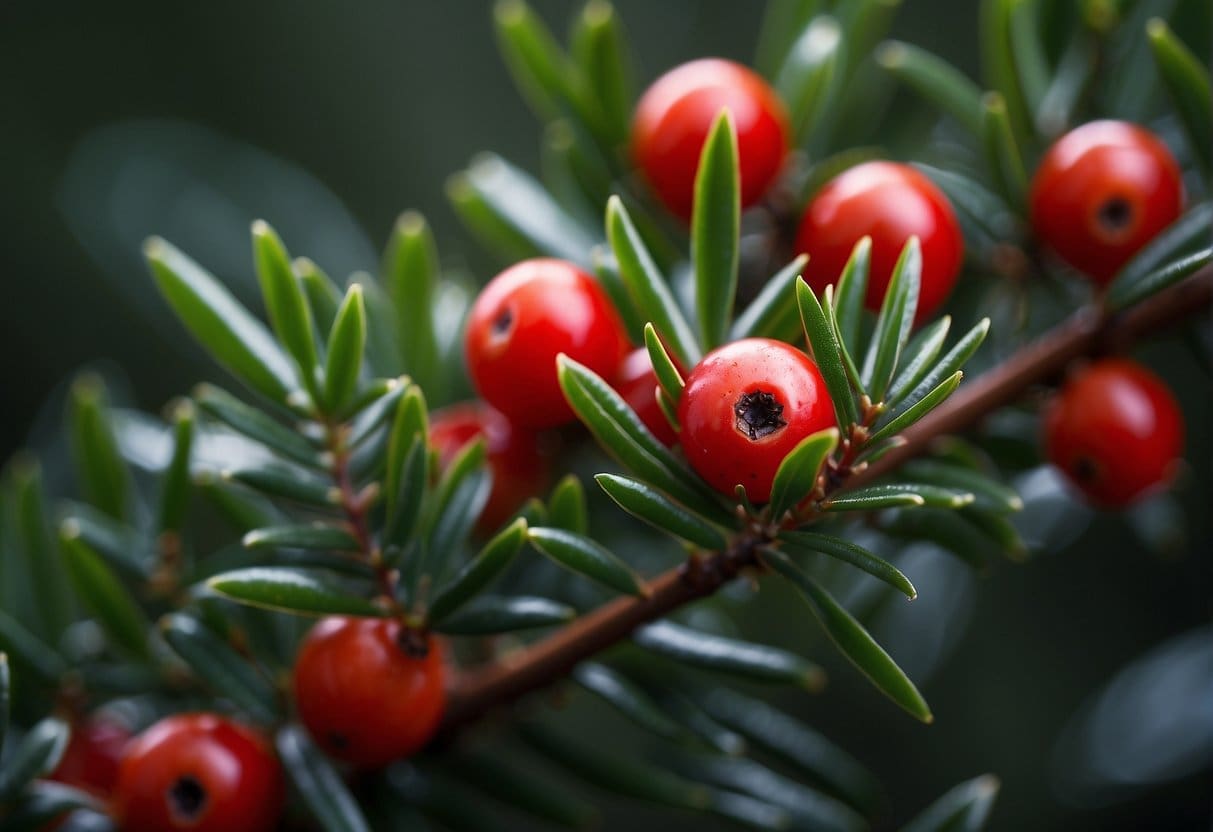
The aril is scarlet and oblong-oval in shape, and it encloses a single seed.
It is important to note that the seeds of the Pacific Yew are poisonous.
Wrapping-Up
In conclusion, identifying Pacific yew (Taxus brevifolia) is not as difficult as it may seem. You can spot the Pacific yew by looking for a small tree growing in the understory in the shade of larger Douglas fir or western hemlock.
The needles are short, flat, and spread out on opposite sides of the twig in flattened rows like a grand fir or western hemlock. Like these trees, Pacific yew needles are dark green on top, but instead of showing …
When identifying Pacific yew, note that the leaves (needles) are spirally arranged, 1 to 3 cm long, and 2 to 3 mm broad. The seed cones are single seeds 4-7 mm long, developing into a berry called aril, 8-15 mm long, wide with an open end. They mature 6-9 months post-pollination.
If you are looking for a yew tree in winter, you can identify it by its evergreen foliage and lack of seed-bearing ovoid or conical cones. Other identifiable characteristics of yew trees include the red berry-like arils and long, flat, dark green needle-like leaves.
It is important to conserve Pacific yew trees, as they are a valuable resource for cancer treatment. The bark of the Pacific yew contains a compound called taxol, which is used to treat ovarian and breast cancer.
Therefore, we must ensure that these trees are not destroyed or overharvested.
Identifying Pacific yew can be easy if you know what to look for. Conserving these trees for their medicinal properties and ensuring their survival for future generations is important. We hope you enjoyed this guide!

Growing up in the Pacific Northwest, we’ve always felt at home in the outdoors. We created Evergreen Adventures PNW to share our love of hiking, camping, and exploring, and to help others discover the best adventures this region has to offer. Along with trip guides and tips, we also enjoy diving into the science behind the landscapes—thanks to a background in Environmental Science—because understanding nature makes every adventure even more meaningful.