
Tired of endlessly searching through your camping gear? Struggle to pack your gear efficiently? Organizing your camping gear can be a daunting task, but it doesn’t have to be. With a few simple tips and tricks, you can make camping a stress-free and enjoyable experience.
Use see-through storage bins for optimal organization. Particularly useful for car camping trips, this method keeps your gear secure in your trunk and prevents it from rolling around with every twist and turn of the road. Label each bin with the contents inside to make finding what you need even easier.
Organize gear by ‘rooms’ for a functional campsite layout. For instance, create a camp box just for the kitchen and another for the bedroom. Use a big storage sack to carry your sleeping bag, pillow, pad or mattress, and clothes. This will help you pack more efficiently and keep everything in its place. Implement these tips for more enjoyable, stress-free camping trips.
Table of Contents
Planning Your Camping Gear: Organizing Essentials
In camping, effective planning is essential. Before you start packing, it’s important to create a checklist to ensure you have all the essential gear you need for a successful trip. In this section, we’ll cover the basics of planning your camping gear, including creating a checklist and identifying essential and non-essential gear.
Creating a Checklist
Create a checklist: An essential step in trip planning. A checklist will help you ensure that you have all the gear you need for a successful camping trip. When creating your camping checklist, consider the following:
- Tent and sleeping gear: Make sure you have a tent, sleeping bag, and sleeping pad for each person in your group.
- Cooking gear: Bring a camp stove, fuel, pots and pans, utensils, and a cooler for perishable foods.
- Clothing: Bring appropriate clothing for the weather, including rain gear and extra layers for colder temperatures.
- Lighting: Bring a headlamp or flashlight and extra batteries.
- First aid kit: Bring a first aid kit with basic supplies such as bandages, antiseptic, and pain relievers.
- Navigation: Bring a map and compass, and consider bringing a GPS device or smartphone with a navigation app.
Essential and Non-Essential Gear
Distinguish between essential and non-essential gear when packing. Essential gear includes items that are necessary for your safety and comfort, while non-essential gear is nice to have but not necessary. The following are examples of essential and non-essential gear:
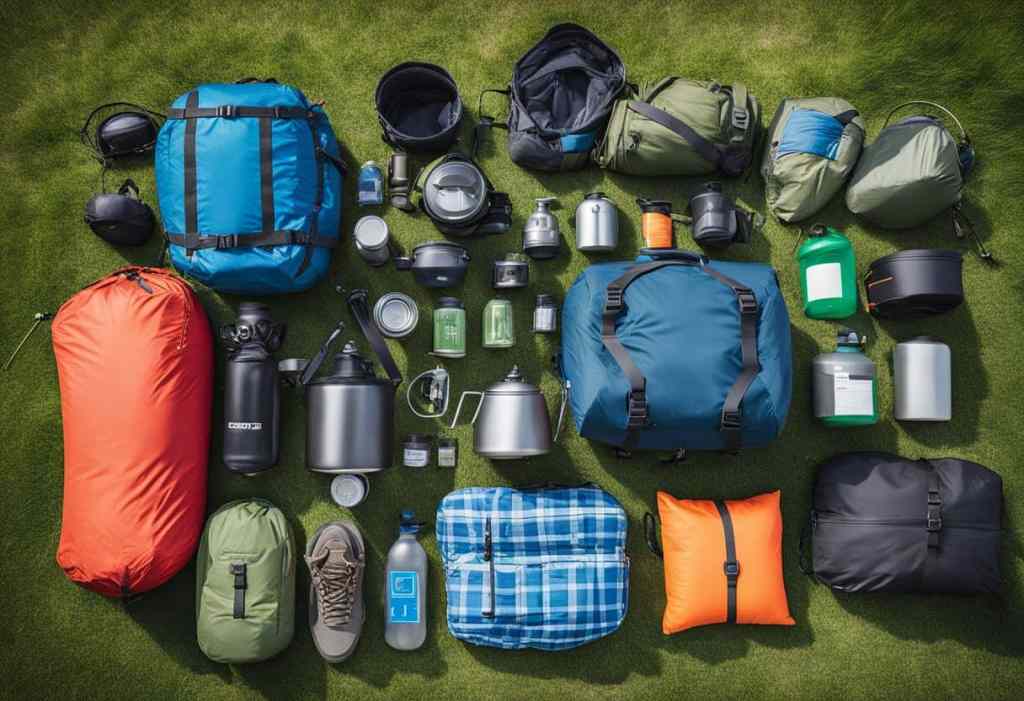
- Essential gear: Tent, sleeping bag and pad, camp stove, fuel, cooking utensils, cooler, appropriate clothing, headlamp or flashlight, first aid kit, map, and compass.
- Non-essential gear: Camp chairs, hammocks, campfire grill, portable shower, and other luxury items.
By identifying essential and non-essential gear, you can prioritize your packing and ensure that you have everything you need for a successful camping trip. Remember to keep your checklist and gear organized to make packing and unpacking a breeze.
How to Organize Camping Gear: Packing & Storage Tips
Packing and storing camping gear can seem daunting. However, with the right tools and techniques, it can be a breeze. Here are some tips to help you pack and store your camping supplies like a pro.
Using Storage Bins and Boxes
One of the easiest ways to pack and store your camping gear is by using storage bins and boxes. Clear plastic bins are great for organizing and keeping track of your gear. Label each bin with the contents inside for easy identification. You can also use smaller plastic bins to organize smaller items like utensils, first aid supplies, and toiletries.
Utilizing Compression Sacks and Dry Bags
Compression sacks and dry bags are perfect for packing clothing and sleeping bags. They help to reduce the amount of space your gear takes up and keep it dry in case of rain. When packing, roll your clothing tightly and place it in the compression sack. For sleeping bags, stuff them into a dry bag and use the compression straps to reduce the size.
Implementing Overhead and Hanging Storage
Overhead and hanging storage are great options for storing camping gear that you don’t need to access frequently. Use carabiners to hang items like lanterns, water bottles, and towels from the top of your tent or nearby trees. You can also use overhead storage nets to keep larger items like blankets and sleeping pads off the ground.
Remember to pack your gear in a way that makes sense to you and your needs. Keep frequently used items easily accessible and store less frequently used items in overhead or hanging storage. With these tips, packing and storing your camping supplies will be a breeze.
Organizing Camping Gear: Maintenance and Cleaning Guide
Keeping your camping gear clean and well-maintained is essential to ensure that it lasts for many camping trips to come. Here are some tips on how to maintain and clean your gear.
Air Out and Freshen Up
After every camping trip, it’s important to air out your gear to get rid of any musty smells and to let it dry out completely. Start by unpacking everything and laying it out in a well-ventilated area. If possible, hang up your tent and sleeping bags outside in the fresh air to allow them to air out properly. This will also help to prevent mold and mildew from forming.
Washing and Drying
When it’s time to wash your gear, make sure to read the care instructions carefully. Most tents, sleeping bags, and other camping gear can be washed in a washing machine, but you should always check the label first. Use a mild detergent and cold water, and avoid using fabric softeners or bleach, as they can damage the fabric.
Once you’ve washed your gear, make sure to dry it thoroughly before storing it away. Hang up your tent and sleeping bags outside in the sun to dry, or use a clothesline or drying rack. You can also use a low heat setting on your dryer, but make sure to check the care instructions first.
Remember to store your camping gear in a cool, dry place when you’re not using it. This will help to prevent mold and mildew from forming and will help to keep your gear in good condition for your next camping trip.
By following these simple tips, you can keep your camping gear clean, fresh, and well-maintained, ensuring that it lasts for many camping trips to come.
Camping Gear Safety: Organize for Protection
In the wilderness, prioritize safety measures for you and your gear. In this section, we will discuss some of the most important measures that you should take to protect yourself and your gear.
Preparing for Pests and Bears
When you are camping in the wilderness, you may encounter pests such as mosquitoes, ticks, and other insects. To protect yourself from these pests, you should bring insect repellent and wear long-sleeved shirts and pants. You should also set up your campsite away from standing water, which can attract mosquitoes.
In addition to pests, you may also encounter bears in the wilderness. To protect yourself from bears, you should bring bear spray and know how to use it. You should also store your food and other scented items in bear-proof containers or hang them from a tree at least 10 feet off the ground and 4 feet from the trunk. This will help prevent bears from getting into your food and other scented items.
First Aid and Emergency Preparations
Accidents can happen when you are camping, so it is important to be prepared for emergencies. You should bring a well-stocked first aid kit and know how to use it. Your first aid kit should include items such as bandages, gauze, antiseptic, and pain relievers.
In addition to your first aid kit, you should also be prepared for emergencies by bringing a map, compass, whistle, and flashlight with extra batteries. You should also let someone know where you are going and when you plan to return.
By taking these safety and protection measures, you can help ensure that you and your camping gear are safe while you are out in the wilderness.
Backpacking and Hiking: Organize Your Camping Gear
When preparing for a hiking or backpacking trip, it’s important to organize your gear efficiently to ensure a smooth and enjoyable experience. Here are some tips to help you organize your gear effectively:
Lightweight and Compact Packing
One of the most important factors to consider when organizing your gear for hiking or backpacking is weight. You want to pack as light as possible without sacrificing essential items. Start by selecting a lightweight, durable backpack that fits comfortably on your body. Look for a backpack with multiple compartments and pockets to help you organize your gear.
When packing, focus on the essentials first, such as shelter, clothing, toiletries, and snacks. Choose lightweight and compact options for each item. For example, opt for a lightweight tent or hammock and a compact sleeping bag. Use compression sacks to reduce the size of your clothing and sleeping bag. Consider bringing travel-sized toiletries to save space and weight.
Categorizing Gear by Use
Another helpful way to organize your gear is by categorizing it by use. This will make it easier to find what you need quickly and efficiently. Here are some categories to consider:
Kitchen: This category includes items such as a stove, fuel, cookware, utensils, and food. Use a stuff sack or dry bag to keep these items together and easily accessible.
Shelter: This category includes items such as a tent, hammock, tarp, and stakes. Keep these items together in a separate stuff sack or dry bag.
Clothing: This category includes items such as base layers, insulating layers, rain gear, and footwear. Use compression sacks to reduce the size of your clothing and keep similar items together.
Toiletries: This category includes items such as a toothbrush, toothpaste, sunscreen, and insect repellent. Use a small toiletry bag to keep these items together and easily accessible.
By organizing your gear in this way, you can quickly access what you need without having to dig through your entire backpack. It also makes it easier to repack your gear when it’s time to move on to your next campsite.
Remember, organizing your gear effectively is key to a successful hiking or backpacking trip. Keep it lightweight, compact, and organized by categorizing your gear by use. With these tips, you’ll be well on your way to a comfortable and enjoyable outdoor adventure.
Join the Conversation and Share Your Insights!
As we wrap up our journey through the art of organizing camping gear, we turn to you, our adventurous readers! Do you have any ingenious tips or tricks for keeping your camping gear in top shape? Maybe a clever hack that’s been a game-changer for your outdoor escapades? We’d love to hear about it!
Join the Conversation and Share Your Insights!
Drop your thoughts in the comments below. Your shared wisdom not only helps our community but also helps fellow campers elevate their outdoor experiences. And if you found these tips helpful, don’t hesitate to share this post with your fellow outdoor enthusiasts. Together, let’s make camping more organized, enjoyable, and fun for everyone!
Frequently Asked Questions
What are some car camping storage ideas?
When car camping, storage space is at a premium. Utilize your vehicle’s trunk, roof rack, and backseat to store your gear. Consider investing in storage containers that can stack neatly, and use bungee cords or cargo nets to secure items that won’t fit in containers. You can also use the space under your camping chairs to store smaller items.
How can I create a camping kitchen organizer?
A camping kitchen organizer can make meal prep and cooking much easier. Use a hanging organizer with multiple pockets for utensils, spices, and other cooking essentials. You can also use a plastic bin with dividers to keep items organized and easily accessible. Consider using a portable camp kitchen with built-in storage compartments for all your cooking needs.
What are some hacks for organizing car camping gear?
One hack for organizing car camping gear is to use a shoe organizer to store smaller items like toiletries, flashlights, and bug spray. You can also use a hanging organizer to store cooking utensils and other kitchen essentials. Another hack is to use a shower caddy to store and transport your toiletries.
What are the best camping storage solutions?
The best camping storage solutions are those that are durable, lightweight, and easy to transport. Consider investing in storage containers that are stackable and have secure lids to prevent items from shifting during transport. Use a duffel bag or backpack to store clothes and other soft items, and use a plastic bin or cooler to store food and drinks.
How do I declutter my camping gear?
Decluttering your camping gear is important to maximize storage space and make packing and unpacking easier. Start by sorting through your gear and getting rid of anything that is broken, damaged, or no longer useful. Consider donating or selling items that are still in good condition but that you no longer need. Use storage containers to keep like items together and easily accessible.
Where should I store my clothes when camping?
When camping, store your clothes in a duffel bag or backpack to keep them organized and easily transportable. Consider using compression bags to save space and keep clothes clean and dry. You can also use a hanging organizer to store smaller items like socks and underwear. Avoid storing clothes in plastic bags, as this can trap moisture and lead to mold and mildew.

Growing up in the Pacific Northwest, we’ve always felt at home in the outdoors. We created Evergreen Adventures PNW to share our love of hiking, camping, and exploring, and to help others discover the best adventures this region has to offer. Along with trip guides and tips, we also enjoy diving into the science behind the landscapes—thanks to a background in Environmental Science—because understanding nature makes every adventure even more meaningful.