
Starting a campfire on your camping trip is not just about staying warm—it’s about creating a gathering spot for stories and cooking up s’mores with friends. But how do you make sure your new campfire-building skills are safe and successful? If you’ve ever wondered how to build the perfect campfire, you’re in the right place. Building a campfire involves selecting the right spot, gathering the necessary materials, and using the correct techniques to ensure both warmth and safety.

As a beginner, knowing what materials to gather and how to arrange them can feel overwhelming. Should you collect twigs, or is there a secret to stacking logs? Don’t worry! This guide will walk you through every step, including how to light your fire without a match. Plus, you’ll learn essential safety tips to keep everyone safe, including keeping pets and little ones at a safe distance.
Key Takeaways
- Choose the right location and gather all your materials before starting the campfire.
- Learn and apply safe building and lighting techniques for successful campfire creation.
- Understand and practice safety measures from maintaining to extinguishing the fire.
Planning Your Campfire
Getting ready for a campfire is as much about safety as it is about fun. You’ll need to find the safest spot, follow local rules, and consider the weather to make sure your campfire is a highlight of your adventure.
Choosing a Safe Location
Start by picking a spot that is away from overhanging branches and dry grass. Make sure the area is clear of any debris that might catch fire. Choose a location on level ground, as it helps in setting up your campfire securely.
Pro tip: Look for a spot where a fire ring is already available. This not only makes it safer but also aligns with the Leave No Trace principle. Avoid setting up too close to tents or other camping gear. Your campfire should be at least 10 feet from anything flammable. Always have a water source or sand on hand to extinguish the fire if needed.
Understanding Local Regulations and Fire Bans
Before lighting that first spark, check the rules in the area you plan to visit. Many places have local regulations or fire bans, especially during dry seasons. These rules are there to keep everyone safe. Ignoring them can lead to fines or worse—wildfires.
You can usually find these rules online or by contacting local authorities or park services. Some regions may only allow campfires in designated areas, while others might have a total fire ban. Double-checking ensures that your campfire fun won’t be interrupted by a ranger delivering bad news!
Preparing for Weather Conditions
Keep an eye on the weather forecast leading up to your trip. Windy conditions can quickly turn a controlled fire into a dangerous situation. If it’s rainy, your campfire may be hard to start and maintain, but it can still be a great experience.
Carry extra dry kindling and fire starters just in case the weather takes a turn. And if it’s hot and dry, perhaps prepare an alternative plan like campfire-free meals to minimize risks. Being prepared for any weather will let you relax and enjoy your adventure fully.
By mindfully planning each step, you’re setting the stage for a safe and memorable campfire experience.
Gathering Materials

Knowing the right materials to gather is key to building a successful campfire. You need to understand which types of wood to choose and how to get your hands on tinder, kindling, and fuel. Each plays a vital role in keeping your fire roaring.
Different Types of Wood
Choosing the right wood can make or break your campfire experience. Hardwoods like oak, maple, and ash are great for long-lasting fires. They burn slowly and provide steady heat. Softwoods such as pine are easier to ignite but burn faster, making them less desirable for sustained fires.
Look for dry wood or dead wood branches that snap easily. Wet or green wood can be tricky to light and will create a lot of smoke. When gathering firewood, aim for a mix of hardwoods and softwoods. Hardwoods shine as the base, and softwoods are occasional helpers. Gather both to create a balanced fire experience.
Tinder, Kindling, and Fuel
Tinder is your fire’s best friend. Items like dry leaves, moss, or even newspaper make excellent tinder. It’s the initial spark that gets your fire going. Always make sure your tinder is dry and fluffy. This helps it catch a spark with ease.
Kindling, the small sticks and twigs, comes next. They’re bigger than tinder but still catch fire without much effort. Arrange them above your tinder. Finally, add fuel in the form of logs or larger firewood pieces. These are the main act. Let them settle after your tinder and kindling have done their job lighting up. Configure them in a crisscross or teepee shape for the best results.
Planning your next campfire? Remember the mighty trio: tinder, kindling, and fuel! They’re your ticket to warm nights under the stars.
Building Techniques

Mastering campfire building involves creating a stable base, choosing the right structure, and knowing efficient ignition strategies. Think about the layout, airflow, and material selection to ensure a successful and safe fire.
Laying the Foundation
Start by finding a safe spot for your campfire. Clear an area free from leaves, grass, and twigs to prevent accidental fires. It’s essential to dig a shallow pit or use a pre-existing fire ring to contain the fire. This helps in managing the fire’s spread and keeps everyone around safe. Use smaller stones or a ring of rocks to form a boundary.
Arranging stones not only contains the fire but also helps reflect heat inward, maximizing warmth. Gathering tinder, kindling, and larger firewood begins here. Keep these materials nearby for easy access once you start building the campfire structure. Choose dry wood to ensure the fire ignites easily. Stay mindful of local guidelines or restrictions to avoid harming the environment.
Teepee Method
The teepee method is a classic way to build a fire. Start by placing a small bundle of tinder in the center. Surround this with kindling, leaning small sticks against each other to form a cone shape. Leave an opening at the bottom for air to flow, which is crucial for keeping the fire burning.
Once the base is set, light the tinder. The flames will rise, igniting the kindling and eventually the larger logs. The shape of a teepee promotes good airflow and burns hot. This method is ideal for quickly generating heat and light. Remember, maintaining the fire involves gradually adding larger logs as the initial kindling burns away.
Log Cabin Method
The log cabin method provides a stable and long-lasting fire. Begin by laying two logs parallel on the ground, slightly apart. Stack two more logs on top, perpendicular to the first, forming a square. Continue stacking logs in this criss-cross pattern, creating layers until you have a small, log structure. Place tinder and kindling inside the square’s center.
Light the tinder, and watch the fire grow inside the log structure. The log cabin method offers excellent heat distribution and flame stability. It’s especially effective for cooking as it creates a concentrated heat source. Keep an eye on the fire, adding logs gradually to maintain its structure and fuel it without collapsing.
Lighting the Campfire
To kick off your camping journey, learning how to light a campfire safely is essential. You’ll explore methods for using matches and lighters without a hitch, while also understanding how to keep that fire lively. Remember, a well-lit campfire is a happy campfire!
Using Matches and Lighters Safely
When it’s time to light the fire, two of your best friends will be matches and lighters. Safety first is the rule here! Always have adults handle lighters and matches.
Hold the match close to the base when striking it. This prevents the flame from burning your fingers. If you’re using a lighter, make sure it’s in good condition. A faulty lighter can be risky, so regular checks are important.
Storage matters, too. Keep matches in a waterproof container. Water ruins them, leaving you fireless and frustrated. Also, choose a windproof lighter—strong winds are no match for it! Keep these tools away from children and always extinguish them completely after use.
Maintaining a Campfire
Once your campfire is sparked, maintaining it is the next step. You don’t want your fire to burn out or get out of control! You can start by adding small sticks and gradually larger logs. This helps control the fire’s intensity.
Position logs in a teepee shape to allow airflow. Airflow is essential for keeping the fire burning steadily. Always keep a watchful eye on the fire—you should never leave it unattended.
To maintain control and safety, have a bucket of water or sand nearby. This is crucial in case the fire starts spreading. When you’re ready to pack up, ensure the fire is completely out by dousing it with water and stirring the ashes. No glowing embers should remain. This simple habit helps prevent wildfires.
Campfire Safety
Building a campfire is a fun and essential part of the camping experience, but safety must always come first. By preparing properly, you can enjoy the warmth, make some s’mores, and create unforgettable memories without any accidents.
Fire Safety Practices
When lighting a campfire, safety practices are crucial. Never leave a fire unattended. This is key for preventing the spread of fire. Keep a bucket of water, sand, or a shovel nearby to smother the fire quickly if needed.
You should always make sure the fire is fully extinguished before leaving. Pour water over it, stir the ashes, and pour more water until it’s cool to touch. Teach everyone in your group about fire safety tips, including keeping a distance and not playing near the fire.
Setup an area clear of overhanging branches to minimize fire hazards. Watch out for high winds, which can spread embers and sparks.
Creating a Safe Fire Ring
Creating a safe fire ring is another important step. Begin by choosing a location that’s away from flammable objects like trees, tents, and dry grass. This prevents unexpected spreading of flames.
Use rocks to build a circle around your fire area or use an existing fire pit. This helps control the fire’s spread and contains its warmth.
Inside the circle, clear any debris like leaves and twigs. It’s wise to keep the fire small and manageable, which makes it safer. Small fires use fewer resources and are easier to control. Always respect local fire regulations; they’re there for a reason!
Managing Fire Hazards
Reducing fire hazards ensures your camping trip stays fun and safe. Keep any flammable objects at least 10 feet away from the fire for maximum safety.
Develop a habit of checking for these hazards, like low-hanging branches or dry woodpiles nearby. Being aware helps prevent problems before they happen.
Have a fire extinguisher or an alternative fire control method at the ready. In case of emergencies, knowing how to use these tools is essential.
Remember, preparedness is key. Making people aware of campfire safety tips can turn them into responsible campers, ready to enjoy the campsite while protecting it.
Enjoying Your Campfire
Enjoying a campfire is not just about warmth and light—it’s a chance to cook delicious meals and engage in good campfire etiquette. Let’s look at these parts of the experience to make sure you get the most out of your time around the fire.
Cooking Over the Campfire
Cooking over the campfire can be a fun and rewarding part of your camping experience. Start with simple recipes like foil-wrapped vegetables, hot dogs, or marshmallows for s’mores. Make sure you have the right tools, like long cooking tongs and a grill grate if needed. Be creative with your campfire cooking—consider trying campfire nachos or making popcorn.
Safety Tip: Always keep a bucket of water or a fire extinguisher nearby. Remember, fires can be unpredictable. Cooking over open flames requires careful attention.
Pro Tip: For evenly cooked food, wait for the flames to subside into glowing embers. They provide steady heat without burning your meal.
Campfire Etiquette
Campfire etiquette helps everyone enjoy the experience safely. Keep noise levels down to respect fellow campers and wildlife. Before leaving, ensure the fire is completely out. Use water and stir the ashes until they are cool to touch.
Respect Nature: Use only designated fire pits to protect the environment. Don’t burn trash or non-natural materials, which can harm wildlife and release pollutants.
Be Considerate: Share the campfire space if you’re in a shared camping area. It’s a great way to meet new friends while keeping the area tidy for everyone.
Extinguishing the Campfire
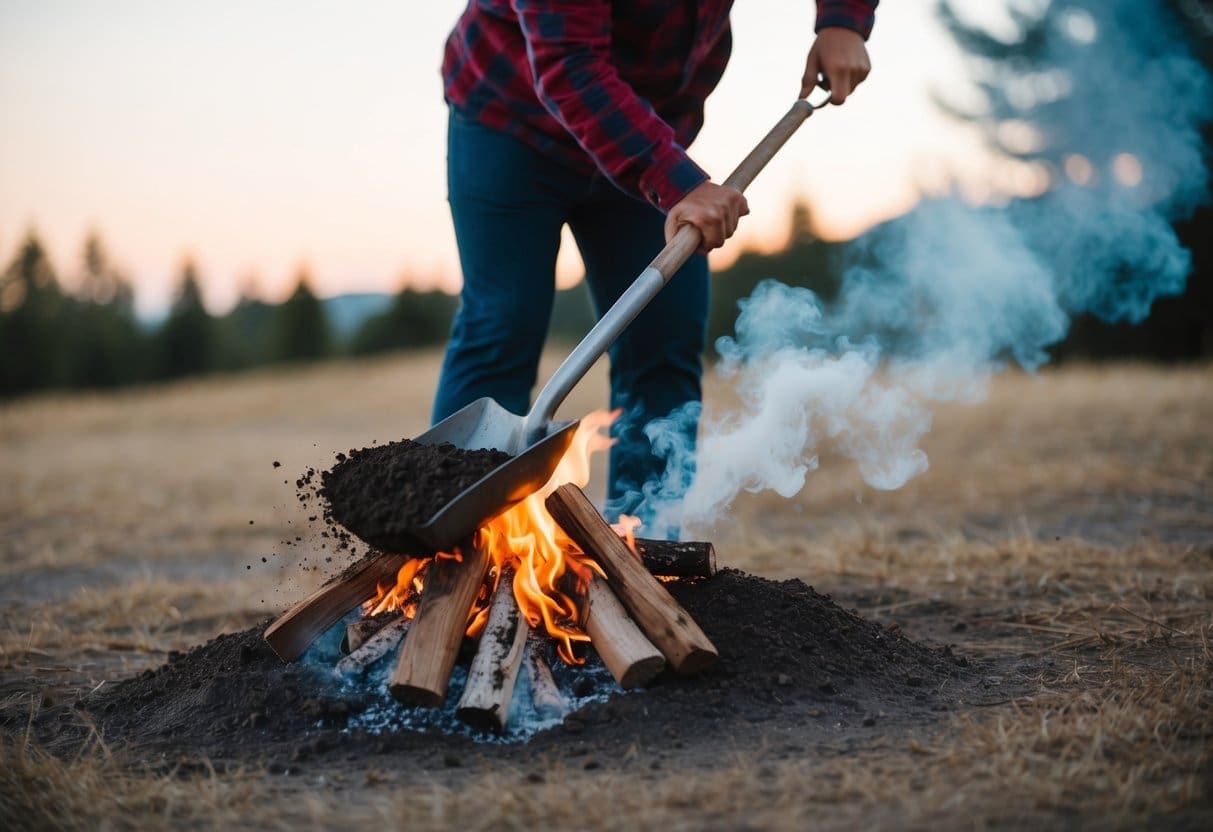
To ensure a safe and responsible camping experience, it’s crucial to properly extinguish your campfire. This prevents wildfires and helps preserve the environment. Let’s look at effective techniques for extinguishing a fire and how to leave no trace behind.
Proper Techniques to Extinguish the Fire
Begin by allowing the wood in your campfire to burn completely to ash if possible. This helps minimize leftover debris. Next, you should pour water over the fire, making sure to douse every part of it. Stir the ashes with a stick to make sure all the embers are wet and cool. Be careful not to stand too close to avoid steam burns.
If water isn’t available, you can use sand or dirt. Shovel sand or dirt over the embers and thoroughly mix it until everything is cool to the touch. You shouldn’t feel any heat when you put your hand near the ashes. Use your senses: sight, sound, and feel, to check if your fire is fully extinguished. It shouldn’t produce smoke or make any sizzling sounds.
Leaving No Trace Behind
Leaving no trace means that you should clean up and restore the environment as much as possible. After extinguishing the fire, check the area for any trash or leftover materials and pack them out. Rocks used for the fire ring should be scattered away from the site, especially if they are an unnatural addition to the landscape. This helps the site look untouched for the next visitors.
If you’ve built a temporary fire pit, fill the hole with native soil and arrange pine needles or leaves over it. Erase any signs that a campfire was present. By minimizing your impact, you’re playing a part in preserving nature for future campers.
Frequently Asked Questions

Campfires are more than just warmth; they create an atmosphere for fun and friendship. By following these steps and tips, you can safely build a campfire, whether you’re using a fire pit or starting from scratch in the wild. Let’s explore how to get your fire blazing, whether you’ve got matches or not, and maybe even get some cooking going!
What are the key steps to building a campfire that will keep us cozy and safe?
To start, pick a dry, clear area with no overhanging branches. Create a fire ring with stones to contain the flames. Gather kindling, larger sticks, and some logs. Arrange your kindling in a teepee or log cabin style for the best flame. Make sure you have a bucket of water or sand ready to put out the fire completely before you leave.
Got a fire pit? What’s the best way to set up a campfire in it?
If you’ve got a fire pit, you’re already ahead of the game! Start by cleaning out any debris from the pit. Lay some tinder at the bottom, then place kindling and larger sticks around it. Just light the tinder, and gradually add more substantial pieces until you have a roaring fire. Keep that bucket of water on hand to douse the flames when needed.
Out in the wild and need a campfire? How can you get started?
Find a flat, clearing space. Be sure to avoid dry shrubs or grasses. Collect tinder, kindling, and larger pieces of wood. Dig a small pit and surround it with rocks. Arrange your wood in a teepee or log cabin formation, starting with the tinder at the center. Remember, stay safe and don’t leave the fire unattended.
What does it take to start a campfire with just wood and persistence?
Using the wood friction method, such as a bow drill, can work. It needs patience, practice, and the right kind of wood. Create heat by rotating a spindle against a fireboard until you create an ember. Transfer this ember to a nest of tinder and gently blow to grow the fire. It’s tricky, but rewarding!
Got cooking on your mind? How can you build a campfire that’s chef-approved?
To cook over your campfire, let it burn down some until you have glowing coals. Place a grill rack or use a campfire cooking tripod over the coals for even heat. Keep flame flares in check as they can burn your meal. Don’t forget aluminum foil packets or cast iron pans for different campfire recipes!
No matches? No problem! But how can you ignite a campfire without them?
A magnifying glass on a sunny day can focus sunlight onto tinder to spark a flame. Or, use a flint and steel to create sparks and light your tinder. Always practice these methods safely, away from flammable materials. With a little practice, you’ll be starting fires like a pro!
Growing up in the Pacific Northwest, we’ve always felt at home in the outdoors. We created Evergreen Adventures PNW to share our love of hiking, camping, and exploring, and to help others discover the best adventures this region has to offer. Along with trip guides and tips, we also enjoy diving into the science behind the landscapes—thanks to a background in Environmental Science—because understanding nature makes every adventure even more meaningful.